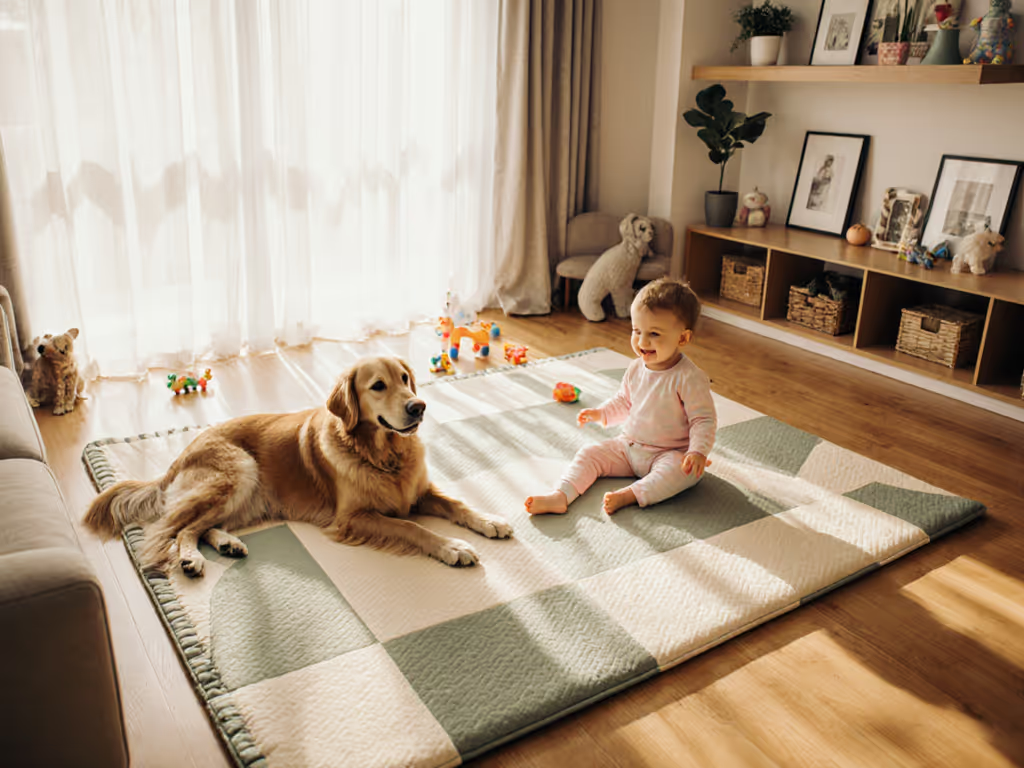
Pet-Friendly Play Mat Comparison: Safest Picks for Pets & Babies
25th May•14 min read
When twins arrive in a 480-square-foot apartment, a standard playmat becomes floor real estate you can't afford. A twin play mat comparison isn't just about picking two mats side by side, it's about finding a play mat for multiples that expands your usable square inches without swallowing your living room. The math is unforgiving: two separate 40" × 50" mats consume about 28 square feet. One oversized mat, thoughtfully chosen, redefines what's possible when space is the constraint.
I learned this the hard way. When our son arrived, I taped mat footprints on the floor for a week, tracking traffic patterns, where the stroller parked, and how sunlight shifted across nap hours. We tested whether a mat needed to span wall to wall or whether a purposeful, contained footprint actually trained better motor skills because it created negotiable boundaries. The winning mat folded under the sofa in six seconds and returned without scraping our old hardwoods. That exercise crystallized my philosophy: square inches are a budget. Make the mat earn them.
For families with twins, the stakes are higher. For product-tested picks, see our best twin play mats focused on durability and space ROI. You need a simultaneous twin play mat that accommodates both children without forcing you to choose between safety, aesthetics, and storage. This guide breaks down the tested options, dimensions, material trade-offs, and hidden costs so you can choose a mat you'll actually use (from tummy time through toddling), and one your home can live with daily.
A space-efficient twin play surface solves a specific problem: two babies demand simultaneous, safe floor time, yet most standard mats (roughly 36" × 48") fit only one infant comfortably, especially during rolling and crawling phases. Standard mats also lack the structural integrity to support two toddlers bouncing simultaneously without edge curl or compression dents.
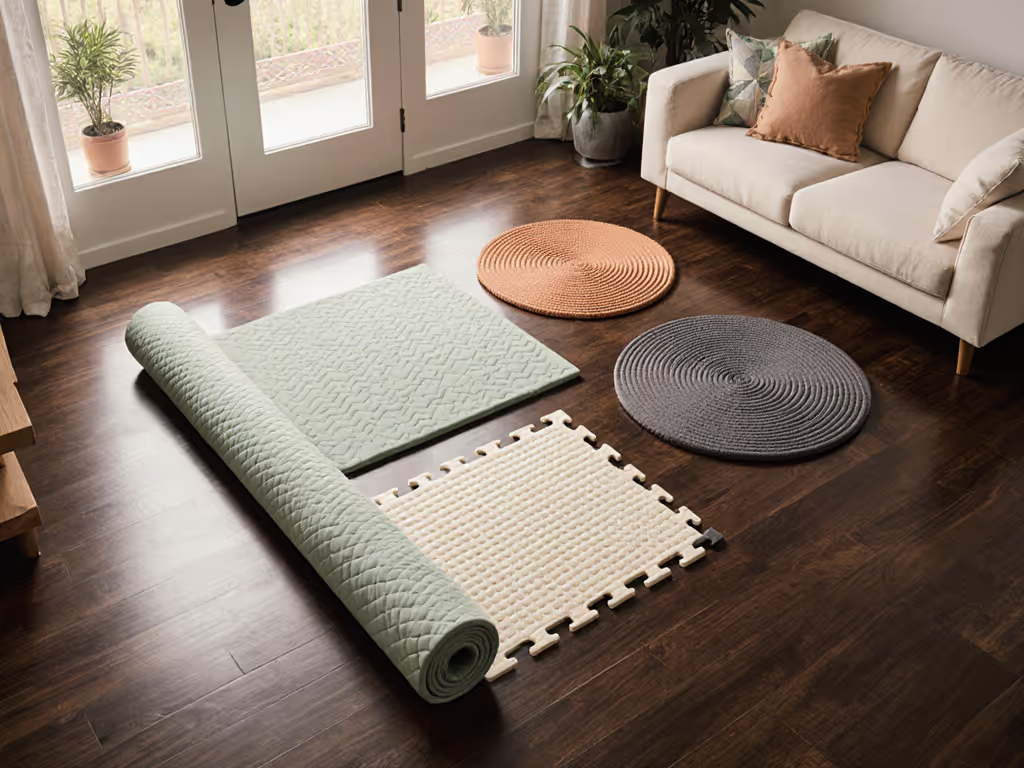
Twin-friendly mats typically fall into three categories:
Each approach carries trade-offs. If footprint math is your main constraint, use our play mat size guide for small spaces to compare options. An oversized single mat maximizes usable floor and simplifies cleaning but sacrifices fold-up storage. Modular tiles offer flexibility and compactness but introduce edge-management and piece-loss risks. Convertible designs adapt across years but add complexity and weight.
A full-size dual-baby play mat typically measures 48" × 72" (4 ft × 6 ft = 24 sq ft). For reference:
In a 10' × 12' open living room, a 48" × 72" mat occupies roughly 24% of floor space, substantial but sustainable if storage folds it away daily. In a 9' × 11' bedroom or a 8' × 10' playroom, the same mat dominates and must live out permanently or impair traffic flow. This is where modular systems and compact alternatives earn consideration.
Tiny Love Super Mat
At 48" × 72" and $44.99, the Tiny Love Super Mat is explicitly designed for multiples and older siblings. This oversized developmental playground provides enough floor for two infants to roll, crawl, and play independently without constant boundary redefinition.
Dimensions: 48" W × 72" L × 0.4" thick
Material: Foam with non-slip bottom
Storage: Does not fold; rolls to 16" diameter × 6" tall (bulky under-bed fit)
Footprint trade-off: Large footprint justifies itself only if you can leave it out or roll it quickly daily. Not ideal for homes where guests require furniture reset.
Cleanability: Spot-wipeable surface; not machine-washable. Stains and odor absorption are moderate concerns with spit-up or diaper incidents.
Aesthetics: Busy, themed patterns typical of developmental mats; not minimalist-friendly for open living spaces.
Toddlekind Wander Classic Indoor/Outdoor Portable Playmat (Sage)
At $95+, the Toddlekind Wander in Sage tone prioritizes aesthetics and portability over oversized footprint. It measures roughly 47" × 71" (smaller than Tiny Love but still dual-use capable) and is genuinely lightweight at ~3.5 lbs.
Material: Natural rubber and PVC-free closed-cell foam; OEKO-TEX certified
Non-slip performance: Reliable on hardwood and tile; handles low-pile carpet without bunching
Storage: Rolls and straps down to 16" diameter; light enough for daily under-sofa storage
Cleanability: Wipeable top; dries quickly; mold-resistant due to closed-cell construction
Aesthetic match: Neutral sage tone blends into adult living spaces; modern, minimal pattern
Durability note: Non-toxic certifications (OEKO-TEX, Greenguard Gold for some colorways) address chemical exposure concerns. No formamide, phthalates, or BPA.
Lifecycle cost: At $95, this mat is priced for buy-once longevity. A 24-month use window yields ~$3.95/month, reasonable if durability holds.
Infantino Twist & Fold
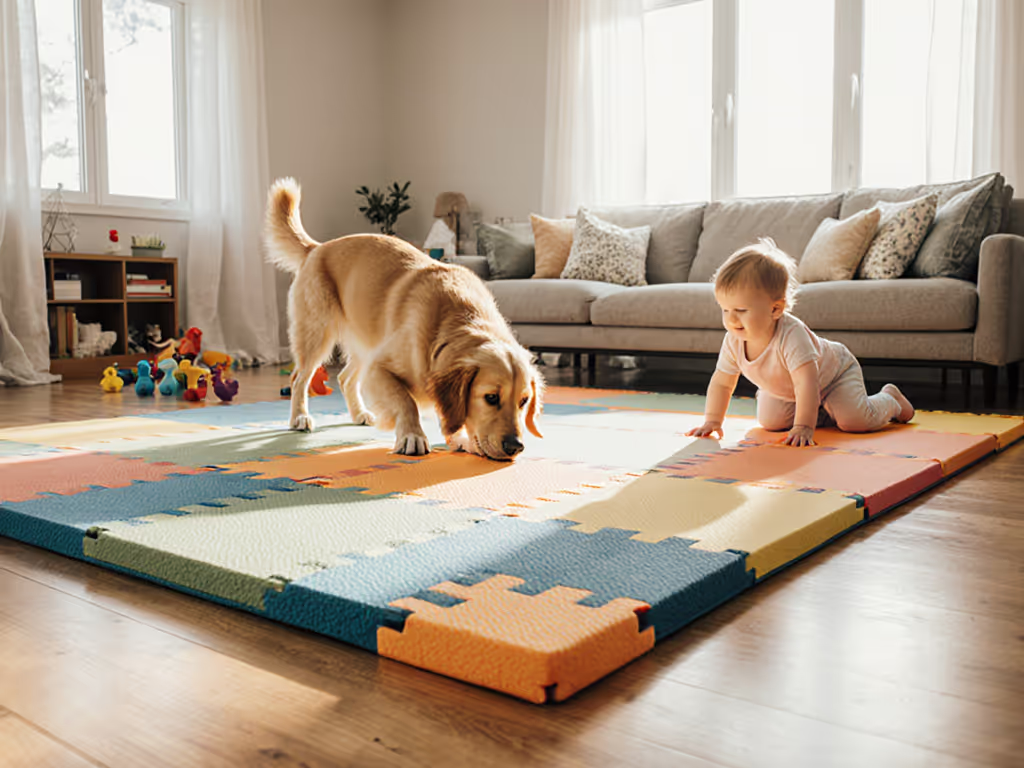
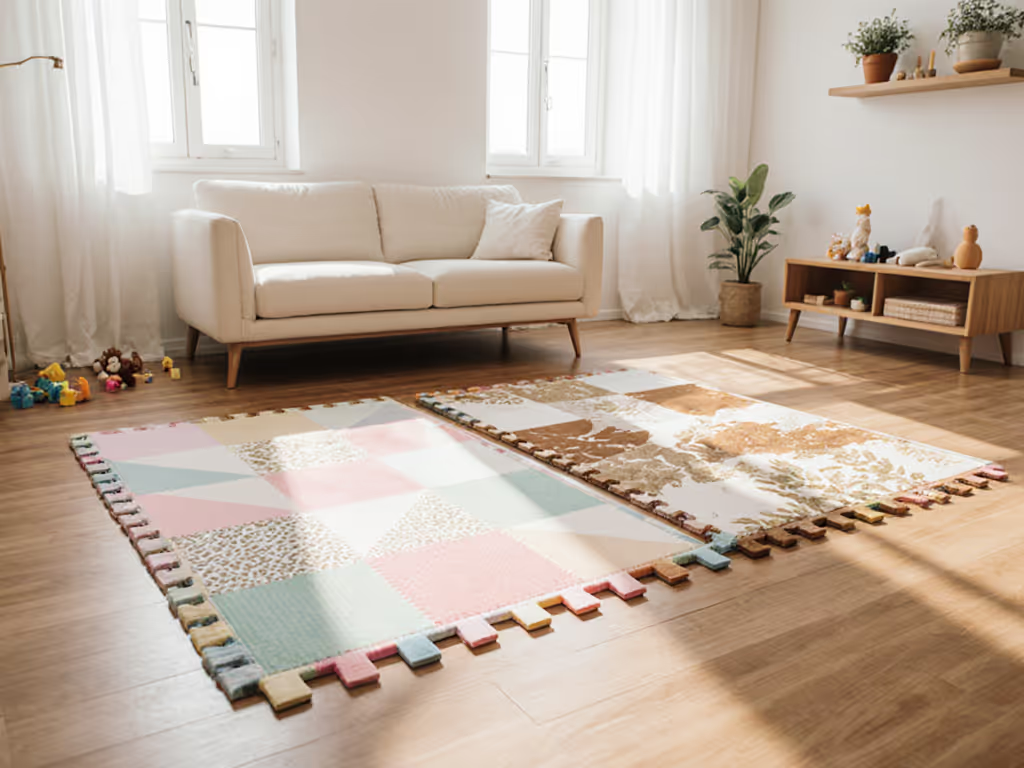
The Infantino Twist & Fold addresses a key pain point: space-constrained parents who need to scale footprint without committing to an oversized permanent mat. This interlocking foam tile system starts compact (2-4 tiles) and expands as your twins grow and need more independent rolling space.
Footprint flexibility: Start with 2 tiles (≈24" × 48"); expand to 4 (≈48" × 48") or 6 (≈48" × 72")
Cost per tile: ~$0.92/month with typical replacement assumptions over a 24-month window; modular expansion keeps per-tile cost predictable
Storage advantage: Remove tiles to fit under a sofa or closet shelf; no bulky rolling
Cleanability: Individual tiles can be spot-cleaned or removed for targeted washing; reduces "mat graveyard" phase where bulky mats become immovable clutter after 8 months
Edge management: Interlocking edges minimize gaps but create pinch hazards if not supervised; edges can curl if exposed to sun or humidity, creating a minor tripping risk for cruising toddlers
Durability concern: Tiles can separate under vigorous toddler play or if the floor is uneven; lost tiles leave incomplete coverage
Material note: Most foam tiles (EVA or PE foam) lack premium certifications but are generally CPSIA-compliant. Check for non-toxic labels if chemical sensitivity is a priority.
Blissful Diary Playmat
Rated 10/10 in recent tests, the Blissful Diary combines a soft quilted fabric top with a non-slip rubber bottom. While not explicitly marketed for twins, its dimensions (≈40" × 50") and forgiving structure handle dual infant use reasonably well for younger, pre-mobile babies.
Material: Quilted polyester top; non-slip rubber base; no reported off-gassing
Cleanability: Machine-washable; a standout feature for messy households (pet owners, weaning-phase puree stains)
Price point: Often $40–$60, making it a low-cost entry if you later upgrade to a twin-specific mat
Trade-off: Softness and plushness come at the cost of firmness; less ideal for motor development (crawling, pulling to stand) as the mat compresses under weight
Storage: Lightweight and rolls compactly; ~4 lbs
Aesthetic: Available in neutral tones; quilted pattern reads "baby gear" rather than home décor
Okaytwins Twin Bassinet & Playard
For families still bridging newborn sleep with floor play, the Okaytwins Twin Bassinet & Playard adapts from two removable bassinets (first 3 months) into a single spacious playpen as twins grow. While not a traditional play mat, it solves the spatial puzzle of maintaining separate nap safety without multiple pieces of furniture.
Footprint: Compact bassinet mode (~40" × 30"); expands to full playard (~40" × 40") as bassinets are removed
Lifecycle advantage: Eliminates the need for separate bassinets plus a large playmat; "buy once, use longer" logic across 18-24 months
Storage constraint: The playard doesn't fold; a dedicated space is required if kept out, or disassembly/reassembly is needed for storage
Hybrid note: Not a replacement for tummy-time floor mats but a complementary solution for contained play and nap transitions
Dual-infant mats most commonly use EVA foam, polyethylene foam, or natural rubber blends. Understanding the differences matters, especially for chemical-sensitive households.
EVA (Ethylene-Vinyl Acetate) Foam
Polyethylene (PE) or Closed-Cell Foam
Natural Rubber Blends
When comparing a twin developmental play mat, don't rely on "non-toxic" marketing alone. Credible certifications include (see our non-toxic safety checklist):
Ask manufacturers for material specifications by layer (top, core, base) and for test reports, not just logos.
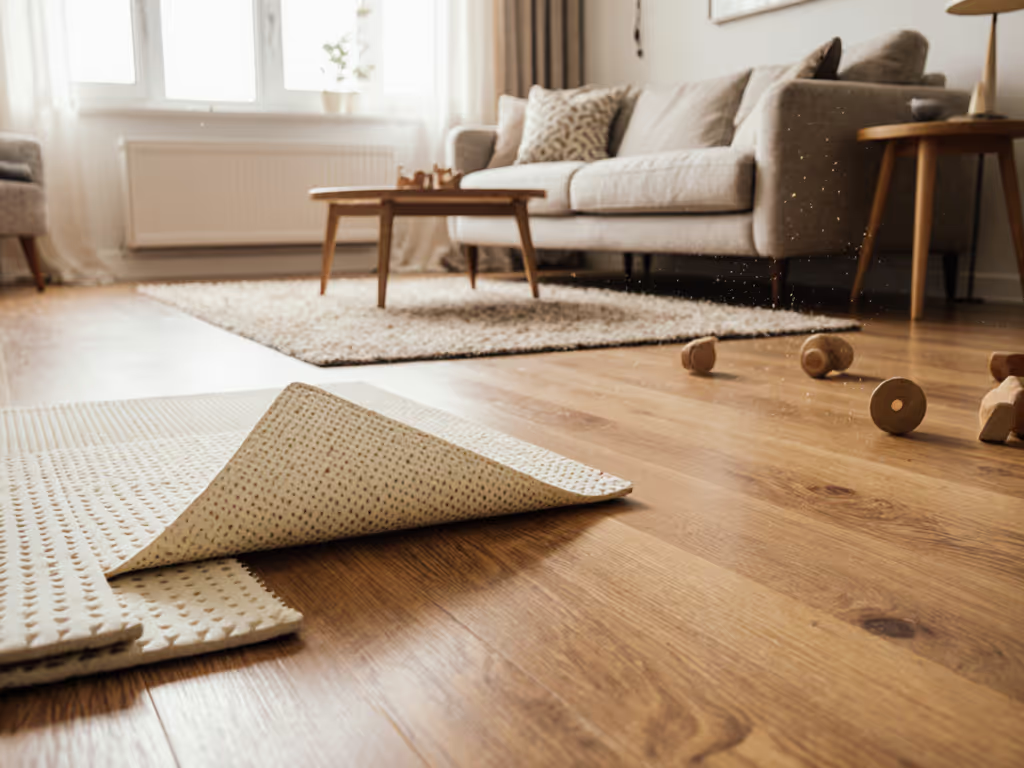
Twin mats must secure against two mobile bodies shifting weight and crawling. For floor-specific advice, see our hardwood and carpet compatibility guide to prevent sliding and scuffing. Test results vary by floor type:
| Floor Type | EVA Tile Mats | Rubber-Bottom Mats | Natural Rubber | Winner for Stability |
|---|---|---|---|---|
| Hardwood | Moderate; slides slightly under toddler weight | Excellent; grips reliably | Excellent | Rubber or natural |
| Laminate | Moderate; stack tiles slightly offset to reduce sliding | Good; use non-slip mat liner if concerns persist | Excellent | Rubber or natural |
| Low-pile carpet | Good; interlocking reduces bunching | Excellent; compresses slightly | Excellent | Rubber-bottom or natural |
| Tile | Moderate; slippery unless griped | Excellent; especially on cool tile | Excellent | Rubber or natural |
| Radiant heat floors | Monitor; some foams compress or off-gas with warmth | Good; monitor adhesion of rubber base | Good; test for adhesion | Test before purchase |
Pro tip from space-constrained homes: A non-slip mat liner under a standard playmat adds ~$8-$15 and can prevent hourly repositioning. It's often cheaper than upgrading to a premium non-slip base.
A mat that doesn't fold or compress never earns its footprint if you live with guests, minimalist aesthetics, or regular furniture rearrangement. Compare foldable vs roll-up play mats to choose the fastest daily stow option.
Mats that meet these criteria:
Mats that don't:
Twin playtime means higher dirt, spill, and accident density. Cleanability directly impacts usable lifespan.
Machine-Washable (Blissful Diary)
Wipeable/Spray-Clean (Toddlekind, Tiny Love, Infantino)
Durability Under Twins:
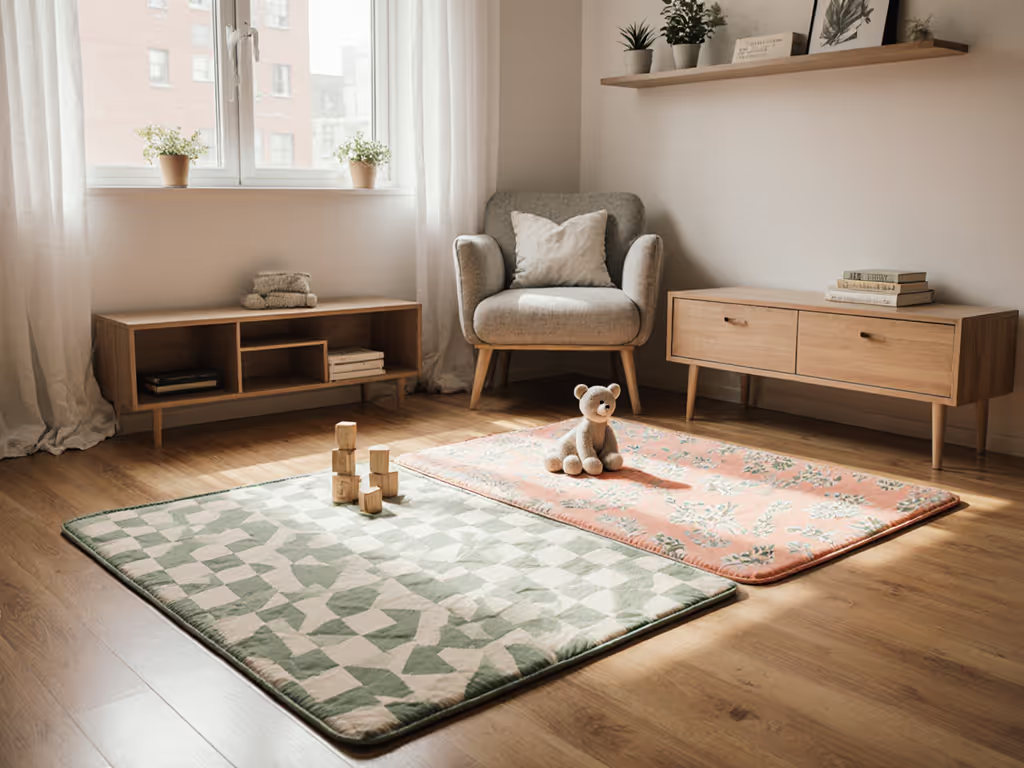
The best mat is the one your home can live with daily. This isn't vanity, a mat that clashes with your décor gets hidden, stored incorrectly, or replaced prematurely due to frustration.
Neutral palettes (Sage, Cream, Warm Gray)
Thematic/Learning Prints (Roads, Letters, Animals)
Reversible Options
Premium price tags are easier to justify when you calculate per-month cost across realistic use spans.
| Product | Typical Price | Estimated Lifespan (Months) | Monthly Cost | Cost-Per-Use (Daily) |
|---|---|---|---|---|
| Blissful Diary | $50 | 18 | $2.78 | $0.09 |
| Infantino Twist & Fold (4-tile set) | $60–$80 | 24 | $2.50–$3.33 | $0.08–$0.11 |
| Toddlekind Wander Classic | $95 | 24-30 | $3.17-$3.95 | $0.10-$0.13 |
| Tiny Love Super Mat | $44.99 | 18–20 | $2.25–$2.50 | $0.07–$0.08 |
Key insight: Toddlekind and Infantino cost more upfront but justify the spend through durability, aesthetics, and faster setup/cleanup (reduced friction = higher daily use). Conversely, Blissful Diary's machine-washability extends its lifespan in high-mess households, lowering per-month cost below its initial price point suggests.
There is no single "best" twin play mat, the choice depends on your constraint hierarchy. Here's the framework:
A space-efficient twin play surface isn't a luxury, it's a lever for reclaiming your home while keeping two babies safe and developmentally engaged. The right mat is the one that fits your floor dimensions, cleans fast enough for your mess tolerance, stores compactly on your worst days, and looks intentional in your space.
Start by measuring your dedicated play zone (in inches, square inches are a budget). Next, identify your constraint: budget, storage, aesthetics, or durability. Then cross-reference that hierarchy against the mats outlined here. Pay attention to certifications, weight, fold time, and post-stow footprint. Read owner reviews on real-world durability, especially on your floor type and climate.
Buy once, use longer. Your twins will roll, crawl, cruise, and toddler-play on this mat for 18-30 months. A $95 mat is $3.95 a month if it holds that timeline. A $45 mat is $2.50 a month if it lasts, or $7.50 a month if you rebuy at month 9 because the surface peeled. The math rewards thoughtfulness, not bargain-hunting.
Your home is small. Your twins are small. But their need for safe, clean, beautiful floor space is not negotiable. Choose a mat that respects all three constraints, and you've solved a problem that keeps working across milestones, from tummy time through toddler chaos and beyond.