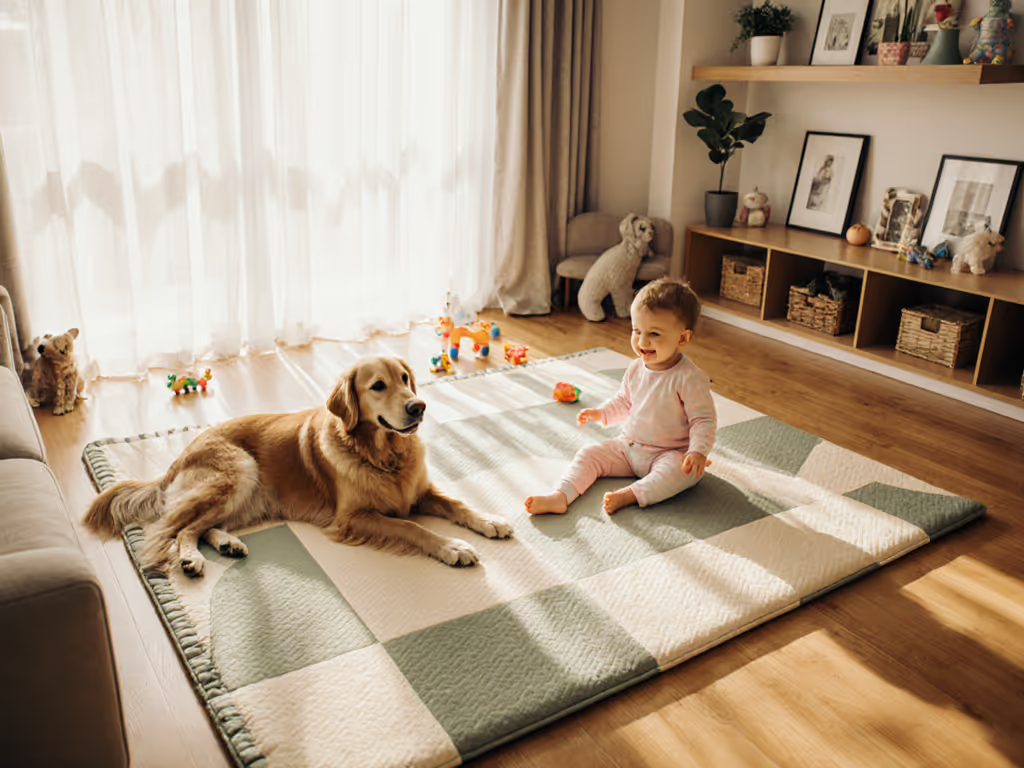
Pet-Friendly Play Mat Comparison: Safest Picks for Pets & Babies
25th May•14 min read
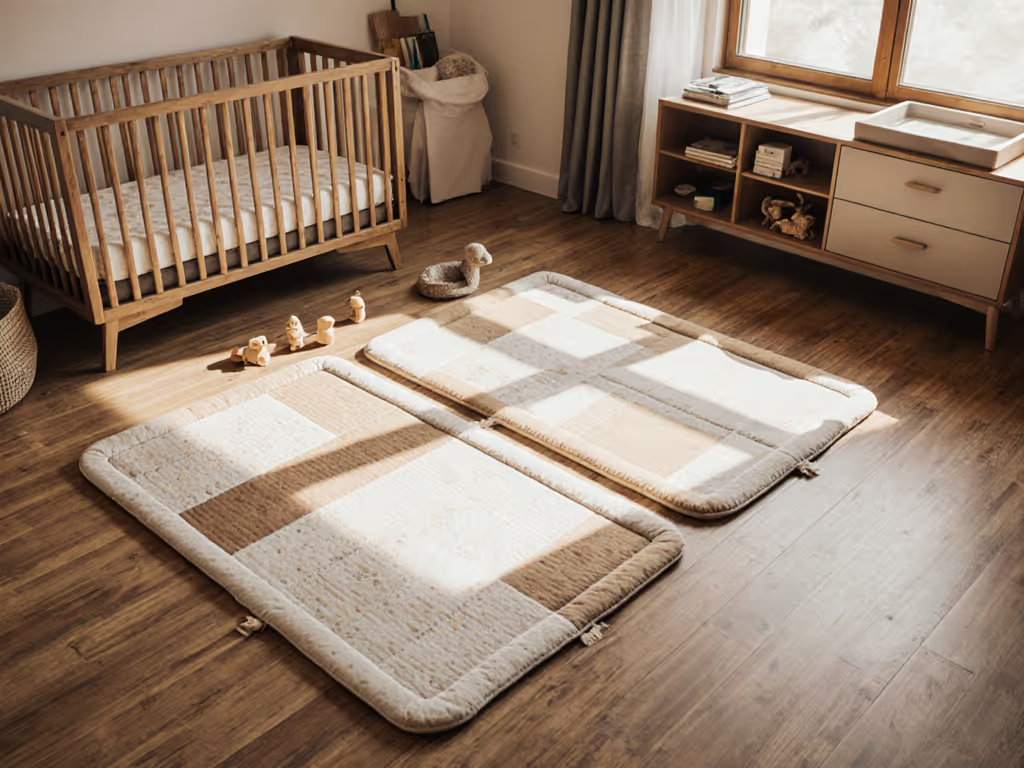
Choosing the right twin play mat comparison requires balancing safety, durability, and honest cost-per-use math - not just sticker price. If you're living with two babies under 36 inches of mat width and hardwood floors, the stakes for a poor choice are real: slip hazards, compression damage within months, and the creeping frustration of owning gear that doesn't earn its footprint.
I've learned this the hard way. Years ago, we cycled through three budget mats in six months: corner curl on one, cracked foam on another, and clutter that triggered daily sighs. That pattern shifted when I built a simple spreadsheet tracking price per month, warranty terms, and realistic lifespan. One durable upgrade replaced all three and still resold for half its original price. That experience shaped how I evaluate mats now - not as a purchase, but as a lifecycle decision.
This guide walks through the best play mat for multiples in the 2026 market, with transparent assumptions, real-world space ROI calculations, and the trade-offs each mat forces you to accept.
A single-baby mat often fails twins for one overlooked reason: babies move in different trajectories. Rolling, crawling, and learning to pull up don't happen on cue. Research analyzing 127 parent reports from twin-focused forums found that mats under 36 inches wide create unsafe head-to-toe overlap during early mobility phases, while mats larger than 48 inches become cumbersome in apartments where renters can't anchor them to walls. For apartment layouts and footprint comparisons, use our play mat size guide for small spaces.
Price per month beats sticker price for real-world value.
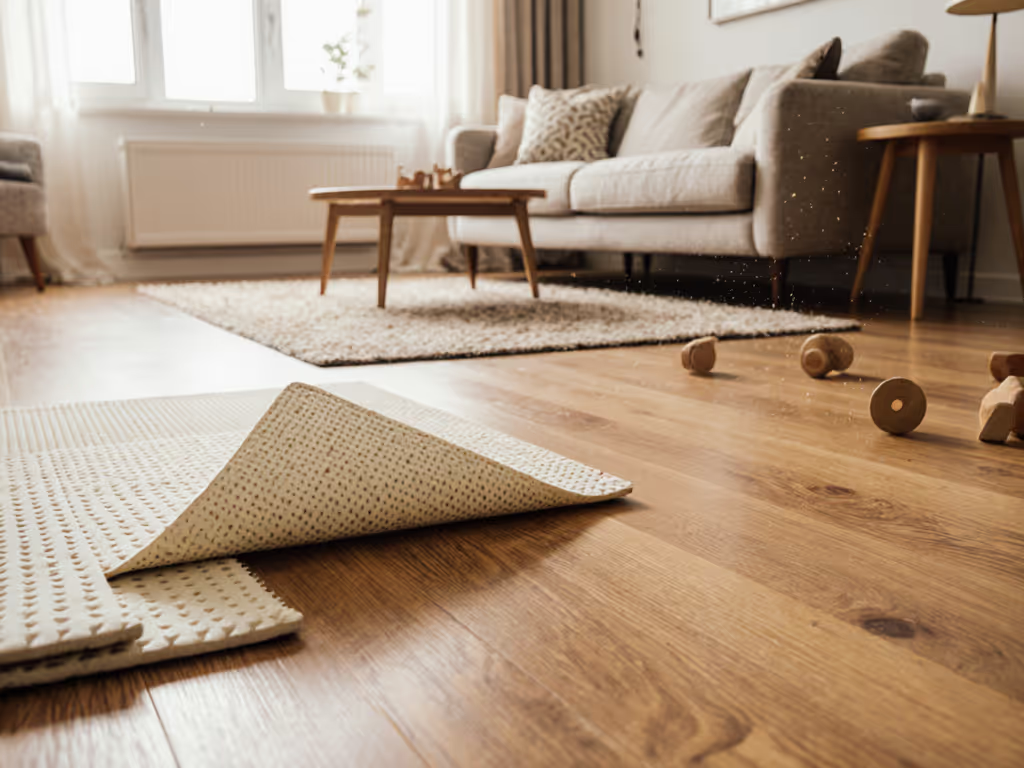
For a simultaneous twin play mat, the material lifespan and slip resistance matter as much as dimensions. On hardwood or laminate floors, a mat without textured rubber backing becomes a skating rink the moment a 9-month-old pulls to stand. Get floor-specific recommendations in our hardwood and carpet compatibility guide. Below are the five top contenders, evaluated for durability, space efficiency, and honest resale potential.
--
Best for: Parents who plan ahead and clean regularly; rearrangeable space
Key specs:
Why twins benefit: Create separate color-coded play zones to reduce toy conflict. Add tiles only when toddlers need more crawling space, no bulky single mat to navigate around.
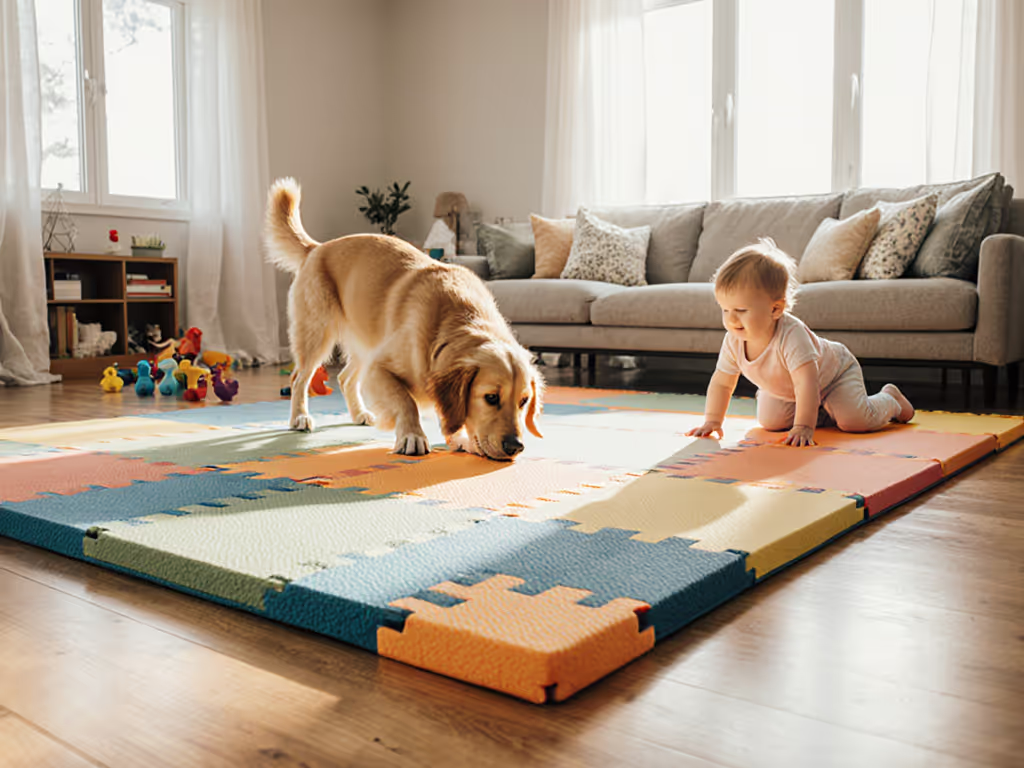
Durability reality: The biggest variable is your cleaning discipline. For material-by-material upkeep, see our play mat cleaning guide. EVA foam tile edges can curl if exposed to humidity without regular care. Pet owners report tiles shift under claws; some babies chew edges (non-toxic, but annoying). Lost tiles cost $3-5 each; replacement bulk discounts are uncommon.
Hardwood compatibility: Mandatory rug pad underneath, adding $15-30 to the true cost. Without it, tiles slip under foot traffic.
Lifecycle math:
Honest trade-off: Superior adaptability, but edge maintenance and tile loss create hidden friction. Not truly "space efficient" unless you commit to permanent placement and weekly upkeep. Excellent for design-forward parents who enjoy the modularity puzzle; frustrating for those who want to "set and forget."
--
Best for: Renters; frequent lifestyle shifts; compact apartments
Key specs:
Why twins benefit: The kinematic fold means guests arrive and the mat vanishes into a closet. Detachable accessories let you create two separate play zones if babies are developmentally staggered (e.g., newborn on flat mat, crawler on bolster side). The 48" length accommodates simultaneous tummy time without head-to-toe compression.
Durability reality: At 0.5" thick, it's adequate for newborns and early crawlers, but not ideal for active 12+ month twins throwing themselves around. The foam is forgiving, not protective. The bolster attachment degrades after 18-24 months of daily use; replacement parts are difficult to source.
Hardwood compatibility: Thin foam + slippery backing = non-slip rug pad required. Folding introduces creasing that can trap moisture; keep the disk open to air-dry between uses.
Lifecycle math:
Honest trade-off: Unbeatable for portability and lifestyle flexibility, but sacrifices durability and cushioning depth. Best viewed as a transitional mat (newborn-to-crawler), not a marathon play surface. Ideal if you plan to upgrade at 18 months anyway.
--
Best for: Families committing to permanent nursery/playroom placement; durability over flexibility
Key specs:
Why twins benefit: The 1.25" depth provides real cushioning for crawling, pulling to stand, and inevitable tumbles. Textured backing eliminates the rug-pad tax. Positioning vertically along a wall uses only 36" of floor width while the 72" length accommodates two babies rolling in different directions.
Durability reality: This mat is dent-prone if you stack strollers or furniture on it - compression marks are irreversible. The closed-cell foam resists moisture better than open-cell, reducing mold risk in humid climates. However, machine-washable claims are misleading: at 4+ lb, drying requires 3+ cycles and risks mildew if air circulation is poor. Spot-cleaning or professional cleaning works better.
Hardwood compatibility: Excellent. The textured backing grips without adhesive residue. No rug pad needed - a rare win.
Lifecycle math:
Honest trade-off: Stationary durability champion, but inflexible space-wise. Not foldable; takes 15 minutes to position. If your nursery layout is fixed for 2+ years, this is high-value. If you move, renovate, or downsize in that window, you'll resent its bulk.
--
Best for: Budget-conscious families; aesthetic versatility; apartments with modest space
Key specs:
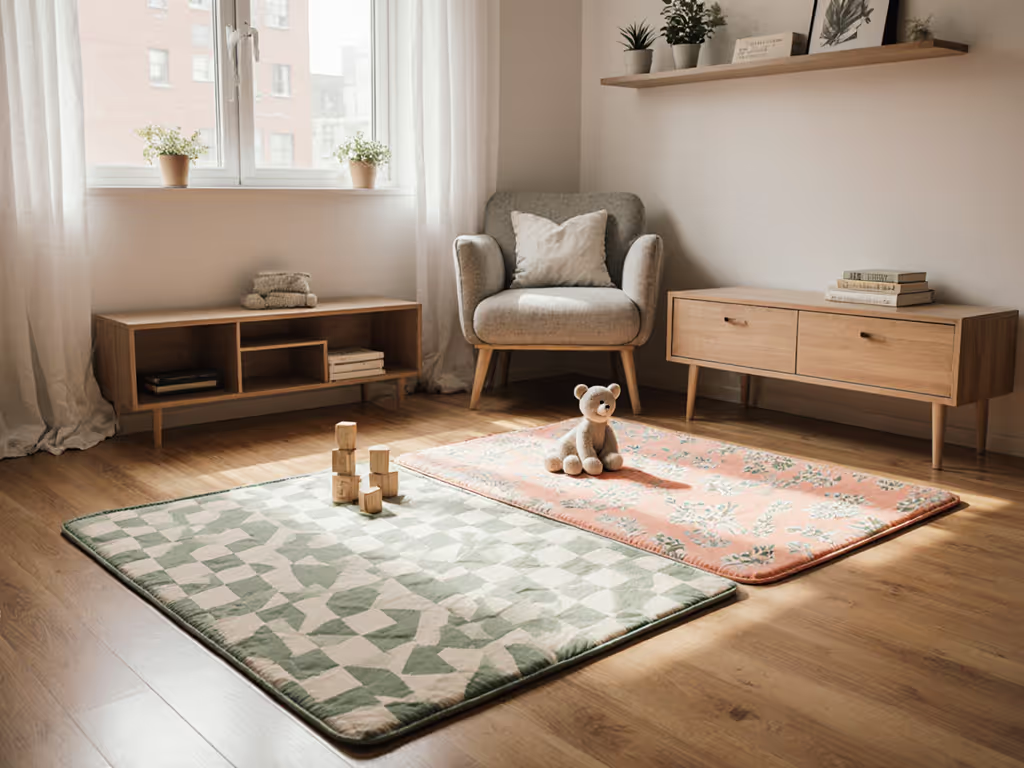
Why twins benefit: The 36" width is optimized for side-by-side newborns and early crawlers. Reversible design (world map on one side, modern patterns on the other) appeals to design-conscious parents who don't want bright kiddie clutter visible. Lightweight enough for one adult to manage setup daily.
Durability reality: Modest padding and lighter foam mean this mat feels less protective for active toddlers. Reports indicate slightly less durability than competitors at similar price points. Edge fraying can occur after 18-24 months of regular use, and the non-slip backing is thinner than premium options.
Hardwood compatibility: Non-slip backing is present but not as secure as textured rubber. A thin rug pad underneath is recommended for confident pulling-to-stand phases.
Lifecycle math:
Honest trade-off: Solid for the budget-conscious household that values aesthetics and portability but is willing to accept thinner padding. Not the durability workhorse, but far above the "mat graveyard" phase mats that collapse after 8 months. A smart compromise if you're upgrading from cheaper tile mats.
--
Best for: Mess-prone phases (spit-up, food exploration); frequent travel; multi-surface homes
Key specs:
Why twins benefit: The wipe-clean top layer is genuinely fast for puree explosions, spit-up, and diaper blowouts - no stain anxiety. Lightweight design means you can move it between rooms or even to grandparents' homes without frustration. Reversible patterns (cute animal/modern prints) let parents rotate aesthetics when tired of one side.
Durability reality: The wipe-clean coating trades some coziness for practicality. Padding is modest (0.375"), so this is better for younger twins (newborn–12 months) than for active crawlers and standers. The coating can peel if cleaned with abrasive scrubbers; alcohol-based wipes are safer. After 20+ months, many parents report the surface becoming sticky (coating degradation).
Hardwood compatibility: Wipe-clean coating can be slippery; rug pad recommended, especially for pulling-to-stand phases.
Lifecycle math:
Honest trade-off: This mat is pragmatically designed for the mess-central phase (months 4-14). The wipe-clean top layer earns its place if you're cleaning spit-up or pureed sweet potato multiple times weekly. For older toddlers with less unpredictable messes, the modest padding becomes a weakness. Excellent as a secondary mat for a playdate or feeding zone; not ideal as the primary surface.
--
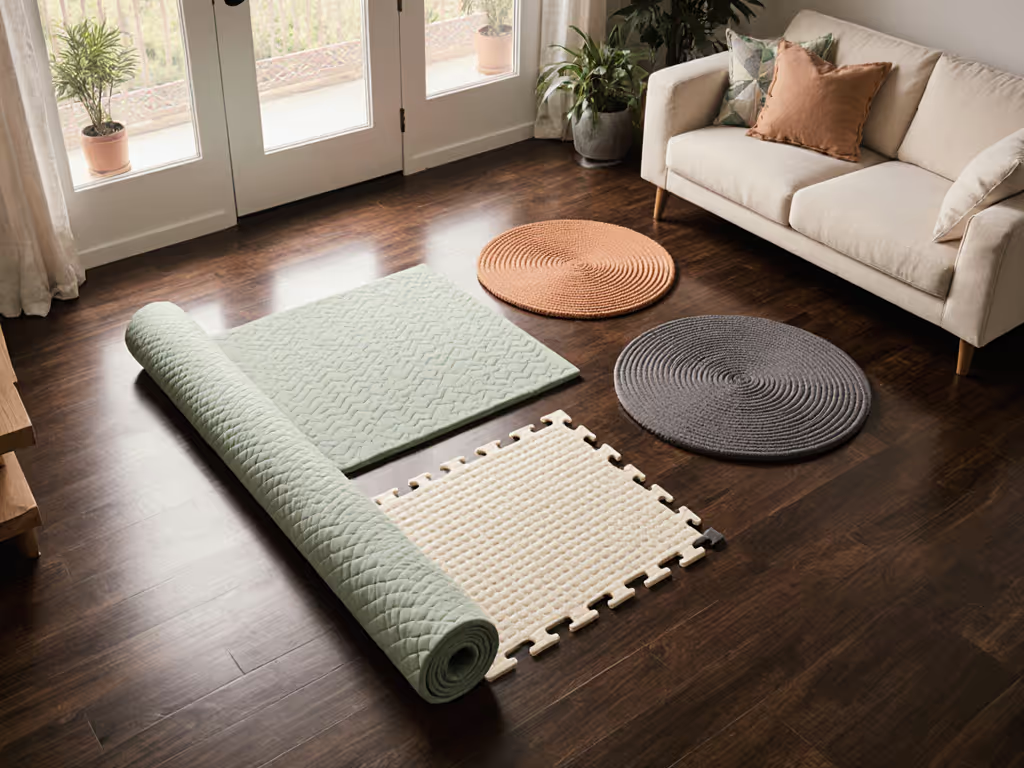
Each material category produces different failure modes in twin households. Understanding this prevents expensive mistakes. If you’re deciding between common foams, our EVA vs TPU comparison breaks down safety, durability, and cleaning in detail.
EVA Foam Tiles: Lightweight, modular, affordable. Downsides include edge curl on hardwood (requires rug pad), off-gassing odor (fades in 1-2 weeks, but problematic in small apartments), and tile separation under foot traffic. Best for long-term, intentional setups.
Closed-Cell Foam (single-piece mats): Superior durability, moisture resistance, and non-slip backing. Downsides include bulk, irreversible compression dents, and difficulty cleaning (washing risks mildew). Best for committed placements and families who prioritize cushioning.
Wipe-Clean Coated Foam: Fast cleanup and travel-friendly. Downsides include modest padding, coating degradation over time, and slipperiness on hard floors. Best for younger babies and families prioritizing cleanup speed over long-term cushioning.
Natural Rubber/Cork Hybrids: Sustainable appeal but premium pricing ($150+). Better suited for single-baby or toddler-only households due to higher cost-per-month and less research on twin-specific durability.
--
The research is clear: mats under 30 inches create unsafe head-to-toe overlap during newborn co-tummy time (critical for airway awareness); mats over 48 inches become difficult to position in apartments without anchoring. The 30-36 inch range strikes the safety and space balance.
Scenario 1: Newborn-to-6-Month Phase Babies need side-by-side positioning without airway compression. A 30-36 inch width is minimum; 48+ inches is overkill. Consider the Infantino (48" length, 24" width) or Skip Hop (36" width) for this phase.
Scenario 2: 6-18 Month Mobility Phase Rolling, crawling, and pulling to stand demand more length (36-60 inches) and secure non-slip backing. Thicker padding (0.75+ inches) becomes important. VIVIDVIBE or closed-cell mats perform better here.
Scenario 3: 18+ Month Toddler Phase If your mat survives this long, it's earning its lifecycle value. Active play, toy throwing, and furniture pulling tax even durable mats. Modular mats (ProSource) offer the flexibility to repurpose or shrink if the mat nears end-of-life.
--
Hardwood/Tile Floors: Non-slip backing becomes non-negotiable. Factor in $15-30 rug pad costs and adjust price-per-month accordingly. VIVIDVIBE and ProSource (with pad) still outperform on hardwood.
Small Apartments (Under 800 sq ft): Foldability and storage depth matter more. Infantino's 10" disk compresses better than a bulky mat stashed under furniture. Weight also matters: can one adult move it daily? For compact layouts and under-sofa storage picks, see apartment-friendly play mats.
Pet Owners: Closed-cell foam (VIVIDVIBE) resists claw scratches better than EVA tiles, which trap pet hair in crevices. Wipe-clean mats (Nuby) simplify pet-related messes.
High-Humidity Climates: Closed-cell foam dries faster than open-cell. Avoid mats that require machine washing in humid regions (mildew risk). EVA tiles can absorb odors if not dried immediately after spills.
Frequent Movers/Renters: Lightweight, foldable mats (Infantino, Skip Hop) justify higher price-per-month due to portability. Investing in a heavy, stationary mat becomes a sunk cost if you relocate.
Design-Conscious Households: Reversible or neutral patterns (Skip Hop, Nuby, VIVIDVIBE) avoid the "kiddie blast zone" aesthetic that clashes with adult decor. This psychological win has real value if you're spending 3+ hours daily on the mat.
--
Durable mats retain 30-50% resale value; cheaper mats often don't sell (not worth shipping). If you plan to resell rather than donate, factor this back into your price-per-month math.
Example: A VIVIDVIBE mat costs $32 initially and resells for $12 (37% recovery). True net cost = $20 over 24 months = $0.83/month. This makes premium durability mats competitive on lifecycle math, even if sticker price seems high.
ProSource tiles rarely resell as a set (bulk listings undercut); Skip Hop and Infantino mats have stronger secondary markets because aesthetics matter to second buyers.
--
There is no single "best" mat for all twin households. Your choice depends on whether you prioritize modularity, durability, portability, or aesthetics - and how long you're willing to commit to one layout.
Choose ProSource Puzzle Tiles if: You plan to stay in your home for 2+ years, enjoy weekly maintenance, and want maximum flexibility to expand or reconfigure. Best lifecycle value at about $3.50/month with discipline. Resale risk is high; treat it as a keeper investment.
Choose VIVIDVIBE Premium Foam if: You're committed to permanent playroom placement, have hardwood floors, and want the cushioning depth that lasts through active toddlerhood. True cost per month (about $3.95) and resale recovery (35-40%) make this a solid durability choice. Best for families planning 2-3 years of continuous use.
Choose Infantino Twist & Fold if: You're a renter, value portability over deep cushioning, and see the mat as an 18-20 month transitional tool. High resale potential (40-50%) and unbeatable storage recover cost quickly. Best for lifestyle flexibility.
Choose Skip Hop if: You want modern aesthetics, modest budget, and reliable mid-range durability without the bulk of stationary mats. Reversible design and 4-5 year brand loyalty among resellers make this a safe "I don't regret it" choice. Price per month (~$4.00) is fair for the design value delivered.
Choose Nuby if: You have younger twins (newborn–12 months), prioritize easy cleanup, and plan frequent travel. The wipe-clean surface earns its place in the spit-up and food-exploration phase. Resale potential is lower; accept this as a phase-specific tool rather than a long-term investment.
Price per month beats sticker price for real-world value.
The parents who report highest satisfaction aren't those who bought the cheapest mat or the most expensive. They're the ones who honestly assessed their space, floor type, lifestyle stability, and cleaning tolerance - then chose the mat that matched. That clarity prevents the regret cycle: buying cheap, wearing out, buying again, and wondering why your closet is full of unusable mats.
Build a simple spreadsheet for your situation. Include initial cost, realistic lifespan (not manufacturer optimism), rug pad or add-on costs, expected cleaning or replacement parts, and resale recovery. Divide the net cost by months of use. The winner will likely surprise you, and you'll own your choice rather than resent it.