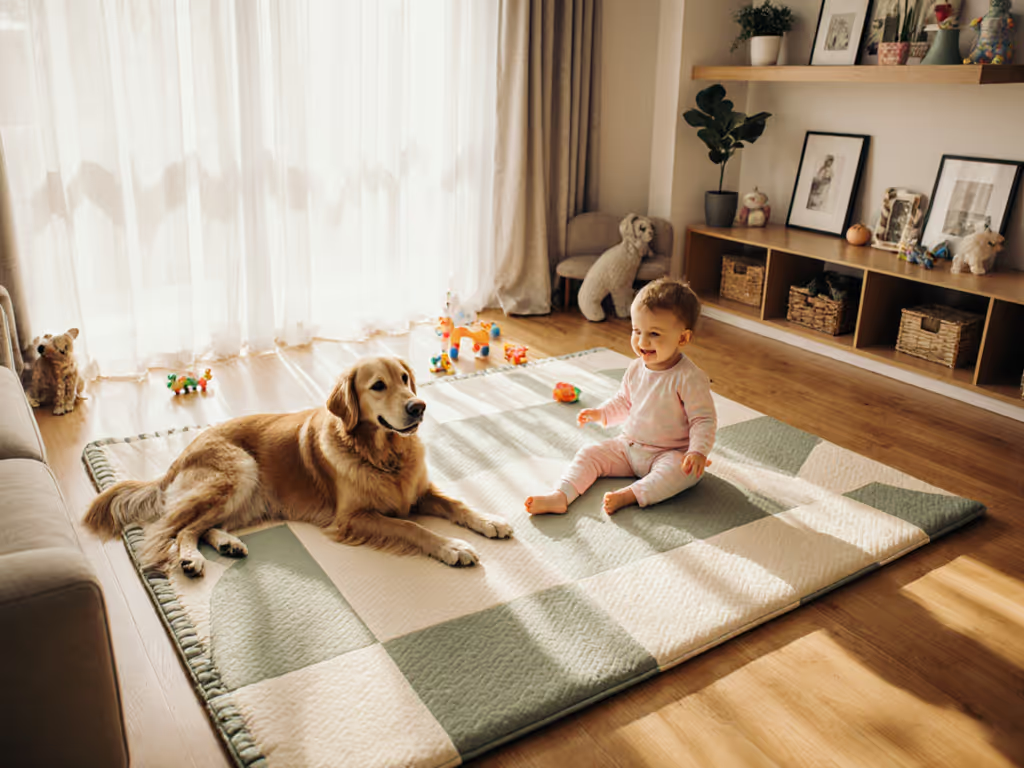
Pet-Friendly Play Mat Comparison: Safest Picks for Pets & Babies
25th May•14 min read
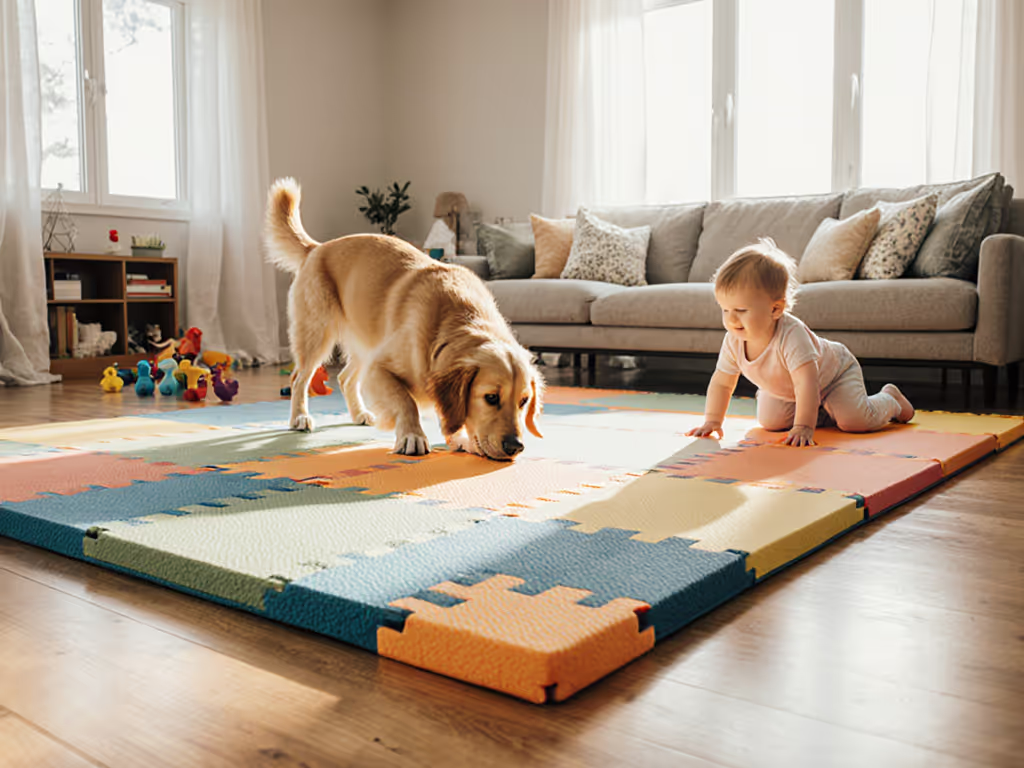
If you're choosing a pet-friendly play mat for a home that doubles as both a nursery and a pet zone, you already know that one mat must satisfy two very different sets of demands. A newborn needs cushioning for tummy time; a toddler needs stability to pull to standing; a dog needs claw resistance; a carpet-climbing cat needs grip. The result: most parents and pet owners face a disorienting matrix of materials, thicknesses, and construction claims. This guide cuts through the noise by comparing the materials and firmness profiles that actually hold up across multi-species play mat scenarios, with floor-type specifics and durability metrics that matter on real hardwood, tile, and carpet.
Comfort is measurable. Thickness alone is a blunt instrument; what matters is how a mat distributes force, resists compression, and stays put on your floor.
The surface you see on a play mat is rarely the whole story. Most modern mats layer a top face material over a cushioning core, then seal it with a bottom grip layer. Each layer makes trade-offs. For a safety-first overview of common play mat materials, see our materials safety guide.
Top-face materials determine cleanability, scratch resistance, and how baby skin feels. Closed-cell polyurethane or PVC offers fast cleanup (spills bead and wipe away), but can feel plastic-like. Natural rubber or OEKO-TEX-certified fabric tops feel warmer and more breathable, but absorb moisture if sealed poorly, trapping odor and pet smells over time.
Cushioning cores determine firmness and noise dampening. EVA foam (ethylene-vinyl acetate) is lightweight, bouncy, and forgiving, often too soft for motor development, but excellent for noise. Closed-cell crosslinked polyethylene is denser, absorbs impact without sinky compression, and resists odor penetration. Higher-density foams (measured in kg/m³) compress less under repeated weight; a 50 kg/m³ foam will retain its shape better than 30 kg/m³ after a year of daily use and pet paws.
Bottom grip layers determine slip resistance and floor safety. Textured rubber, thermoplastic polyurethane (TPU), or PVC bumps create friction, but thick bumps can catch carpet fibers or roll on hardwood. Thin, evenly distributed texture often outperforms chunky dots.
A mat claiming "1.3 cm (½ inch) thick" that uses 25 kg/m³ EVA will feel pillowy and compress under a toddler's knees; the same thickness in 50 kg/m³ closed-cell foam feels supportive and resilient. This is why comparing metrics, not just eyeballing thickness, matters.
Firmness: Medium to firm (when density ≥45 kg/m³); excellent compression resistance.
Cushioning: Absorbs shock without bottoming out; joints feel stable, not sinky.
Cleanability: Non-porous; spills sit on surface, making mop-up fast. Pet odors do not penetrate. Low stain risk if wiped promptly.
Claw Resistance: Moderate. Fine for most dogs; heavy claws or extended playtime may create surface dimpling over years. Not ideal for very large or high-energy breeds.
Floor Compatibility: Works with hardwood, tile, and low-to-medium pile carpet when paired with a textured TPU base. Does not slip on freshly waxed wood but may migrate on very smooth finishes. Radiant heat safe.
Noise Damping: Good; absorbs 8 to 12 dB of impact noise, noticeably quieter than thin foam.
Lifespan: 4 to 6 years of daily use; may show minor compression dents in high-traffic zones, but edges rarely peel.
Price-Per-Month (4-year use): Mid-range; ~$0.30 to $0.50/month.
Firmness: Soft to medium; compresses under pressure; may feel unstable for standing play.
Cushioning: Very forgiving; excellent for rolling and newborn tummy time. Too bouncy for toddler balance work.
Cleanability: Porous; spills and pet accidents seep into the foam if not sealed with a top layer. Odor absorption risk is high. Stain-prone.
Claw Resistance: Poor. Dog claws pierce and chunk EVA easily. Not recommended for homes with pets larger than 10–15 lbs or for very playful scratchers. Deciding between EVA and TPU? Compare them in our EVA vs TPU guide.
Floor Compatibility: Lightweight, so base may slip on smooth hardwood; often ships with thin rubber pads that may not grip tile well. Can trap moisture on carpet edges, risking mold in humid climates.
Noise Damping: Excellent; softness absorbs sound, but bounciness can create spring-back noise if a child jumps repeatedly.
Lifespan: 2 to 3 years; surface breaks down from UV and ozone in dusty homes; edges curl after 18 months if not protected.
Price-Per-Month (2-year use): Budget-friendly; ~$0.15 to $0.25/month, but faster replacement adds up.
Firmness: Medium; responsive. Slow return to shape (memory) gives a held, stable feel.
Cushioning: Balanced; absorbs shock but maintains support for motor development. Not too soft, not too firm.
Cleanability: Low porosity if sealed; more breathable than plastic, so sweat and spill edges dry quickly. TPE naturally resists odor. Hand-washing or a damp cloth works; machine-washing not recommended (can degrade seals).
Claw Resistance: Very good to excellent. Natural rubber and TPE are tough; claws leave marks but do not chunk or tear easily. Pet owners report 5+ years without visible claw damage.
Floor Compatibility: Excellent grip on tile and hardwood due to high friction. May bunch on low-pile carpet if base is too grippy; mid-pile and high-pile usually fine. Radiant heat safe but may soften slightly in very warm climates.
Noise Damping: Moderate; firmer than EVA, so more impact sound transmits. Still reduces noise by 5 to 8 dB.
Lifespan: 5 to 7 years; edges may whiten or crack if left in direct sunlight, but structural integrity holds.
Price-Per-Month (5-year use): Premium; ~$0.40 to $0.70/month, but lower replacement frequency justifies cost.
Works with your floor: Natural rubber and TPE are the most forgiving across hardwood, tile, and carpet (they grip without demanding adhesive backing or complex base layers).
I crawled beside our daughter on both sides of a seam, feeling the exact moment tile grout lines shifted the mat's contact point. The plush mat I'd chosen looked fine on hardwood but bottomed out on grout texture; a thinner, firmer mat spread impact better and didn't shift when she pulled up. This taught me that support is distribution, not just thickness numbers. For room-by-room recommendations on hardwood, carpet, tile, and vinyl, read our floor compatibility guide.
Slip Risk: High, especially on fresh wax or polyurethane finishes. EVA mats with thin rubber pads are notorious; closed-cell PE with a textured TPU base or natural rubber mats stay put.
Dent Risk: Furniture legs and heavy concentrated weight (e.g., baby bouncer frame) can indent soft foam. Firmer foams (≥50 kg/m³) or natural rubber resist dents. If denting occurs, it may or may not fade; closed-cell PE typically recovers partially; EVA does not.
Moisture Concern: Hardwood is sensitive. Choose a mat with a sealed base so spills do not seep underneath. Closed-cell PE or TPU-sealed EVA mats are safer. Avoid porous natural fiber mats without waterproof backing.
Recommended Profiles: Closed-cell PE (45+ kg/m³) with textured TPU base; natural rubber or TPE with sealed construction.
Slip Risk: Highest on glazed or polished tile. Seams and grout ridges create micro-slips. Dense, high-grip mats work best. Non-slip pads or double-sided gripper tape can help.
Grout-Line Integration: Uneven grout lines (deeper than 2 to 3 mm) will create pressure points and gaps under soft mats. Firmer cushioning distributes weight more evenly. Thin mats (< 8 mm) may telegraph grout texture to crawling babies.
Cleanability Ease: Tile is hard to damage, so aggressive mat cleaning (wet-vac, steam cleaner) is safe. Mats with sealed undersides won't trap moisture in grout.
Radiant Heat: Tile often has underfloor heating. Most foam and rubber mats are safe; confirm ≤60°C max operating temp with the vendor. Closed-cell PE and TPE tolerate heat better than EVA.
Recommended Profiles: Closed-cell PE (≥50 kg/m³) with thick, well-distributed TPU base; TPE or natural rubber for maximum grip and durability.
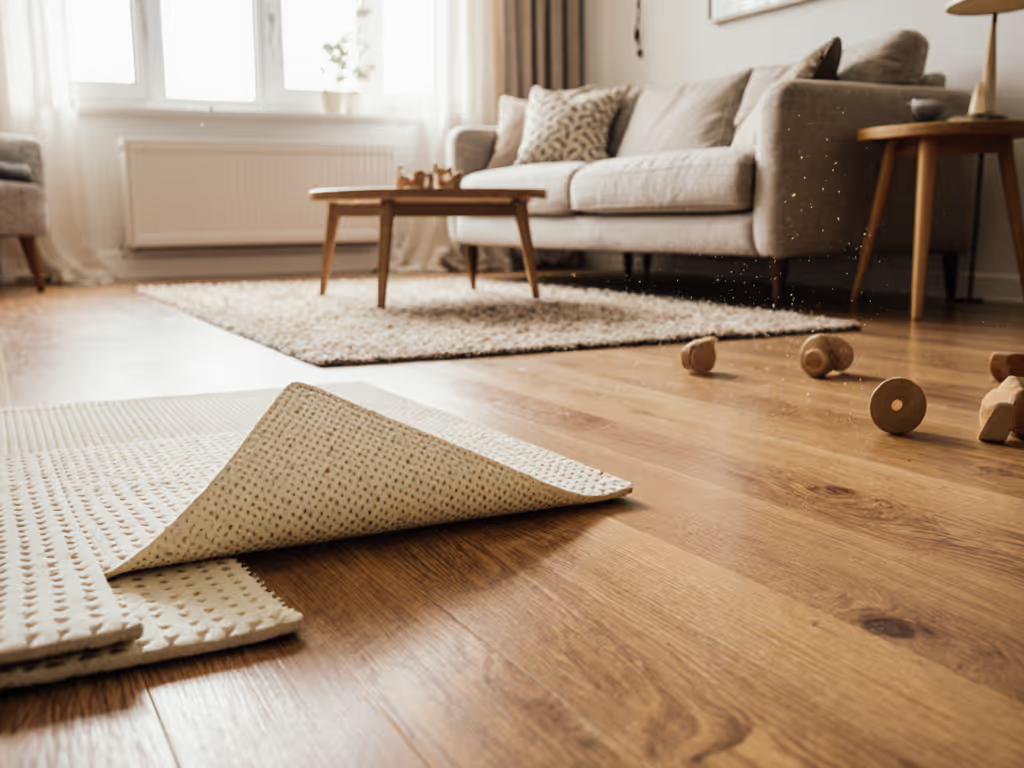
Slip Risk: Low if mat base is smooth; high if base has thick bumps (they catch fibers and create micro-rotations). Thin, even-textured grip works best.
Carpet Matting: Heavy mats on carpet for months risk matting down the pile underneath, creating a permanent indent. Thinner mats (8–12 mm) and occasional shifting reduce this risk.
Moisture Trap: Carpet holds moisture. Mats with sealed undersides prevent spills from wicking into carpet fibers. Avoid porous EVA on damp carpets (mold risk).
Vacuum Compatibility: Smooth-bottomed mats let vacuums run under edges. Chunky rubber dots can catch vacuum edges. If the mat has seams (tile-style), crumbs collect in crevices.
Recommended Profiles: Smooth-bottom closed-cell PE or natural rubber; avoid EVA unless top-sealed and used for short periods.
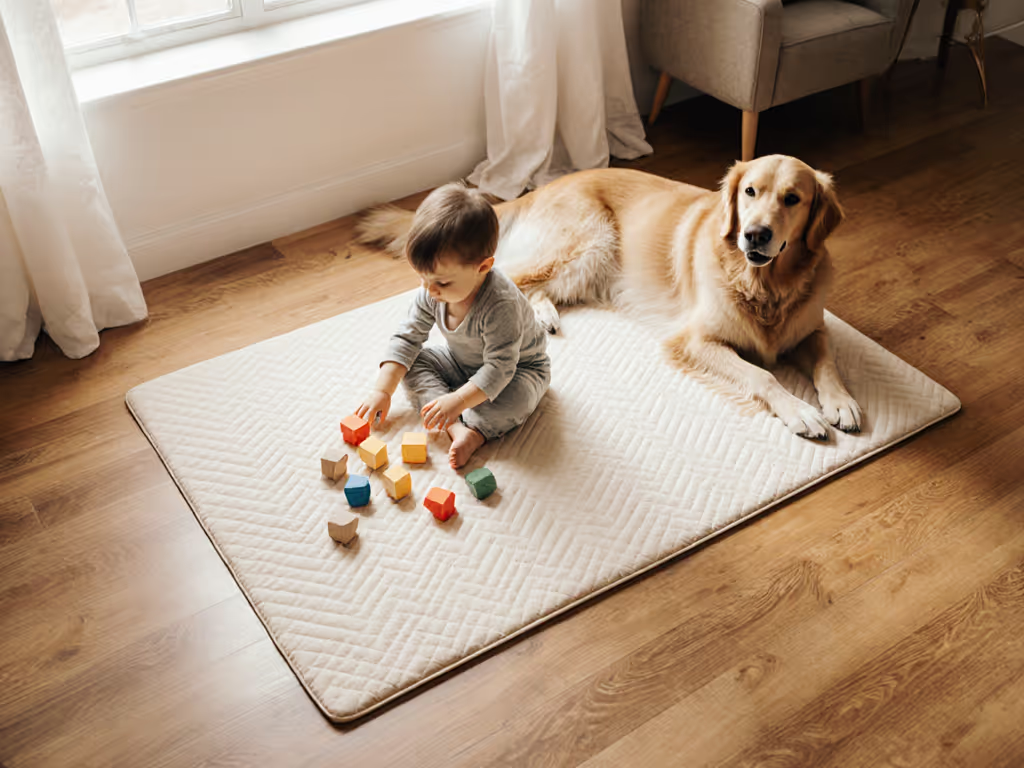
A pet-claw resistant play mat needs both top-face toughness and a core that doesn't crumble when scratched. Dogs clawing during excited play exert localized forces of 40 to 80 lb/in² (depending on size and nail sharpness). EVA foam capitulates; closed-cell PE and natural rubber defer. For pet-specific performance data, see our pet-friendly materials ranking.
Surface Durability Metrics:
Seam Integrity: Mats with glued or stitched seams are weak points. Pet claws at seam edges will separate layers faster than mid-panel. Welded seams or full-face construction (no visible seams) are more durable.
Compression Over Time: A mat used 8 hours/day for 4 years sees ~12,000 compression cycles. High-quality closed-cell PE (≥50 kg/m³) retains ≥80% of original thickness. Budget EVA foam may drop to 60% thickness, creating a sinky feel and reduced cushioning.
The difference between a mat you wipe weekly and one that smells like stale kibble and spit-up is material porosity and top-face sealing.
Best: Closed-cell PE with sealed PVC or TPU top. Spills bead. Pet accidents pool on surface. Mop or spray-and-wipe in seconds. Pet odors do not penetrate.
Good: Natural rubber or TPE with sealed construction. Slower dry time (~30 min on carpet) than plastic, but breathability prevents trapped moisture odor. Hand-wash or spot-clean recommended; avoid harsh chemicals.
Poor: Unsealed or top-layer-less EVA foam. Spills absorb. Pet urine soaks in and bonds to foam cells (enzyme cleaners help but rarely fully remove odor). Stains set after 24 hours.
| Material | Odor Absorption | Machine Washable | Spot-Clean Time | Pet-Friendly Durability |
|---|---|---|---|---|
| Closed-cell PE | None | No | 5 min | Excellent |
| EVA (sealed top) | Low-to-moderate | No | 15 min | Fair |
| EVA (unsealed) | High | No | 30+ min | Poor |
| Natural rubber | Minimal | No | 10 min | Excellent |
| TPE | Minimal | No | 10 min | Excellent |
Practical Do/Don'ts:
Thickness and firmness are not the same. A 20 mm mat made of soft EVA (25 kg/m³) feels thinner and softer than a 12 mm closed-cell PE mat (55 kg/m³). For a baby play mat shared with pets, the trade-off is real:
A parent choosing between a $180 closed-cell PE mat and a $80 EVA mat may feel the price pinch. Lifecycle math changes the view.
Scenario 1: Budget EVA
Scenario 2: Premium Closed-Cell PE
Over 4 years, both mats cost roughly the same, but the closed-cell PE mat means one purchase, one setup, and zero mid-milestone disruption. For renters and design-conscious parents, that continuity and aesthetic consistency (one mat, one look for 4 years) is worth the upfront price.
Storage and Portability: Most mats roll or fold to 50–60 cm lengths. Lighter mats (EVA, thin closed-cell PE) fit under a sofa or crib-side shelf. Heavier, denser mats (natural rubber, thick closed-cell PE) may require a closet. Weight matters in apartments: a 5 kg mat is awkward for daily on/off; a 2–3 kg mat is one-hand portable.
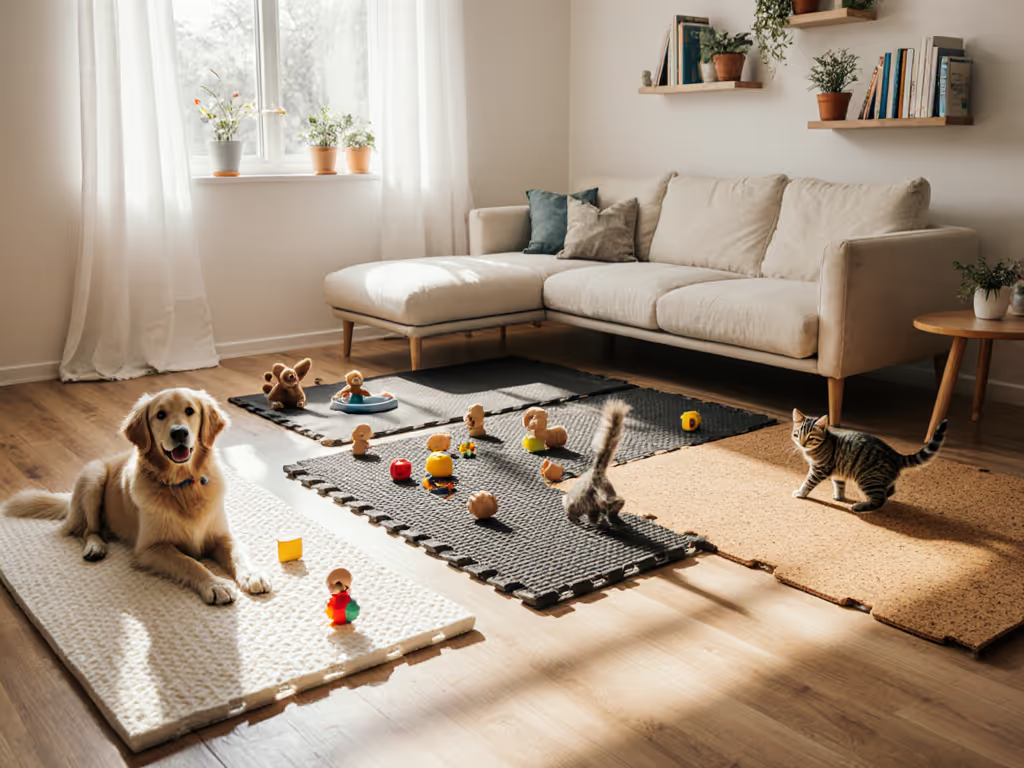
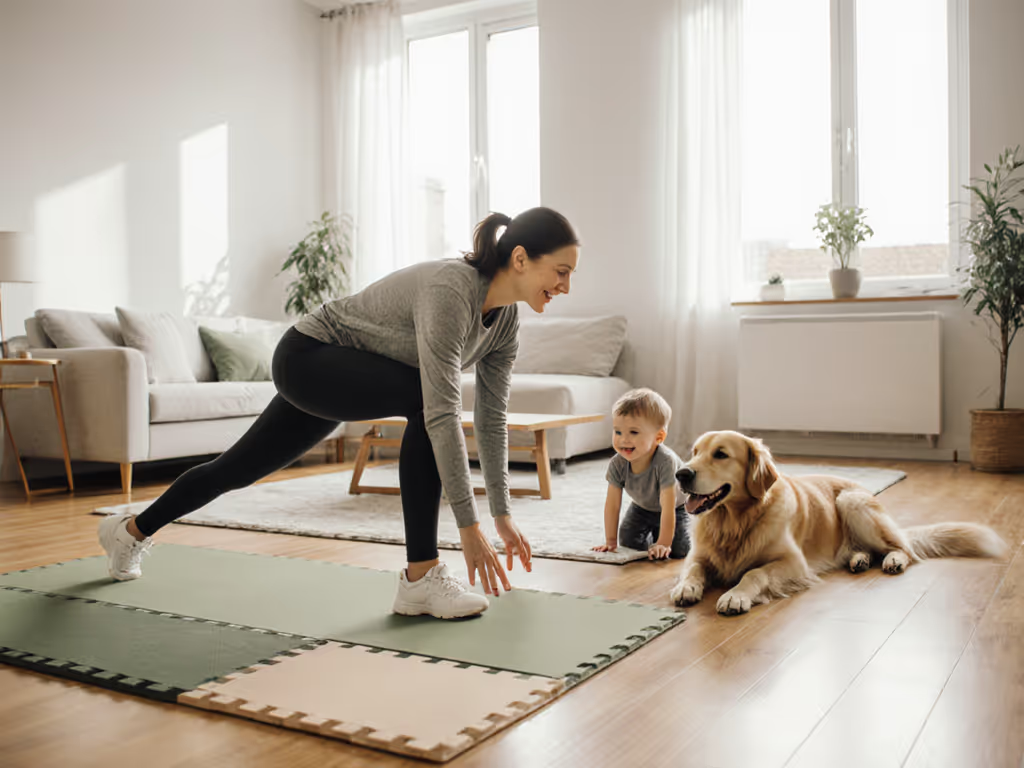
The best multi-species mats are reversible or adaptable. A mat that works for baby tummy time also works for pet nap zones, and a parent doing floor yoga or stretches on the same mat. This demands:
Closed-cell PE and natural rubber mats in the 10–15 mm range excel at this versatility. EVA mats often feel unstable under weight after a year of use.
| Priority | Best Material | Why |
|---|---|---|
| Budget, short-term use (< 2 years) | EVA with sealed top | Affordable, soft, good initial feel. |
| Long-term durability (4+ years) | Closed-cell PE (45+ kg/m³) | Resists compression, odor, claws. Best lifecycle value. |
| Pet owners, claw resistance | Natural rubber, TPE | Highest tensile strength; claws mark but don't chunk or tear. |
| Hardwood/tile floors, slip risk | Natural rubber, TPE | Excellent grip; responsive feel. |
| Noise-sensitive apartments | Closed-cell PE (thick), EVA | Dense PE absorbs 8 to 12 dB; EVA bouncy, so spring-back noise. |
| Aesthetics, minimal look | Sealed closed-cell PE or TPE in neutral tones | Can blend into modern interiors; no cushion-stitching seams visible. |
| Easy cleaning, spill-prone | Closed-cell PE or sealed TPE | Truly wipeable; spills do not soak. |
| Temperature/radiant heat safety | Closed-cell PE, TPE | EVA may soften; confirm ≤60°C. |
No mat is perfect for all priorities. Clarity on trade-offs empowers choice:
Framing these as deliberate choices (not regrets) makes the purchase satisfying.
Your next steps: Test mats on your specific floor type if possible. Ask vendors for samples, or visit a showroom where you can feel thickness and firmness firsthand. Measure your room and sketch mat placement (accounting for furniture, doorways, and storage space when rolled). Read third-party safety certifications (CPSIA, OEKO-TEX, Greenguard Gold) for materials transparency, not just marketing claims. And if you have pets and a baby, prioritize claw resistance and cleanability over softness; a mat that holds up to 4 years of dual use is worth the upfront investment.
The right mat works with your floor, adapts to your life, and earns its footprint from day one.