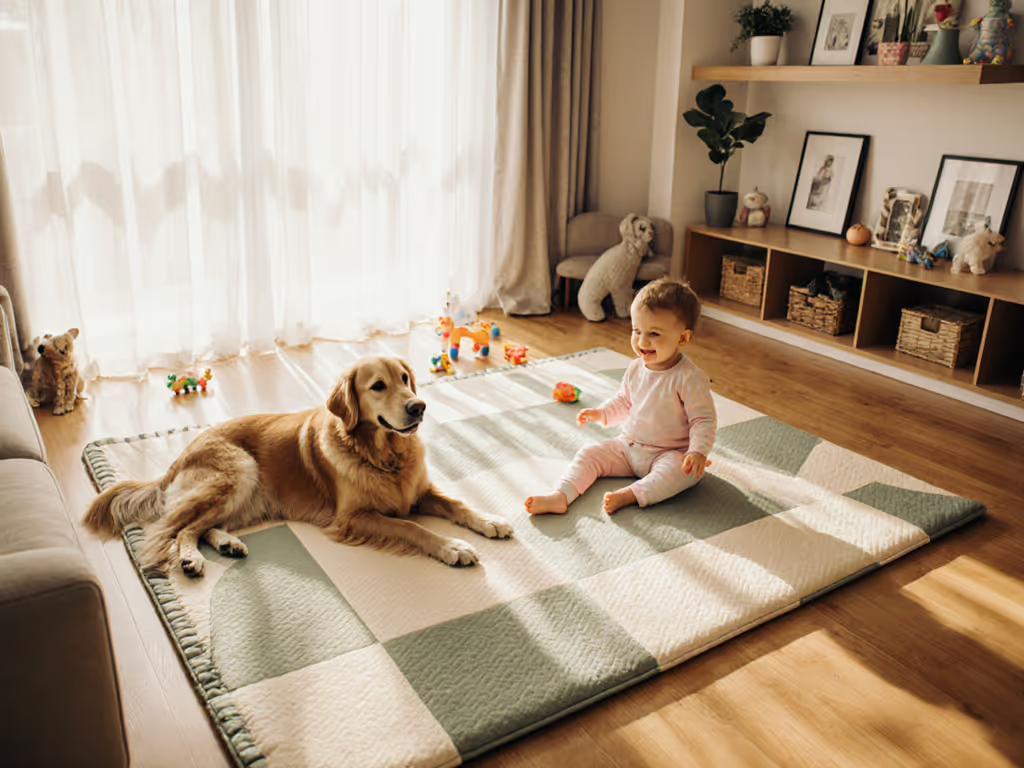
Pet-Friendly Play Mat Comparison: Safest Picks for Pets & Babies
25th May•14 min read

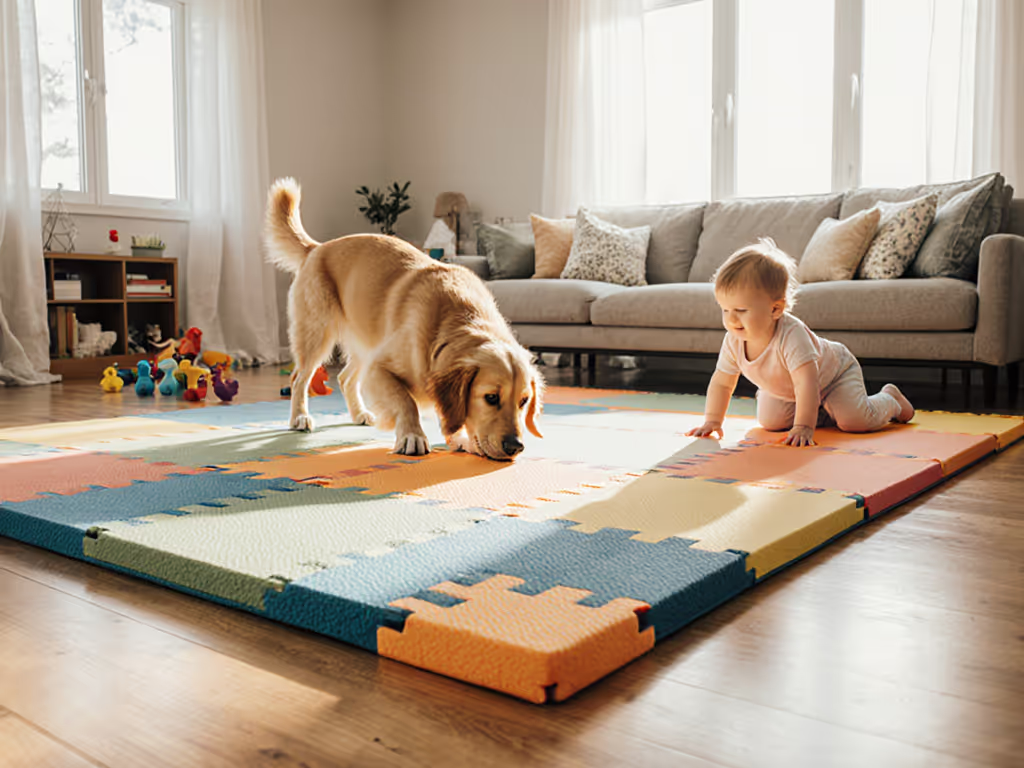
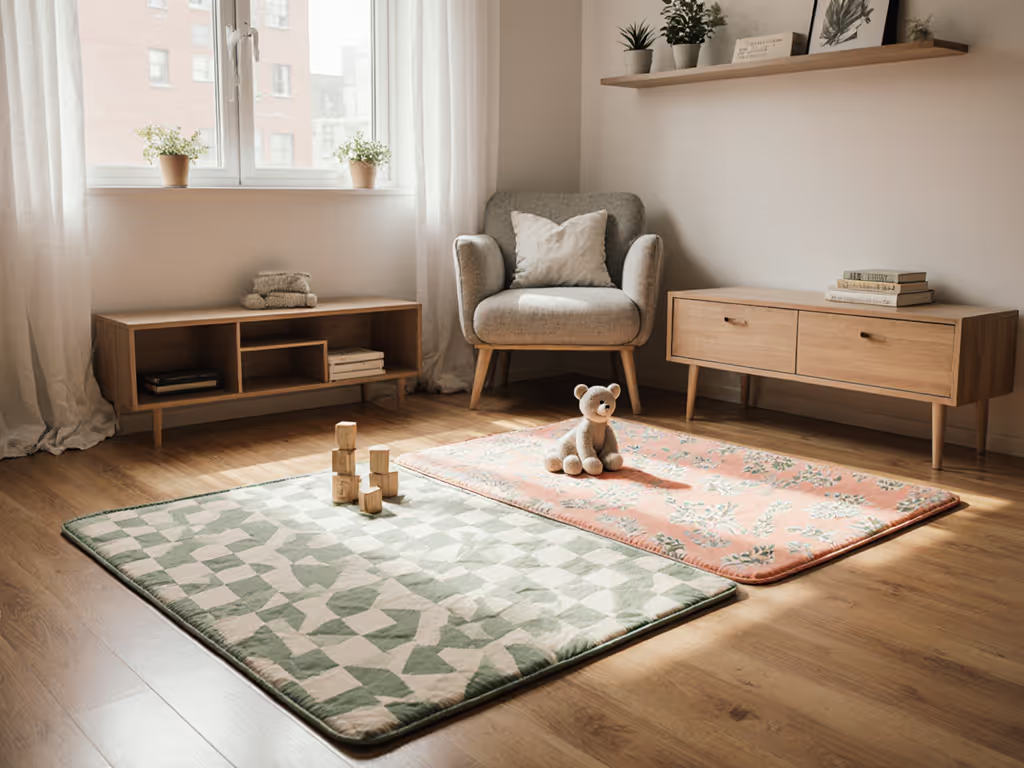
A pet-friendly play mat comparison gets complicated fast when you're balancing a baby's safety with a dog's claws or a cat's habit of using corners as markers. Most play mat reviews focus on nursery-only setups (soft, often thick, sometimes off-gassing before they're even unboxed). Add a pet into a small apartment, though, and you need durability, cleanability, and odor control alongside non-toxic materials and third-party certifications. For pet-specific layouts and safety tips, see our multi-species play mat guide. This guide breaks down the real trade-offs and ranks materials by their fitness for multi-species play mats that actually survive shared living spaces.
A mat for both children and pets must meet three overlapping demands: chemical safety for the baby (who chews, crawls, and spends hours on it), durability against claws and urine, and cleanability so you're not constantly replacing it. Most conventional play mats fail at least one of these. PVC and EVA foam mats, for instance, are often treated with flame retardants and may off-gas formaldehyde or phthalates, neither acceptable near a nursing infant, and they're also prone to staining and odor retention from pet accidents. Polyester, marketed as a "safe" budget option, sheds microplastics with claw stress and absorbs smells like a sponge.
This is where transparency matters most. Transparency is a feature, not a vibe or hint. When a manufacturer won't share materials, certifications, or cleaning protocols, there's a reason. I learned this the hard way when my nursery smelled aggressively "new" for days... turned out to be VOCs leaching from a popular foam mat. Once I started requesting test reports and actually reading them, I found that one supplier's mat came with a full safety data sheet and clearance for both newborns and pets. The headaches and smell disappeared.
Not all foams are created equal. Ethylene-vinyl acetate (EVA) is widely used but concerning: it's been found to potentially contain formamide, classified as a possible human carcinogen. Even "low-VOC" EVA often retains odors and stains, making it a poor fit for homes with pets.
TPU (Thermoplastic Polyurethane) is significantly better. It's formamide-free, commonly used in medical devices (a marker of safety testing), and has a low-VOC profile. TPU mats resist staining better than EVA and dry faster after a pet accident, reducing mold and odor risk. The trade-off: TPU is firmer than EVA, which some parents find less "cloud-like." For a multi-species household, the durability win outweighs the softness loss. For testing details, read our EVA vs TPU comparison.
Natural rubber latex (derived from rubber tree sap, not synthetic latex) ranks highest for durability and cleanliness. It's naturally antibacterial, resists scratching from claws, and doesn't absorb pet odors the way foam does. The catch: true natural rubber mats cost more, and some families have latex sensitivities. Always verify OEKO-TEX or similar certification to confirm the latex is pure and free from solvents or adhesive residues.
Plain-language definition: OEKO-TEX certification means independent labs have tested the material for over 300 harmful chemicals and verified dye safety and VOC limits. It's not a marketing tag; it's a testable claim.
Organic cotton, especially GOTS-certified (Global Organic Textile Standard), is non-toxic and soft, ideal for baby skin. However, it's a liability with pets. Cotton absorbs urine, is prone to mold if not dried quickly, and stains deeply. A dog's accident will permanently mark the mat. For material-by-material steps, use our play mat cleaning guide. Unless you're prepared to replace a high-end organic cotton mat after one incident, save it for a pet-free nursery.
Cork, another popular "natural" choice, is genuinely antimicrobial and antifungal, which sounds pet-friendly. Here's the snag: most cork mats use polyurethane binders to laminate cork to the backing, introducing chemical exposure. Some manufacturers (notably Corkademy) skip the PU binder entirely and use natural latex. Without the binder, cork is durable against claws and resists odor, but verify with the maker. Show the test report to confirm adhesives are non-toxic.
Ranking from most resistant to least:
OEKO-TEX 100 or Gold: Tests for toxic chemicals, flame retardants (both PBBs and PBDEs), and sets VOC limits. This is table-stakes. A mat with OEKO-TEX is at least cleared for baby skin contact; pet durability is a separate question.
GOTS (Global Organic Textile Standard): For fabric layers only; confirms organic cotton without synthetic pesticides or formaldehyde dyes. Doesn't address foam or adhesive safety, so don't rely on it alone.
Greenguard Gold: Independent air-quality testing; ensures off-gassing meets strict low-VOC thresholds. Worth seeking if odor control is a priority in a small space.
GRS (Global Recycled Standard): Validates recycled content claims; less relevant to pet-household durability but useful for lifecycle value if you care about end-of-life recycling.
Flagged unknown: "Non-toxic" without certification is unverifiable. A brand claiming "non-toxic" without naming a third-party certifier is making an unchecked assertion. Ask for specifics.
Natural rubber and cork are inherently odor-repellent due to their antimicrobial nature. TPU foam, because it's less porous than EVA, dries faster and resists smell absorption better. Organic cotton and polyester are odor traps, pet urine will soak in and persist even after washing.
The real variable is the mat's washability and sealing. A mat with sealed seams and a wipeable top layer (even fabric, if treated) will manage odors better than a mat with open edges and absorbent fills. Seek mats with machine-washable covers (organic cotton, TPU with detachable covers) or fully wipeable surfaces (natural rubber, cork).
If possible, request a sample or search for user reviews specifically mentioning pet ownership and cleaning outcomes. Look for language like:
Avoid mats described as:
Once you've narrowed your choice, reach out to the seller or manufacturer with a direct question: "I have a pet. Can you share test data on how the mat performs after repeated pet accidents and cleaning cycles?" Their response, whether they provide test reports, deflect, or go silent, tells you a lot.
Lower Risk (suitable for concurrent baby + pet use): Natural rubber latex (OEKO-TEX certified), TPU foam (formamide-free, OEKO-TEX certified), cork with natural latex binder (PU-free, verified antibacterial).
Moderate Risk (pet-friendly but chemical caution needed): Organic cotton with GOTS cert + sealed, washable cover; cork with polyurethane binder if OEKO-TEX certified and additives disclosed.
Higher Risk (not recommended for dual-use): EVA foam, PVC, polyester, conventional cotton, any foam or fabric without named certification, mats using undisclosed adhesives.
Thicker mats (1.6 to 2+ inches) absorb impact better for babies learning to roll and crawl (a genuine safety win). However, thickness increases the likelihood of off-gassing during the first few days or weeks, especially with foam layers. Thicker foams also compress over time under repeated pet traffic, flattening cushioning and creating creases where dirt and odor linger.
The better strategy: choose a medium thickness (1 to 1.2 inches) of high-quality material (natural rubber or TPU) over a thick budget foam. A 1-inch natural rubber mat will outlast a 1.6-inch EVA mat by years and will resist pet wear far better. You're trading some initial softness for durability and cleanability, the right trade in a pet household.
One-piece mats are seamless and easier to keep clean (fewer crevices for dirt and odor). However, they're harder to store in small spaces and harder to replace if a section is damaged.
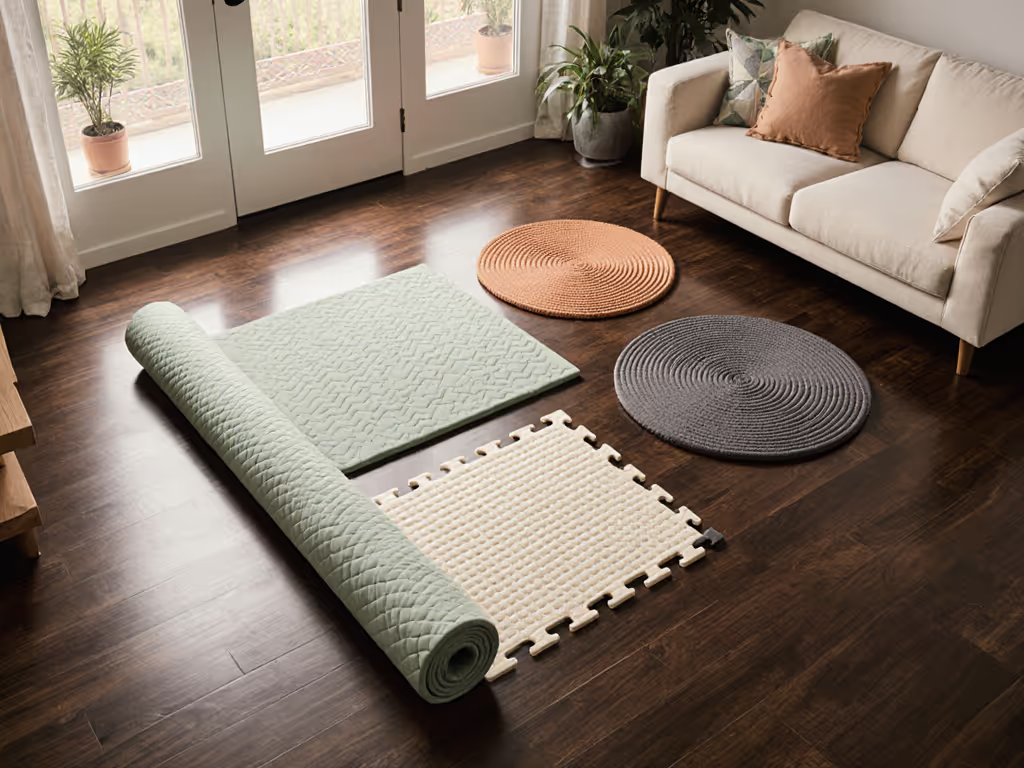
Modular or foldable multi-species play mats (like interlocking tiles or roll-up designs) offer flexibility: you can remove a chewed or stained section without discarding the whole mat, and you can size the playspace to your room. The downside is seams, where tiles meet, dirt and pet hair gather, and urine can wick between pieces if they're not sealed properly. If you go modular, verify that pieces seal tightly and that the system includes edge guards to prevent tripping.
Regardless of material choice, establish a baseline:
For a household balancing infant safety and pet durability:
Best overall: Natural rubber (OEKO-TEX certified, natural latex binder, 1 to 1.2 inches, machine-washable cover or fully wipeable).
Best budget-conscious: TPU foam (OEKO-TEX certified, firm construction, sealed seams, removable washable cover).
Best eco option: Cork with natural latex binder (PU-free, verified with test report, antimicrobial, 1 inch thickness).
Avoid: EVA, PVC, polyester, organic cotton without sealed waterproof backing, or any mat lacking named third-party certification.
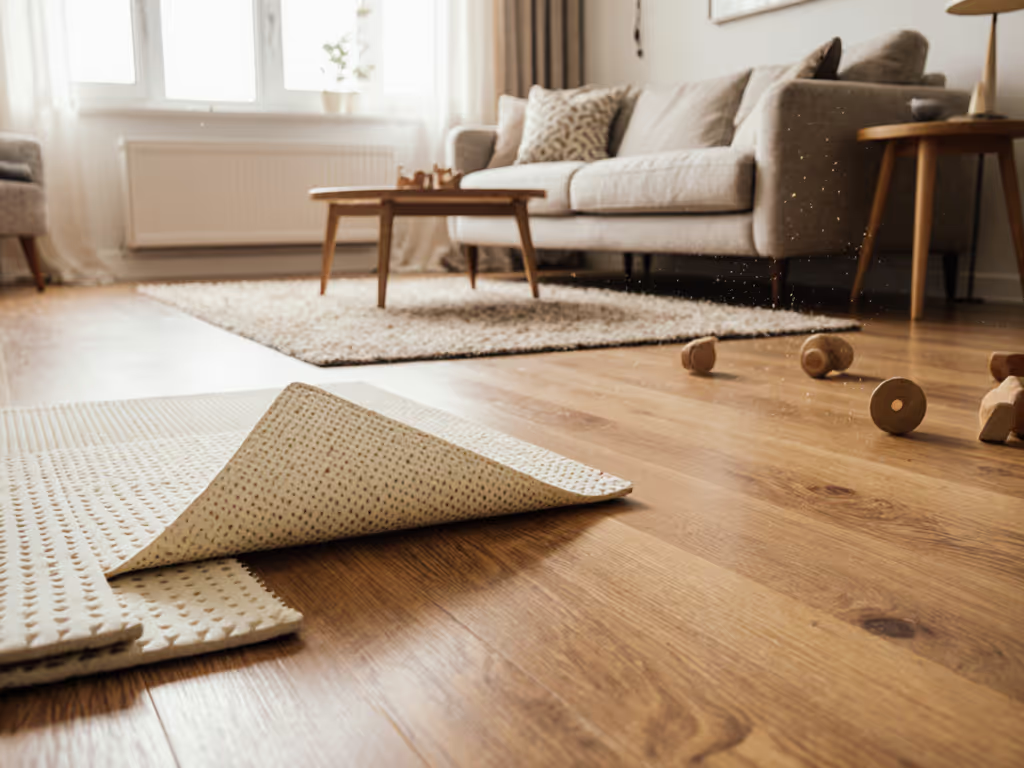
Before finalizing your purchase, take three steps. First, identify your room's floor type (hardwood, tile, carpet) and note any slipping or bunching issues with past mats (this shapes your mat's required grip and thickness). Match grip to floors with our safe surface guide. Second, create a simple materials transparency checklist: write down the brand's material layers, ask for OEKO-TEX or equivalent cert, request details on adhesives and dyes, and note how quickly they respond. A transparent maker will send a fact sheet; a vague one will redirect you to marketing copy. Third, audit your pet's behavioral risks: does your dog mark territory, do claws leave visible scratches on existing surfaces, do accidents happen daily or rarely? Then weight your priorities accordingly (odor-resistance vs. claw-resistance vs. cleanability).
Show the test report. Request it from the seller before you buy. If they won't provide one, move to the next brand. Your family's health and your mat's longevity both depend on knowing what you're bringing home.