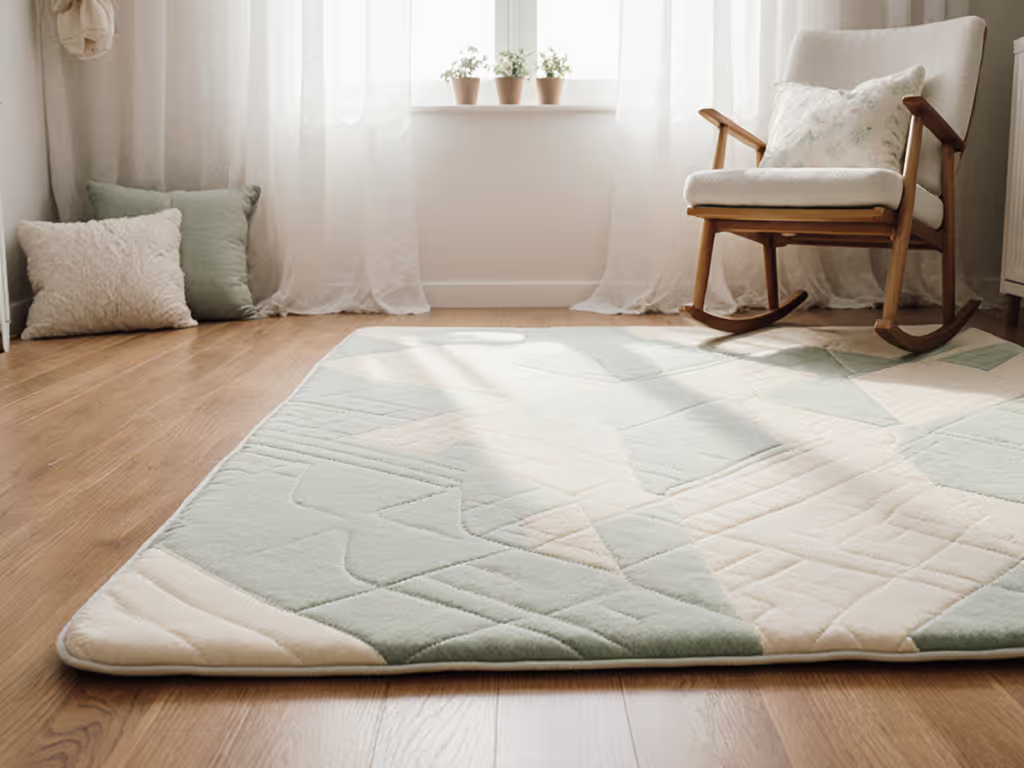
Colic-Soothing Play Mat Design For Calm, Stable Comfort
21st May•11 min read
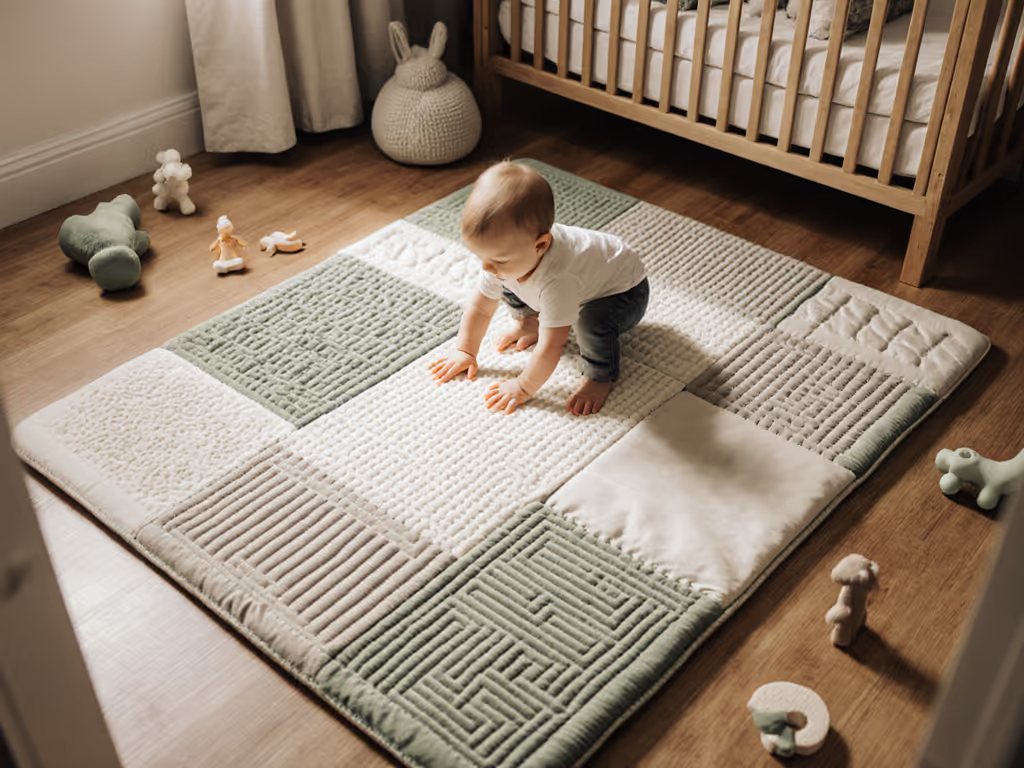
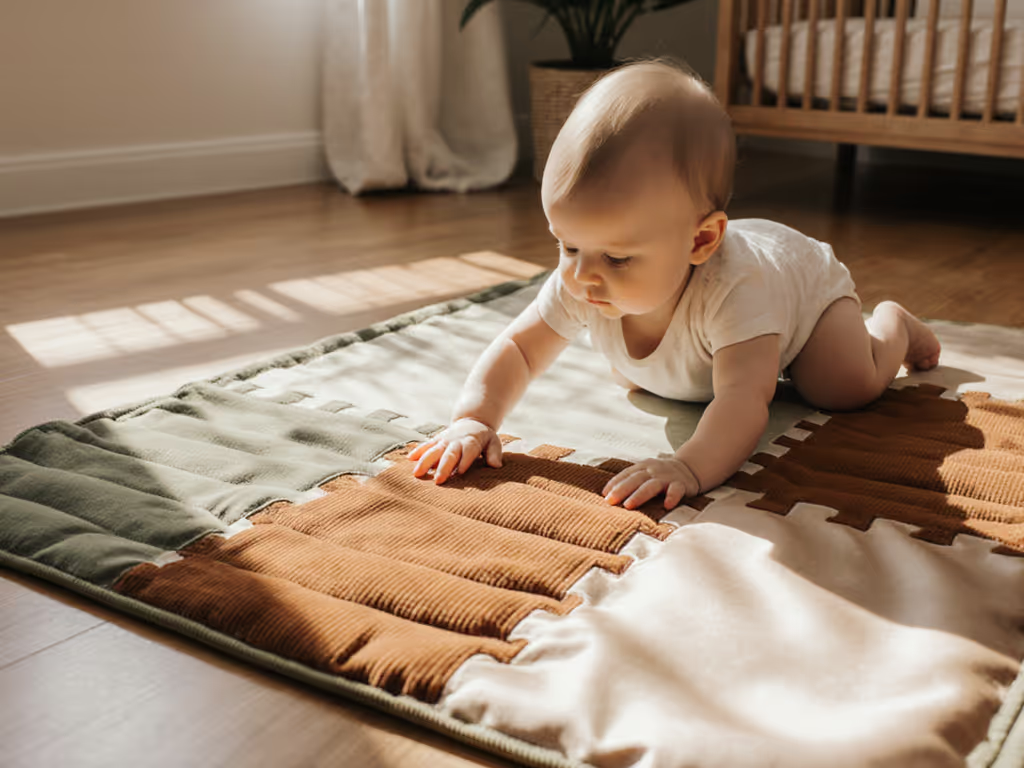
A neural pathway play mat isn't just cushioned ground; it's a deliberate landscape of tactile signals that shapes how your infant's brain wires itself together. The textures you choose, layered across milestones from 0 to 24 months, determine whether your mat becomes a forgotten burden or an invisible backbone of daily infant brain development.
I've always measured a mat's true value by what it costs per month, dividing its price by the months your home will actually live with it. But that math only works if you understand what textures do, and why the softest mat isn't always the smartest choice for building motor and cognitive resilience.
Your baby's brain forms trillions of neural connections in the first two years. Every surface they touch, every texture their skin encounters, and every movement that follows: these all reshape the brain's architecture. This isn't metaphorical cushioning; it's real cognitive scaffolding.
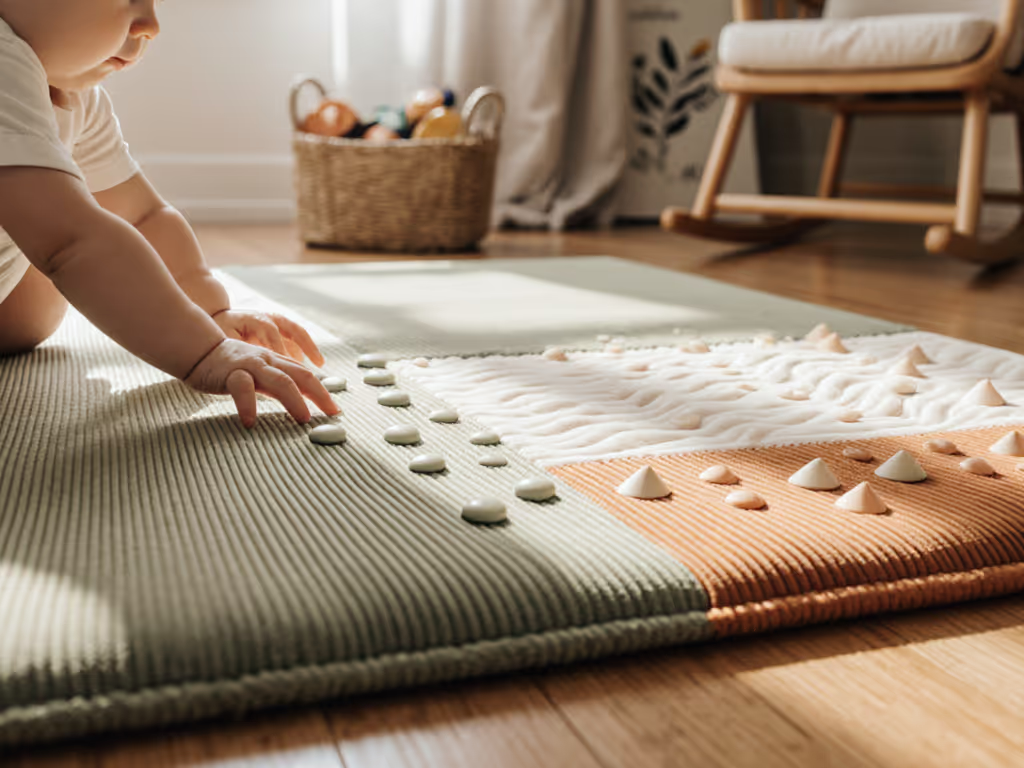
When a baby touches a textured surface while simultaneously seeing it and hearing a sound (say, a crinkle), the brain links input from three senses at once. That cross-modal integration (touch + vision + sound) builds coordinated neural networks that later support crawling, reaching, babbling, and problem-solving. A flat, featureless mat misses this opportunity entirely. For the science behind how textures stimulate infant brain pathways, read our texture neuroscience explainer.
The softer the landing, the bolder the baby. Movement thrives in spaces that feel safe; when babies move more, cognitive growth accelerates. Learn how floor feedback builds spatial awareness in our proprioception guide.
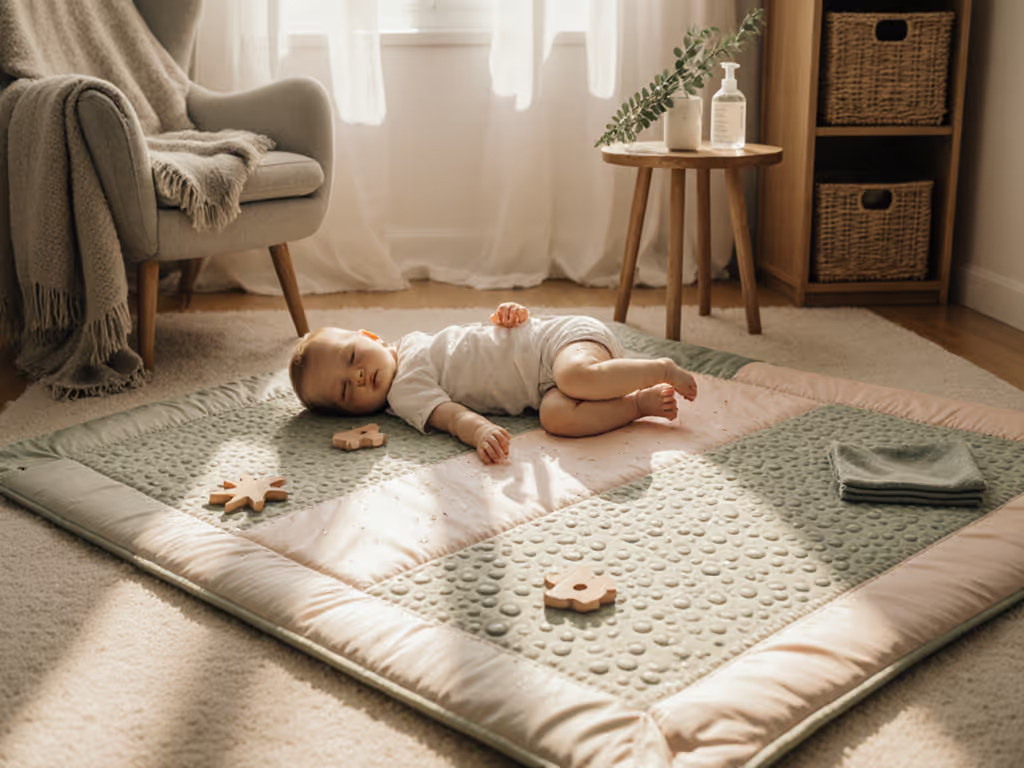
What they do: A consistently soft surface (often 1-1.5 inches of EVA or closed-cell foam) provides even cushioning and predictable comfort. Babies relax, meltdowns settle faster, and the aesthetic stays calm and neutral.
Neural payoff: Limited. Repetitive texture doesn't generate new neural connections; it reinforces existing ones. Safe for vulnerable newborns, but doesn't accelerate learning.
Best stage: 0-3 months (newborn sensory baseline) or as a "reset zone" between more challenging activities.
Trade-off: Low stimulation means slower sensory literacy. Baby doesn't learn to discriminate between soft and textured, which delays tactile exploration skills.
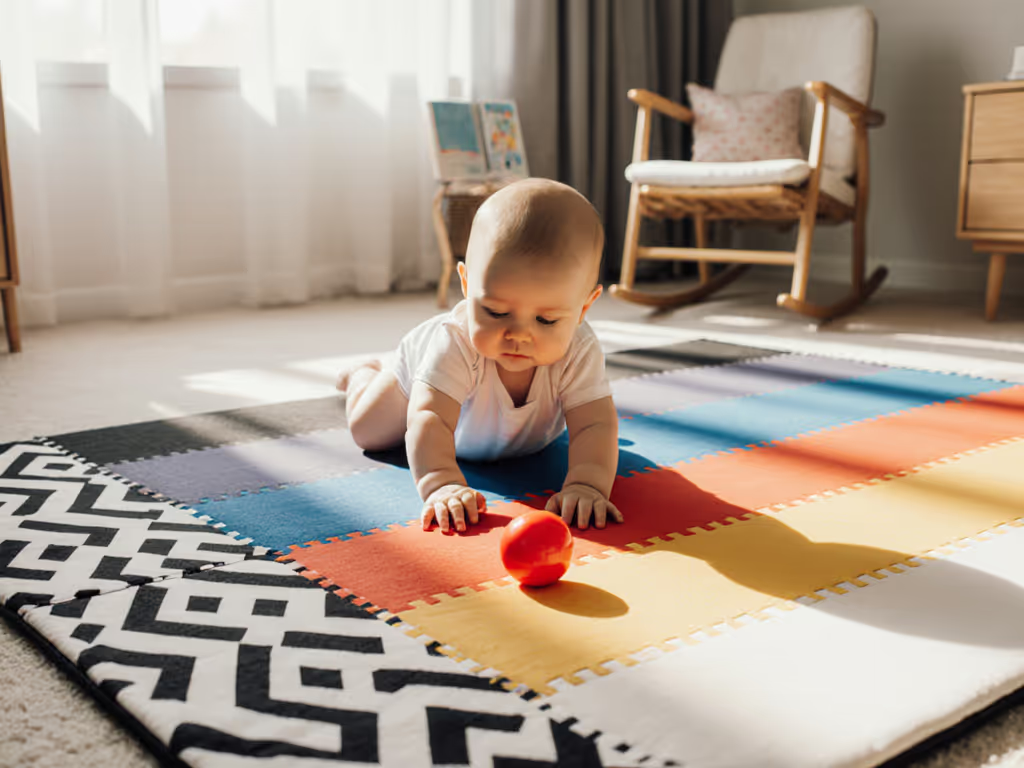
What they do: Blend 2-4 distinct textures across zones - smooth satin panels, crinkly materials, slightly firmer supporting regions, and soft nap-time sections. Each area triggers different sensory and motor responses.
Neural payoff: High. Varied input forces the brain to categorize and compare; this active discrimination builds richer neural pathways than repetition alone. Babies learn cause-and-effect (crinkle = my touch), develop fine motor control (reaching for textured targets), and build confidence in their ability to change their environment.
Best stage: 4-24 months (when babies actively explore and begin grasping, rolling, and crawling).
Trade-off: More complexity means slightly busier visual design (though neutral-palette options exist). Some textures collect dust or require more frequent cleaning. Not ideal for overstimulated or sensory-sensitive newborns.
The infant cognitive texture response isn't random, it follows predictable milestones. A mat that works from newborn to toddler must adapt its texture offering across three clear windows.
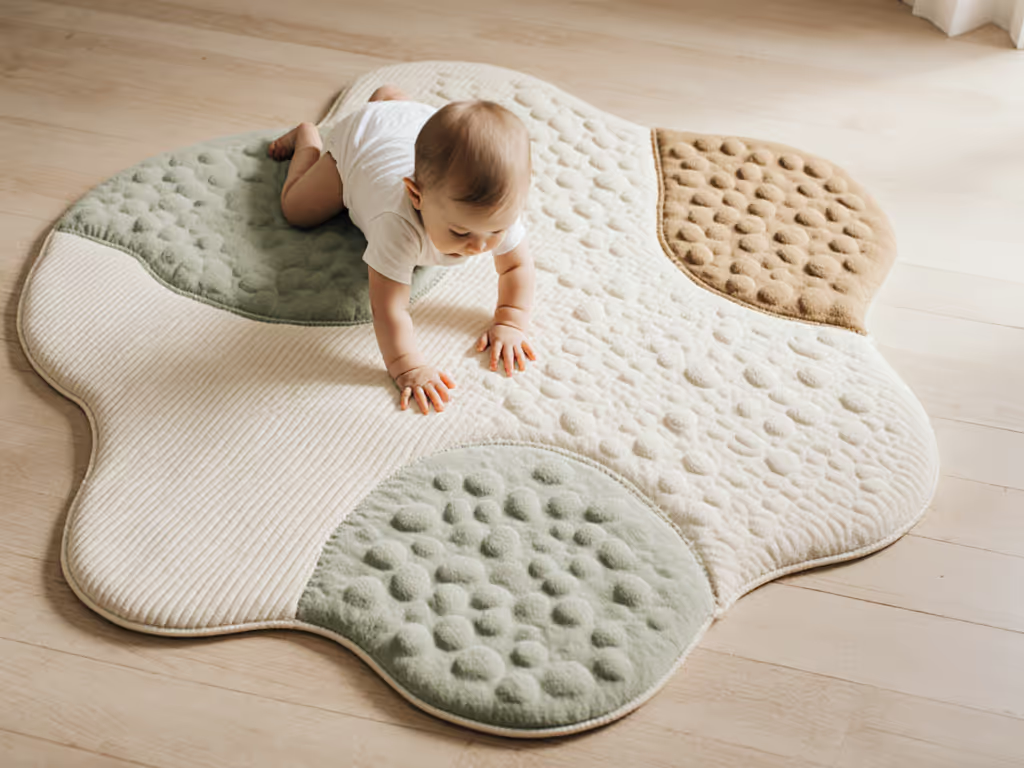
Babies at this stage are discovering their senses. Neck and back muscles are still fragile during tummy time. Textures should invite without overwhelming.
Optimal texture profile:
Why it works: Sensory mats at this stage should strengthen reflex integration and motor basics (head control, arm coordination) without flooding the nervous system. Babies at this age have limited motor control and need predictability to feel secure.
Babies now grasp, sit, and crawl. Tactile neural development accelerates when textures demand interaction. More complexity now drives faster neural wiring.
Optimal texture profile:
Why it works: Sensory busy boards and texture variation boost fine motor skills, hand-eye coordination, and problem-solving. Babies learn that different surfaces require different muscle engagement (grip harder on crinkly, glide on smooth), which builds motor discrimination.
Toddlers pull to stand, cruise, and climb. Texture complexity play mats must now balance softness (falls happen) with enough firmness to support balance work.
Optimal texture profile:
Why it works: Toddlers use texture and surface feedback as sensory anchors for motor learning. A mat that "tells" a toddler's feet where safe zones are (via texture shifts) supports confident crawling and standing without constant verbal correction.
Square inches are a budget, make the mat earn them.
This is where most parents stall. A 2-inch plush mat feels luxurious and guarantees a gentle landing. But ultra-soft surfaces can actually delay certain motor milestones because babies receive less proprioceptive (body-awareness) feedback from the floor.
When I taped mat footprints on our old hardwoods and tracked traffic patterns, what surprised me wasn't the footprint; it was that our son crawled more confidently on the mat that folded under the sofa in six seconds and had a firmer core. If portability and quick storage matter, compare foldable vs roll-up play mats to pick the right system for your space. He could feel where he was in space. The softest mat became the one he avoided for active play; he saved it for naps.
The comparison:
| Attribute | Ultra-Plush (2"+) | Moderate (1-1.25") | Firm (0.8-1") |
|---|---|---|---|
| Fall safety | Excellent | Very good | Good |
| Proprioceptive feedback | Low (baby sinks; less input) | High (optimal feedback) | Very high (may feel hard to crawl on) |
| Motor milestone speed | Slower (less sensory drive) | Faster (ideal balance) | Fast (but risk of over-stimulation) |
| Storage (fold-ability) | Difficult | Easy | Very easy |
| Durability (dents) | Low (compresses quickly) | High | Very high |
| Texture complexity ease | Easier (thick cushion hides unevenness) | Challenging (textures must align precisely) | Challenging (precision critical) |
| Cost per month | Higher (replaces sooner) | Moderate | Lower (longer lifespan) |
The sweet spot for most multi-stage use is 1-1.25 inches with texture-mapped zones, firm enough for honest motor feedback, plush enough to feel secure, and durable enough to justify the per-month cost across 18-24 months of use.
Not all mats perform equally on all surfaces. A mat that glides on hardwood may bunch on low-pile carpet; a crinkly-textured top may trap dust in plush carpeting. The substrate (what the mat sits on) determines whether your texture choices actually deliver the sensory experience you intended.
On hardwood/laminate: Non-slip backing is critical. Texture on the top (for baby) can stay varied and complex; the friction happens underneath. Any moderate-plush mat with a rubberized or TPE base stays stable.
On tile: Hardest surface for a mat to grip. Requires the stickiest non-slip (often phthalate-free silicone or natural rubber). Top-layer textures must be forgiving because falls will be harder. Consider a firmer core with extra shock-absorption in high-impact zones.
On low/high-pile carpet: Mats sink into deep carpet, creating instability. Go firmer (0.8-1 inch) and ensure underside is grippy and breathable (to help prevent moisture or mold in the carpet below). Texture complexity on top is less critical because the carpet itself provides sensory variety. For floor-by-floor recommendations, see our hardwood and carpet compatibility guide.
Start with these questions:
A neural pathway play mat earning its square inches must work across 18-24 months minimum to justify the investment. Here's how to math it:
The premium mat often costs less per month because it lasts longer and supports faster developmental progress. But only if the textures actually map to your baby's current stage.
Before buying any mat, spend one week observing traffic and light, exactly as you would with furniture placement. Where does your baby spend tummy time? Which corner gets afternoon sun (visual stimulation)? Where do you most often sit nearby (for supervision)?
Once you've mapped those zones, choose a mat whose texture-mapped regions align with your room's natural flow, not the brand's marketing image. A texture zone is only valuable if your baby actually spends time on it.
Then, measure the mat's footprint against your storage reality. Can it fold or roll into your target spot (under sofa, in closet, behind a door) in 6-10 seconds? If not, it won't live with your home daily. You'll end up leaving it out (clutter stress) or giving up on it (sunk cost).
The best mat is the one your home can live with daily, not in a dream nursery, but in your room, on your floor, for your baby's current stage. Texture mapping only works when the mat stays visible, accessible, and actually used.