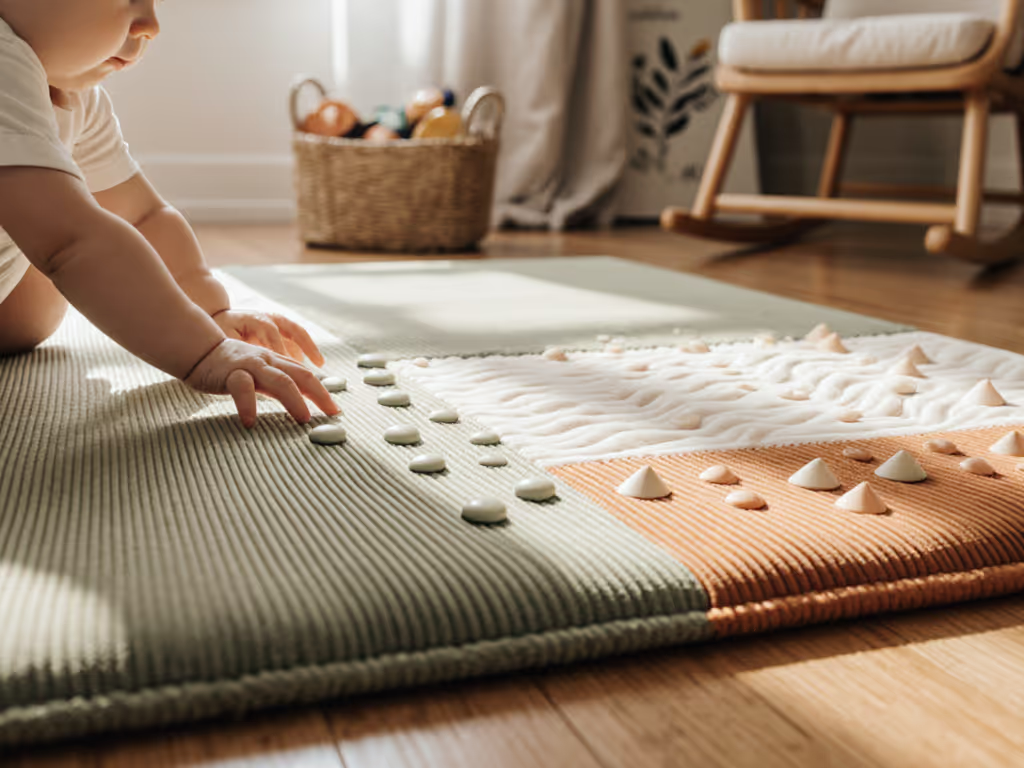
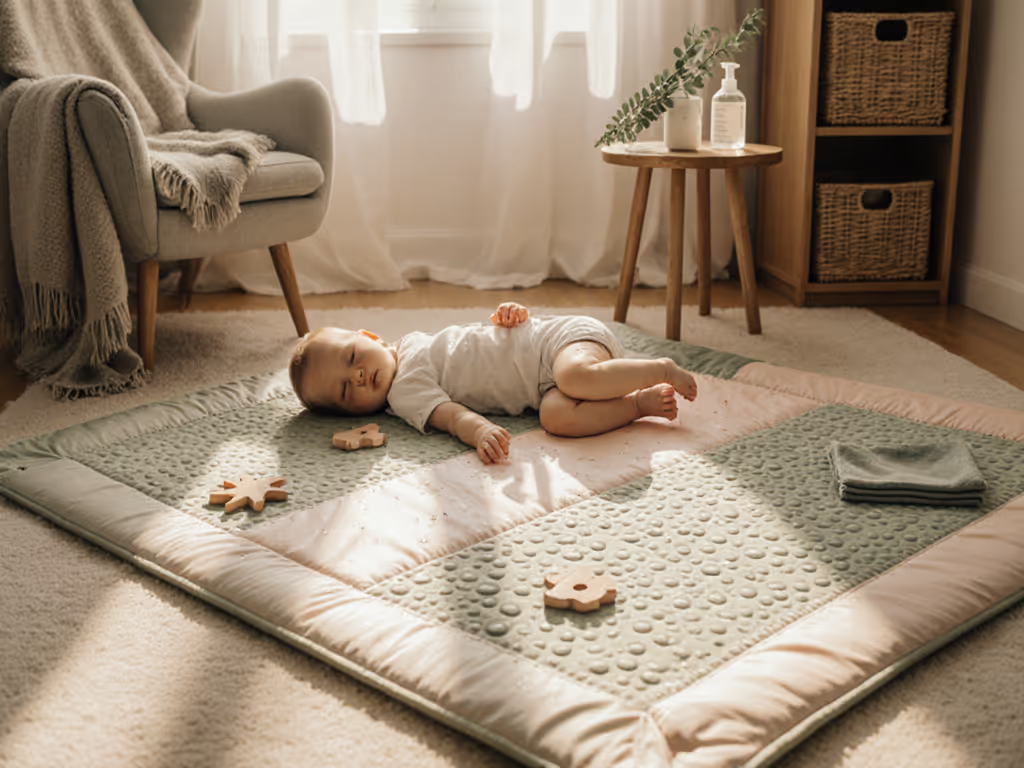
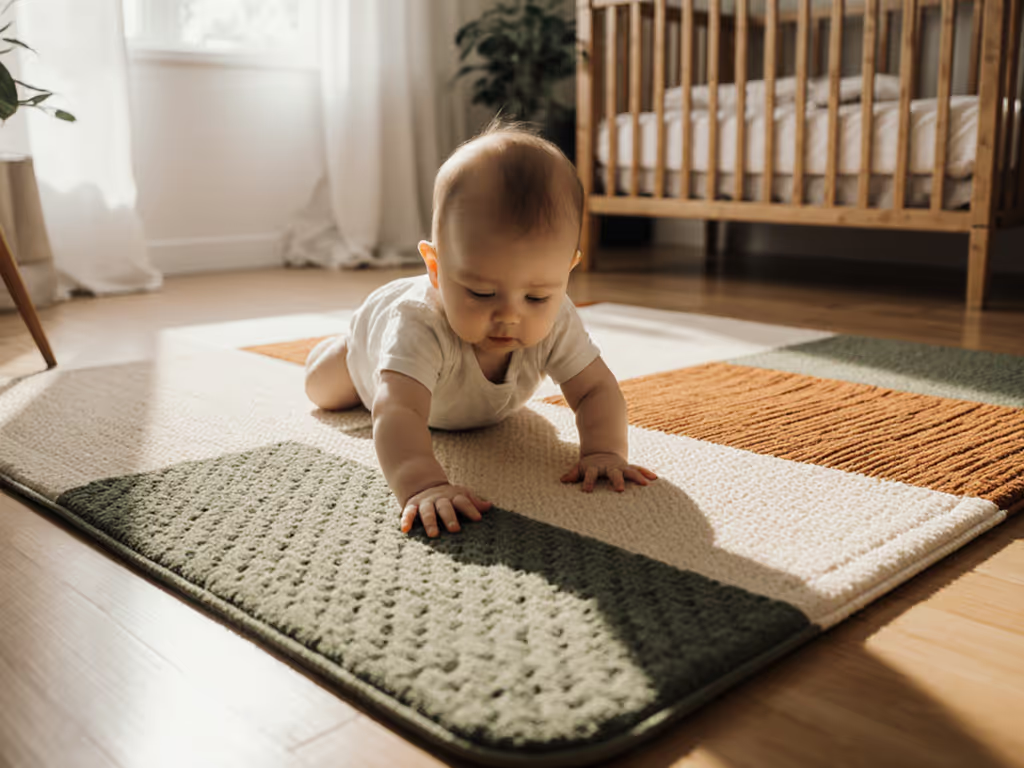
Designing a colic soothing play mat is less about miracle features and more about controlling the environment: pressure, sound, temperature, and visual noise. The right baby play mat can't cure colic or reflux, but it can give you a stable, quiet, and comfortable base that makes soothing routines easier to repeat and sustain. For evidence-based techniques, see our colic-soothing play mat strategies.
1. What "Colic-Soothing" Really Means in a Play Mat
When parents talk about a mat that "helps colic," they're usually noticing a few things:
- Baby seems less startled by movement and noise on the floor.
- You can stay down at baby level longer without your own knees and back protesting.
- The space around baby feels calmer: fewer sharp clacks from toys, less glare, less visual clutter.
All of that is design, not magic.
A good colic-oriented setup does four jobs:
- Distributes pressure so hard floors don't poke through under baby's body or your knees.
- Stays put on your floor type so there's no micro-slipping when you rock, shush, or shift weight.
- Dims the sensory input: muted sound and visuals instead of a carnival.
- Handles messes quickly, especially spit-up and reflux, so the area doesn't smell or stay damp.
If you keep those four in focus, the rest of the decisions (thickness, material, pattern, size) get much easier.
Support is distribution; thickness alone is a blunt instrument.
2. Thickness, Firmness, and Stability: Translating "Feel" Into Numbers
Most mats are marketed by thickness in centimeters, but that's only half the equation. Learn how firmness is measured in our play mat firmness (ILD) guide. A 20 mm mat that collapses to 2 mm over tile feels worse than a firmer 10 mm mat that keeps its shape.
Target Specs for a Colic-Focused Mat
For typical foam or rubber play mats used on hardwood, laminate, or tile:
- Thickness:
- 8-12 mm for firmer, one-piece mats (PVC/TPU/PU foam-backed).
- 10-18 mm for denser rubber or high-density foam.
- Firmness / density (for foam cores):
- Look for medium-firm feel; when you press with your thumb, you should see 2-4 mm of give, not a full sink.
- If density is listed, 30-50 kg/m³ foam is a useful ballpark for supportive play mats.
Why this range?
- Too thin (<6 mm) over hard tile means you feel grout lines under your knees and baby's ribcage.
- Too soft or thick (very squishy >20 mm) can feel unstable when baby starts pushing up or when you rock or bounce on your knees.
I learned this the hard way, crawling on tile beside my own baby to feel what she was feeling. One mat looked plush but collapsed at every grout line; a thinner, firmer one spread impact beautifully and didn't skid when she kicked. That's the moment I stopped trusting marketing thickness numbers.
Stability Checks You Can Do at Home
When you're evaluating a mat (in-store or once it arrives):
- Thumb test: Press down hard near the center. If you feel the floor clearly within ~3 mm of movement, it's too soft or thin for hard floors.
- Knee test: Place both knees 15-20 cm apart and shift weight. You should feel cushioned but not wobbly.
- Rock test: Sit cross-legged, gently rock and twist. The mat should not bunch, slide, or "ripple" around you.
For a colic-soothing setup, prioritize a mat that feels predictable under every movement. Micro-slips and sudden changes in firmness are exactly the kind of sensations that can keep a fussy baby on edge.
Works with your floor.
3. Floor-Type Compatibility: Make the Mat Work With Your Floor
Your floor is half the system. For floor-specific safety tips, see our hardwood and carpet compatibility guide. The same mat behaves very differently on tile vs carpet, and that changes both comfort and safety.
Hardwood & Laminate
Goals: Non-slip without damaging finish, good noise damping, easy cleaning.
Look for:
- Grippy underside: fine texture or patterned rubber backing, not slick plastic.
- No adhesive requirement: avoid anything that recommends tapes that can pull finish.
- Temperature tolerance: if you have radiant heat, check the max temperature rating (often 27-29 °C for floors) and ensure the mat is rated for underfloor heating.
Risk note: Soft PVC or rubber can sometimes react with certain floor finishes, leaving "ghost" marks. If you're unsure, test a 30 x 30 cm area for 48-72 hours or place a thin, breathable barrier (like a cotton rug pad) under one edge first.
Tile
Tile is the most demanding surface for a colic soothing play mat:
- Grout lines create pressure peaks.
- Slick glaze can defeat weak non-slip.
- Tile is acoustically "live," amplifying every dropped toy.
Here, aim for:
- At least 10 mm thickness with medium-firm foam or rubber.
- Clearly textured underside with multiple contact points (not just four corner dots).
- A surface that's not glossy; a slightly matte topsheet will reduce toy clatter.
Low-Pile Carpet & Rugs
On low-pile carpet, the issue is usually bunching, not hardness.
- Choose mats described as "carpet-compatible" or with higher overall weight (they resist sliding and wrinkling better).
- Expect a slightly softer feel; your firmness tests should still feel stable, just with more "give."
High-Pile Carpet
If you're on shag or plush carpet, most foldable or roll-up mats will feel marshy.
- Either accept that this is a secondary play zone, or install a firmer base layer under the mat (e.g., a thin, dense exercise mat) to even out the pile.
- Avoid thick, soft foam-on-soft-carpet; that "double sponge" feel is not ideal once baby starts pushing up or pulling to stand.
4. Sensory Design: Patterns, Colors, and Textures That Calm Instead of Hype
A sensory play mat for colic should reduce sensory load, not add to it. Dive deeper into calming palettes in our play mat color psychology guide.
Visual Design: Soothing Baby Mat Patterns
For babies who already seem overwhelmed, choose:
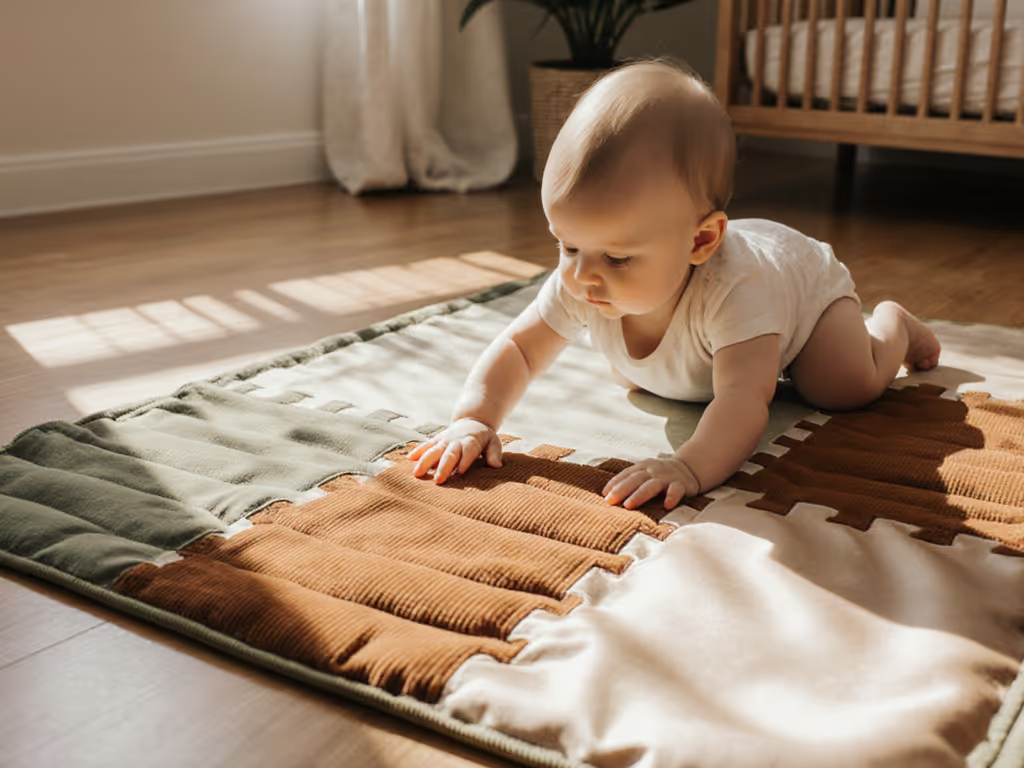
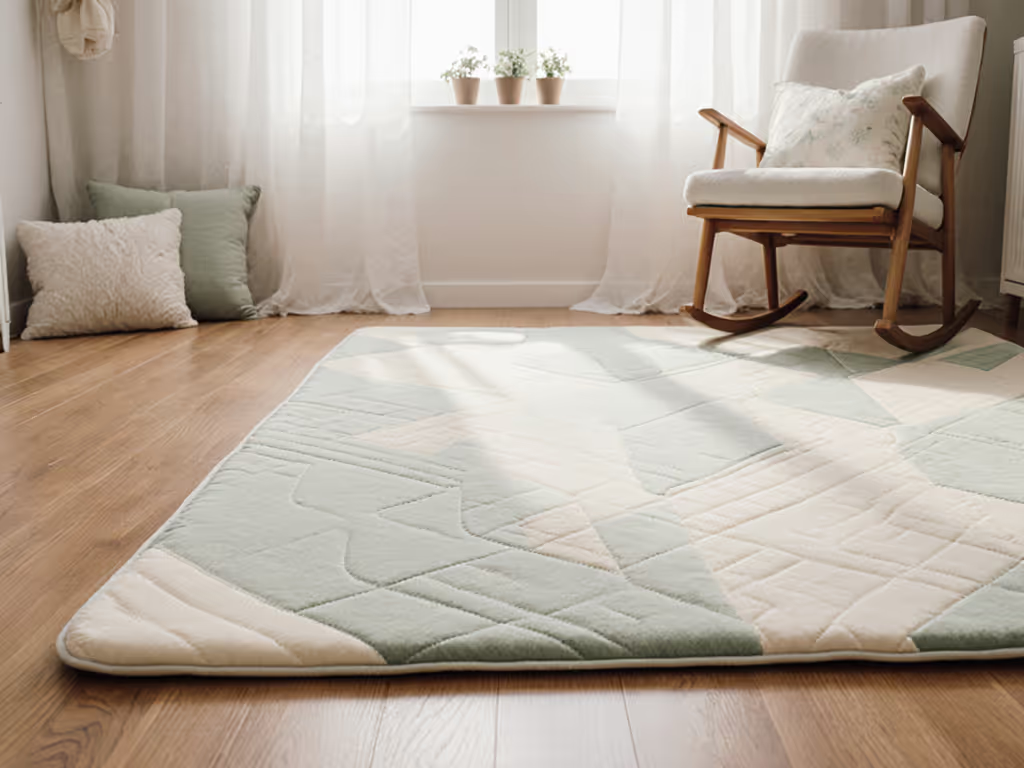
- Low-contrast palettes: warm grays, soft blues/greens, muted earth tones.
- Large-scale patterns: broad arcs, wide stripes, or gentle geometrics, not tiny repetitive motifs.
- Minimal direction changes: avoid busy zigzags, micro-polka dots, and loud alphabets.
Patterns that work well:
- Simple grids or checkerboards in similar tones.
- Oversized "river" or "path" curves that can later support quiet, imaginative play.
Patterns to be cautious with for colicky or easily overstimulated babies:
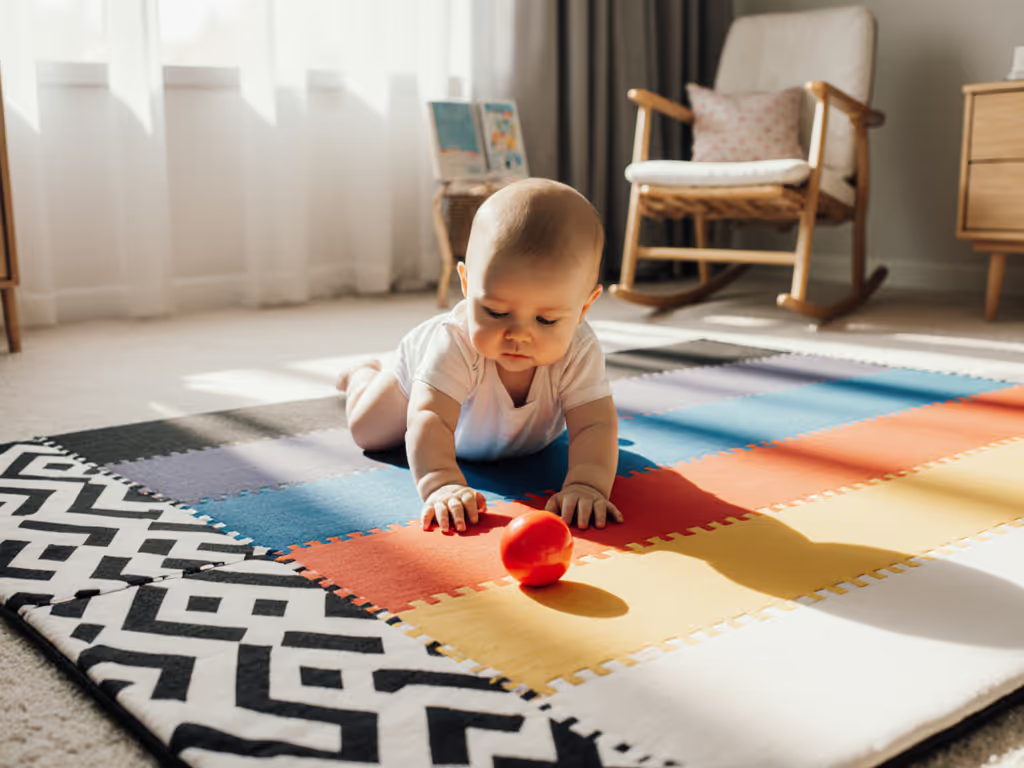
- Black-white high-contrast "developmental" prints across the entire mat.
- Neon or saturated colors covering large areas.
You can keep high-contrast toys or cards in a bin and bring them out selectively, rather than baking that energy into the entire floor.
Texture and Sound
For calming play mat techniques, think in layers:
- Base layer (the mat): mostly smooth, slightly textured for grip; nothing crinkly built into the surface that makes noise every time you shift.
- Optional overlays: a soft muslin blanket, a single small textured lovey or tag toy for tactile interest.
Avoid mats with permanently attached rattles, squeakers, or crinkly zones if your baby is already fussy. Those are hard to "turn off".
5. Designing for Reflux and Mess: The Infant Reflux Play Mat
Reflux doesn't change what a mat should do, but it raises the stakes on cleanability and moisture resistance. Get step-by-step methods in our play mat cleaning guide.
For an infant reflux play mat, prioritize:
-
Closed, wipeable surface:
- Look for descriptions like "closed-cell," "waterproof," "non-absorbent."
- Avoid deeply embossed patterns that can trap liquid in grooves.
-
Sealed edges:
- Laminated tops that roll over the sides, or tiles that interlock tightly with minimal exposed core.
- Fewer seams means fewer places for sour milk smell to live.
-
Fast dry time:
- After a wipe-down with a damp cloth and mild soap, the surface should feel dry within 10-20 minutes.
-
Cleaner compatibility:
- Most mats tolerate diluted, mild dish soap and water.
- Avoid harsh solvents, undiluted essential oils, or anything that leaves a slippery residue. These can damage the surface and reduce grip.
Risk note: Never soak foam-core mats in a bathtub. Water can infiltrate through seams, leading to hidden mold. Stick to surface cleaning and confirm the manufacturer's instructions.
For frequent reflux episodes, keep a dedicated washable topper (like a thin cotton blanket or towel) staged at one end of the mat. That way you can swap textiles quickly while the underlying mat stays mostly clean and dry.
6. Sizing and Layout in Real Rooms
You don't need to cover every centimeter of your living room. You need a stable, predictable zone that fits your soothing routine.
Size Guidelines
For small urban living rooms, a practical footprint is:
- Minimum: ~120 x 120 cm (4 x 4 ft). Enough for newborn tummy time plus your knees.
- Ideal everyday: 140-180 cm on the long side (4.5-6 ft). Space for rolling, a small baby gym, and you lying beside baby.
- Max for multi-use rooms: Choose the largest size that still lets you:
- Walk around the coffee table without stepping on the mat's edge.
- Fold or roll it and slide it under a sofa/bed.
Layout: A Text-Only "Diagram"
Picture this from above:
- Wall
- Sofa along the wall.
- Mat placed fully in front of the sofa, its long edge parallel to the sofa, with at least 30-40 cm of bare floor as a walking lane on the TV side.
- Coffee table either fully on the mat (if low and stable) or fully off it; avoid half-on/half-off setups that create tippy edges.
This keeps the mat as a defined "calm zone," not something you constantly cut across at the corners.
7. Practical Setup & Maintenance Checklist
Do: Setup for Calm, Stable Comfort
- Do test grip on your actual floor before committing to a permanent spot.
- Do anchor visually: keep the mat's edges parallel to a wall or major furniture line; this reduces perceived clutter.
- Do create a soothing kit nearby: a small bin with one or two soft toys, a swaddle, and your white-noise source.
- Do wipe spills quickly, especially milk or formula; follow with a dry cloth to keep the surface grippy.
- Do inspect edges weekly for curling, tearing, or compressed zones where the surface layer is thinning.
Don't: Common Pitfalls
- Don't use the mat as a sleep surface. Follow safe sleep guidelines: firm, flat mattress in a crib or bassinet.
- Don't tape corners directly to finished wood or laminate unless the tape is explicitly rated "finish safe."
- Don't place directly over strong heat sources, like floor vents or space heaters; prolonged heat can warp foam or increase off-gassing.
- Don't drag heavy furniture (like a full armchair) across the mat; lift and place instead to avoid tears or compression scars.
8. Where to Go From Here
A truly colic-oriented baby play mat is less about a specific brand and more about how precisely it's matched to your space and routine.
Next steps you can take:
- Measure your floor zone and sketch the footprint you actually have, down to the centimeter.
- List your floor type and constraints (radiant heat, pets, downstairs neighbors, carpet vs tile).
- Decide your priority order: firmness/stability, cleanability, materials transparency, aesthetics. Rank them 1-4; use that to filter options.
- Track specs, not just photos: thickness in mm, approximate density or firmness, care instructions, and any third-party material certifications.
- Plan for multi-use: make sure the mat you choose can handle your yoga session, quiet play, and everyday foot traffic without feeling precious.
You aren't just buying foam; you're dialing in a micro-environment that you and your baby will return to dozens of times a day. When you treat thickness, firmness, pattern, and floor-type compatibility as linked variables, not guesses, you end up with a calm, stable setup that really does work with your floor and your life.