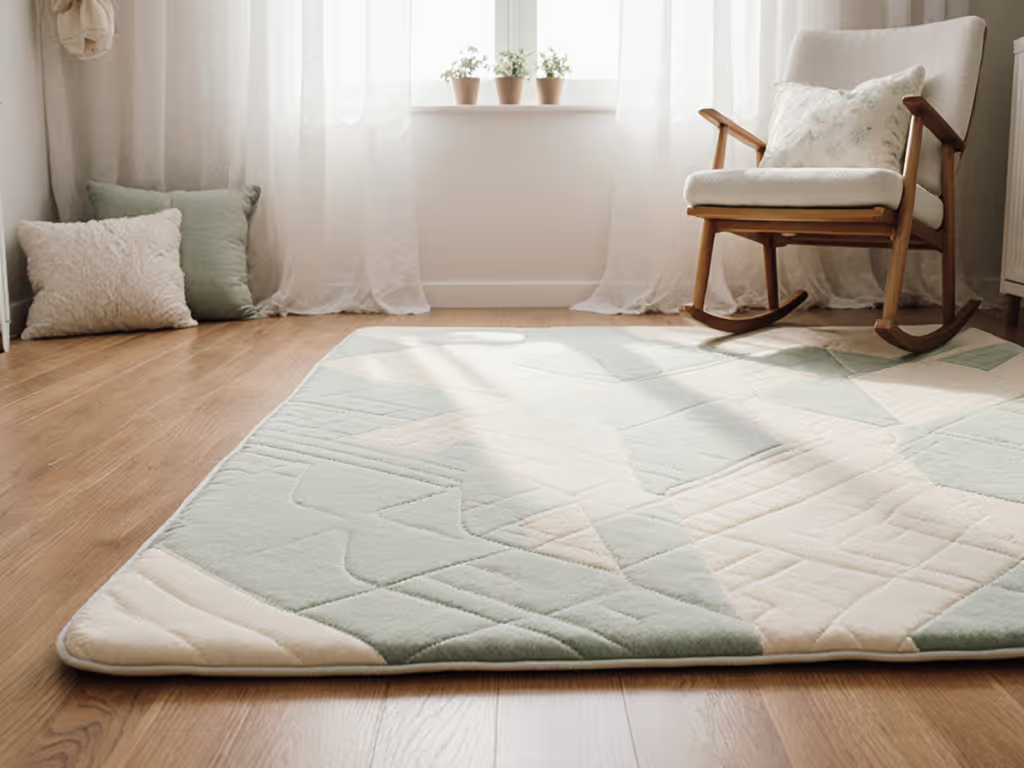
Colic-Soothing Play Mat Design For Calm, Stable Comfort
21st May•11 min read
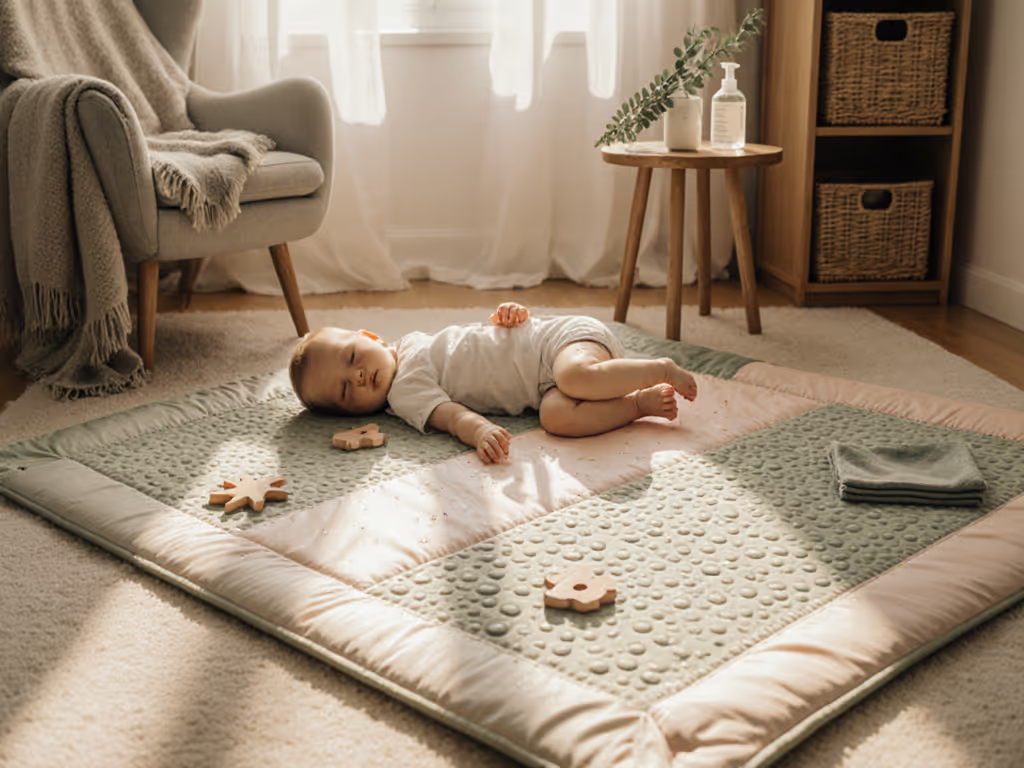
A colic-soothing play mat combines calming sensory design with practical durability, but only if you can actually keep it clean. As someone who's cleaned up 2 a.m. disasters on everything from hardwood to carpet, I've learned that a baby play mat is only as useful as the time it takes to restore it. Here's what the research shows about using mats for colic relief and, more importantly, how to maintain them in real life.
Infant colic creates a cycle: baby is uncomfortable, parents are stressed, and the environment matters more than people realize. A pilot study examining reflexology treatment for colic found that colic symptoms disappeared in 43% of infants and decreased in the remaining 57%[1]. The key finding wasn't just symptom relief, it was that reducing stimulation and providing a soothing environment lowered parental stress, which in turn helped the baby settle[1].
This is where calming play mat techniques enter the picture. Play mats designed with soothing colors and soft textures create an environment that actively reduces your baby's stress levels and improves focus during playtime[2]. Unlike busy, high-contrast patterns that overstimulate, a soothing baby mat pattern with gentle tones and organized visual elements gives a colicky infant a stable sensory foundation. Parents reported that the reflexology intervention reduced the most typical colic symptoms: infants' body tension, colic crying, and restless movements, along with improved sleep quality and irregular bowel movements[1].
The research is clear: environmental calm matters. When babies spend time on a sensory play mat for colic that uses texture, gentle color, and soft materials rather than loud prints, they have a measurable advantage. This isn't placebo. The study confirmed that infants whose colic continued after intervention still cried significantly less (p = 0.0024) by the fourth session, and their daily sleeping time increased from 13.84 hours to 14.66 hours[1].
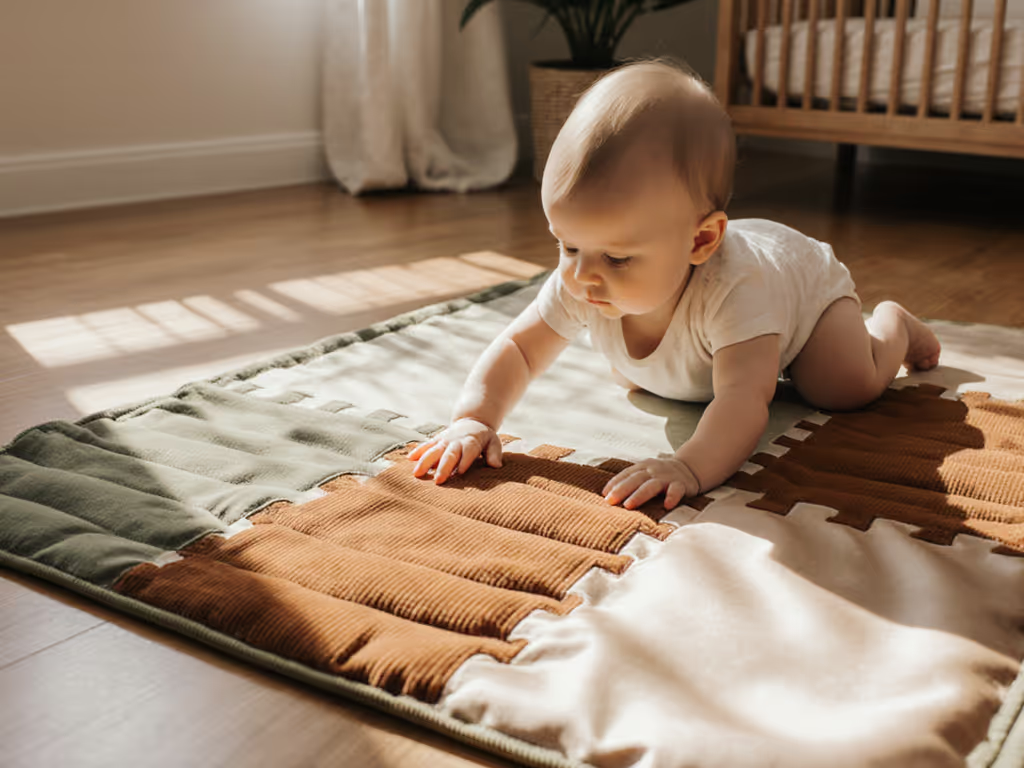
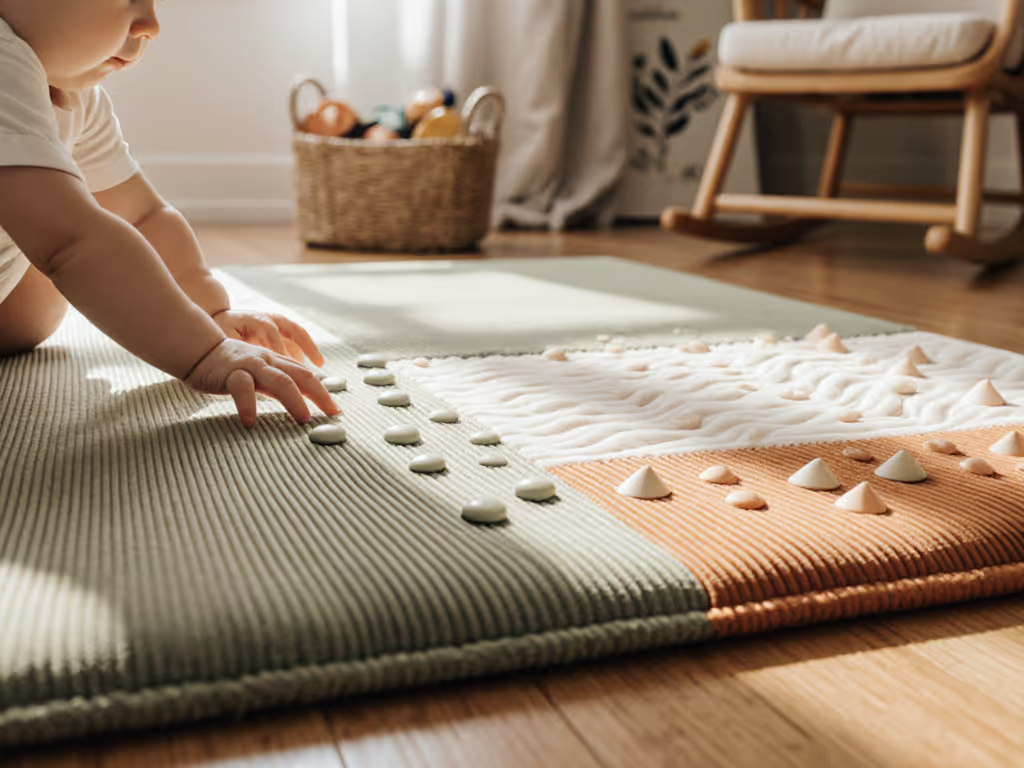
Quilted playmats provide sensory stimulation through various colors, textures, and tactile surfaces, which aids in developing a child's senses and motor skills[3]. For a colic-prone baby, this is critical: controlled sensory input (not sensory overload) supports nervous system regulation. A well-designed mat includes:
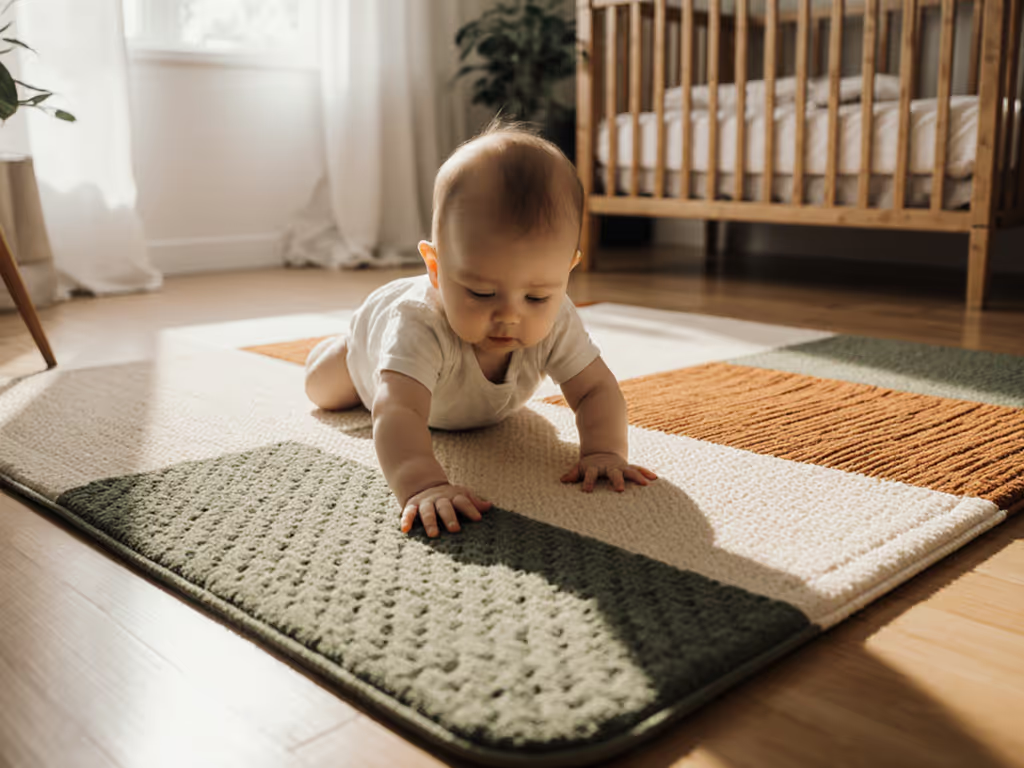
Play mats with calming colors (neutrals, soft blues, muted greens, and pastels) reduce overstimulation compared to primary-colored or high-contrast patterns[2]. For parents, this is a bonus: a neutral, modern mat integrates into your adult home instead of broadcasting "baby zone." A cohesive palette also makes the mat feel intentional rather than chaotic.
Play mats create a soft, cushioned surface for babies to play on, reducing the risk of injury from falls or bumps, and a non-slip backing that prevents accidents[3]. For a colic baby learning to roll and move, this cushioned predictability is soothing. They're developing motor skills (rolling at 2 to 6 months, sitting at 5 to 8 months, and crawling at 6 to 10 months[4]), and a stable, safe mat supports each milestone without startling them with slips or hard impacts.
Here's what nobody tells you: a beautiful, developmentally sound mat is worthless if you dread cleaning it. For step-by-step methods by material, see our complete cleaning guide. I've tested dozens of mats against the real messes of early parenthood (spit-up, diaper blowouts, pureed sweet potato, coffee rings from the parent at 6 a.m.). If it's fussy to clean, it won't get used. You'll avoid it, avoid tummy time, and miss the developmental window.
Understand what you're working with. Common soil types on baby mats include:
Before you commit, test the mat against your actual floor and routine. Here's how I assess a mat's real-world maintenance:
Once you've chosen a mat, establish a routine. My tested protocol:
Immediate response (under 5 minutes after soil contact):
Weekly reset (15 minutes):
Monthly deep clean (30 minutes):
Time to clean is the real daily cost.
If a mat requires 30 minutes of scrubbing monthly, factor that in. If it dries in 5 hours, you lose that space. Choose accordingly.
Play mats that provide a safe area for tummy time encourage rolling, crawling, and other movements essential for physical growth[5]. The challenge: thickness matters for safety and comfort, but overly thick mats compress, stain easily, and take forever to dry. Similarly, soft fabrics feel luxurious but trap odor and moisture.
Look for closed-cell foam or TPU-based mats when cleanability is a priority. These materials:
Avoid porous, open-cell foams and natural rubber if quick drying is essential (they're wonderful for texture and eco credentials, but they require significantly more drying time and are prone to mildew if not fully dry within 24 hours). Not sure which surface suits your routine? Compare waterproof vs fabric play mats for cleaning speed, comfort, and durability.
A mat that works from newborn through toddler (12+ months) must resist compression, edge curl, and surface scratching. Play mats encourage babies to move freely, strengthening muscles and improving coordination[3]. By month 8, a crawling baby is putting pressure on small areas repeatedly; by 18 months, a toddler is dragging toys, standing, and potentially scratching the surface.
When choosing a mat, verify:
Start here:
A colic-soothing play mat is an investment in your baby's nervous system and your own sanity. But it only works if it stays clean, stays in place, and becomes part of your rhythm instead of another source of stress. Choose one you'll use.