Baby Play Mat Review: Dual-Use for Development & Parent Yoga
7th Feb•10 min read
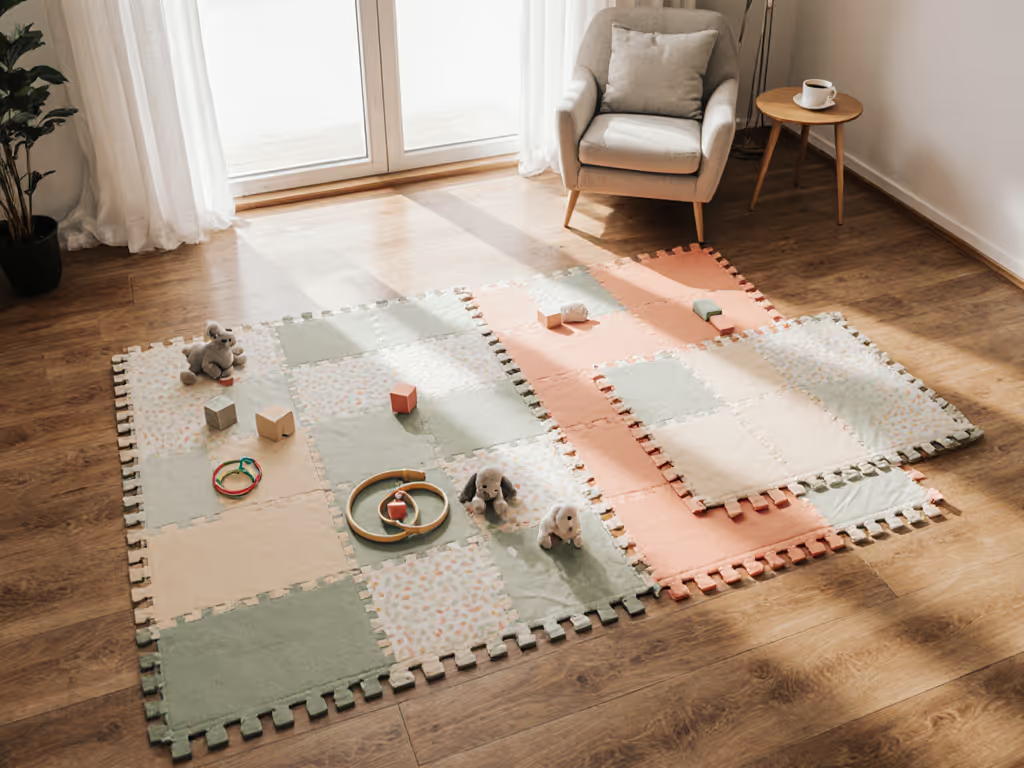
When you're furnishing a room for two babies simultaneously, a twin play mat comparison becomes essential, not optional. Space is finite, your tolerance for visual clutter is tested daily, and buying the wrong mat means not just wasted money but a second year of awkward rearrangement or storage angst. A play mat for multiples isn't simply two mats crammed side by side; it's a strategic decision about footprint, material performance, floor compatibility, and what actually survives concurrent drool, crawling, and the inevitable toy drop from a standing cruiser.
I've spent years mapping how different surfaces behave under paired pressure points (two sets of knees at once, two rolling ranges, and the acoustic reality of stereo babbling on various floors). The data tells a clear story: mat thickness and softness alone won't protect either child or your hardwood. Support is distribution; thickness alone is a blunt instrument.
This article dissects the real-world variables that separate mats that feel helpful from those that perform under the specific stress of twin play scenarios. You'll walk away with clarity on material trade-offs, floor-type matchmaking, and a framework to make a one-time buy that scales from newborn through toddling.
The first fork in the road is structural: do you buy one large, unified mat or two smaller surfaces placed in tandem?
A single, large continuous surface (typically 70-90 inches wide) offers several advantages:
Trade-offs: A large mat with one-piece construction is heavier (15-22 kg), harder to maneuver daily, and if one section is damaged, replacement means replacing the entire mat. Shipping costs are also steeper.
Two smaller mats (each 47-55 inches), positioned side by side or staggered:
Trade-offs: Visible gap or line between mats; edges can separate if babies crawl over them, creating a trip hazard. To minimize gaps and shifting, see our edge security comparison. Cleaning two surfaces takes incrementally longer. Aesthetically, the seam is visible and disrupts a minimalist visual line.
Support is distribution; thickness alone is a blunt instrument.
Recommendation: If your room is under 180 square feet or has a defined play corner, a single large mat minimizes edge risk and maintenance friction. If you have flexible room use or anticipate moving the setup, two smaller mats provide resilience and adaptability. For vetted options sized for small footprints, see our twin play mats tested.
Not all pad materials perform identically under dual-use stress. Here's how the common options map across firmness, durability, and feel:
Firmness range: 20-30 Shore A (soft but responsive)
Typical thickness: 8-12 mm
Feel: Spongy, rebounds quickly after pressure
Durability risk: Prone to compression dents over 12-18 months if used daily under concentrated weight (e.g., cruisers standing in the same spot). Surface can yellow or discolor with UV or age.
Floor compatibility: Moderate. EVA grips most surfaces adequately but can slip slightly on high-gloss tile or sealed concrete if moisture is present.
Cleanability: Good. Most EVA mats are wipeable; some are splash-resistant but not fully washable. Stains can penetrate if not addressed quickly.
Noise profile: Moderate. Reduces toy-drop noise by ~40% compared to bare tile; sufficient for mid-volume apartments but not ideal for noise-sensitive setups.
Firmness range: 25-35 Shore A (balanced, slightly firmer than EVA)
Typical thickness: 10-15 mm
Feel: Smooth, non-porous, more durable than EVA
Durability advantage: Resists compression better; less prone to discoloration. Tear resistance is higher, especially valuable in dual-baby scenarios where toys and tiny shoes create friction.
Floor compatibility: Strong. TPU's smooth underside grips hardwood and tile reliably. Less likely to slide when babies shift their weight rapidly.
Cleanability: Excellent. Fully wipeable, machine-washable (for some models), and resistant to staining because the surface is non-porous. Dries faster than EVA.
Noise profile: Similar to EVA (~40% reduction); some TPU mats with ribbed undersides perform slightly better at dampening impact sounds.
Firmness range: 30-45 Shore A (noticeably firmer, more stable)
Typical thickness: 8-12 mm (firmness comes from material density, not thickness)
Feel: Dense, slightly grippy, "alive" under hand - some parents report a more premium tactile quality
Durability: Excellent. Resists compression and tearing; lifespan often 4-6 years under heavy use.
Floor compatibility: Outstanding. Natural rubber's inherent grip is superior; less likely to shift even on polished concrete or glazed tile.
Cleanability: Good. Wipeable and generally non-porous, though some natural rubber can absorb stains if sealed improperly. May require occasional conditioning to maintain suppleness.
Noise profile: Slightly better than EVA/TPU (~50% reduction) because of material density, but difference is modest.
Cost caveat: Natural rubber carries a premium (often 20-35% higher than EVA). For budget-conscious families, the durability offset usually justifies the spend if planning 3+ years of use.
Firmness range: 35-50 Shore A (firm, minimal "sink")
Typical thickness: 6-10 mm (performs well despite lower thickness because of density)
Feel: Bouncy but controlled; feels more "grown-up" underfoot (appeals to parents who also do floor workouts)
Durability: Very good. Resists compression and water absorption.
Floor compatibility: Good but less forgiving than natural rubber or TPU if undersides are smooth; some closed-cell foams benefit from a rubberized base layer.
Cleanability: Excellent. Non-porous, wipeable, quick-drying.
Noise profile: Better than soft foams (~50-60% reduction) due to density.
Here's where intuition often fails: parents assume softer = more comfortable and safer. If you're deciding between foam types, our EVA vs TPU comparison details safety, durability, and cleaning trade-offs. In reality, for twins, firmer support is often preferable because it:
I've crawled beside twins on thin EVA over ceramic tile - mat looked plush, but when both babies sat down in the center, the mat bottomed out and rocked. The parents then bought a 12 mm TPU mat with a firmer underside, and the difference in perceived stability (and in their stress level during tummy time) was immediate. Comfort turned out to be distribution and responsiveness, not just plushness.
Recommended minimum firmness for twins: 25 Shore A (TPU, closed-cell foam, or natural rubber). If choosing EVA, ensure thickness is at least 12-15 mm.
Mat performance is not material-agnostic; it depends entirely on what lies beneath. For room-by-room recommendations, check our flooring compatibility guide. Here's the breakdown:
Best-performing mats: TPU with rubberized base, or natural rubber
Slippage risk: Low to moderate with EVA; requires rubber underside to prevent sliding during baby-shuffling weight shifts
Noise concern: Moderate; hardwood amplifies toy impacts, so aim for mats 10+ mm thick or with ribbed undersides
Maintenance: Vacuum under mat weekly to prevent grit scratching the floor; ensure mat is dry before placement
Do's:
Don'ts:
Best-performing mats: Natural rubber, TPU with ribbed undersides, closed-cell PE foam
Slippage risk: High with EVA, especially if any moisture is present (spit-up, humid bathrooms). Tile's gloss is nearly frictionless
Noise concern: Severe; tile is an acoustic amplifier. Prioritize mats 12+ mm thick or designs with acoustic layers (ribbed, composite undersides)
Maintenance: Tile beneath the mat can mold if mat sits on wet tile for prolonged periods; ensure airflow and dry tile before placement
Grout line interaction: Thin mats (under 10 mm) can rock or seat unevenly on grout lines, creating edge hazards
Do's:
Don'ts:
Best-performing mats: TPU, closed-cell foam (lighter weight mats reduce pressure on seams)
Slippage risk: Moderate to high; laminate is smooth and can be as slick as tile when freshly cleaned
Noise concern: Moderate; laminate isn't as acoustically dead as carpet, but softer than tile
Maintenance caveat: Laminate is moisture-sensitive; any standing water or prolonged dampness under the mat can cause seam swelling
Do's:
Don'ts:
Best-performing mats: Any EVA, TPU, or foam with a smooth, non-grip underside (paradoxically, you want to avoid over-gripping on carpet)
Slippage risk: Low; carpet provides friction. Risk is bunching or wrinkling as babies move across the mat
Noise concern: Minimal; carpet already dampens sound; mat adds redundancy
Maintenance: Carpet beneath mat can compress or develop odor if mat stays in place too long; vacuum underneath monthly
Do's:
Don'ts:
Best-performing mats: TPU, natural rubber, closed-cell foam
Slippage risk: High with smooth EVA, especially in garages or play rooms
Noise concern: Severe; concrete is one of the hardest surfaces acoustically. Mats 12+ mm thick, ideally with composite undersides
Maintenance: Concrete can wick moisture; ensure mat is dry before placement
Do's:
Don'ts:
Quick floor-type rule: The harder and smoother the floor, the firmer and more gripped the mat must be. The softer and textured the floor, the more flexible you can be on material choice, but don't sacrifice thickness for noise control.
For apartment dwellers and parents mindful of disturbing downstairs neighbors or nap time, acoustic performance is non-negotiable.
Baseline noise levels (toy drop, 1 meter high, on bare floor):
Noise reduction by mat type:
| Mat Type | Thickness | Noise Reduction | Residual dB (on tile) |
|---|---|---|---|
| EVA, 8 mm | 8 mm | 35-40% | 50-56 dB |
| EVA, 12 mm | 12 mm | 40-45% | 48-54 dB |
| TPU (smooth), 10 mm | 10 mm | 35-40% | 50-56 dB |
| TPU (ribbed), 12 mm | 12 mm | 45-50% | 45-50 dB |
| Closed-cell PE, 10 mm | 10 mm | 45-50% | 45-50 dB |
| Natural rubber, 10 mm | 10 mm | 40-45% | 48-54 dB |
| Natural rubber (composite), 12 mm | 12 mm | 50-55% | 40-46 dB |
Interpretation:
Practical note: Twin babies create two simultaneous noise sources. If you're placing two mats side by side, ensure they're the same material and thickness to avoid acoustic inconsistency (one quieter zone, one louder) that draws attention.
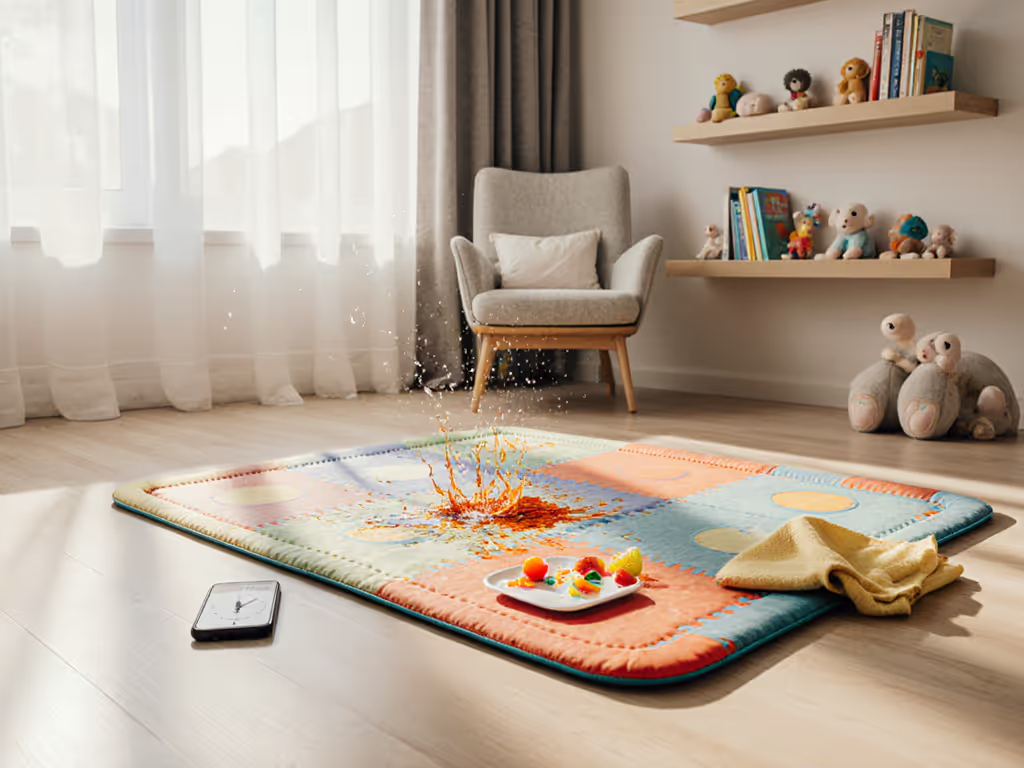
With twins, messes double. For step-by-step care by material, use our play mat cleaning guide. Evaluate how fast a mat bounces back from spit-up, diaper blowouts, pureed vegetables, and pet hair.
Cleaning protocol:
Stain resistance: Good to excellent, depending on material porosity. TPU and smooth closed-cell foam resist stains better than EVA.
Drying time: 1-3 hours in room temperature with air circulation; 30-60 minutes in direct sunlight.
Durability concern: Repeated water immersion can weaken seams or adhesive over time; avoid soaking.
Cleaning protocol:
Drying time: 4-8 hours (longer than spot-clean because of water penetration).
Advantage: Thorough cleaning; odor elimination; allergen removal.
Disadvantage: Takes mat out of service for extended period; heavier mats are difficult to load/unload; not practical for daily spot-cleaning.
Cleaning protocol:
Stain resistance: Excellent; non-porous surface resists absorption.
Odor retention: Minimal; natural rubber doesn't trap smells as readily as EVA.
Durability: Material integrity is strong; cleaning doesn't degrade performance.
Recommendation for twins: Prioritize wipeable or machine-washable mats over puzzle tiles (which trap debris and are hard to clean thoroughly). Expected cleaning frequency: daily spot-cleaning, weekly thorough clean, monthly deep clean.
Risk note: Never use bleach, ammonia, or steam cleaners on any play mat; chemical residue or heat damage can compromise material safety.
Your home doesn't stop being "grown-up" when babies arrive. A mat should integrate, not dominate.
Neutral, solid tones (cream, light gray, soft sage, tan): Blend into living rooms; feel calming; hide stains less effectively than patterned options.
Reversible designs (one neutral side, one soft pattern): Flexibility to match room mood; slight upgrade in aesthetic engagement without commitment.
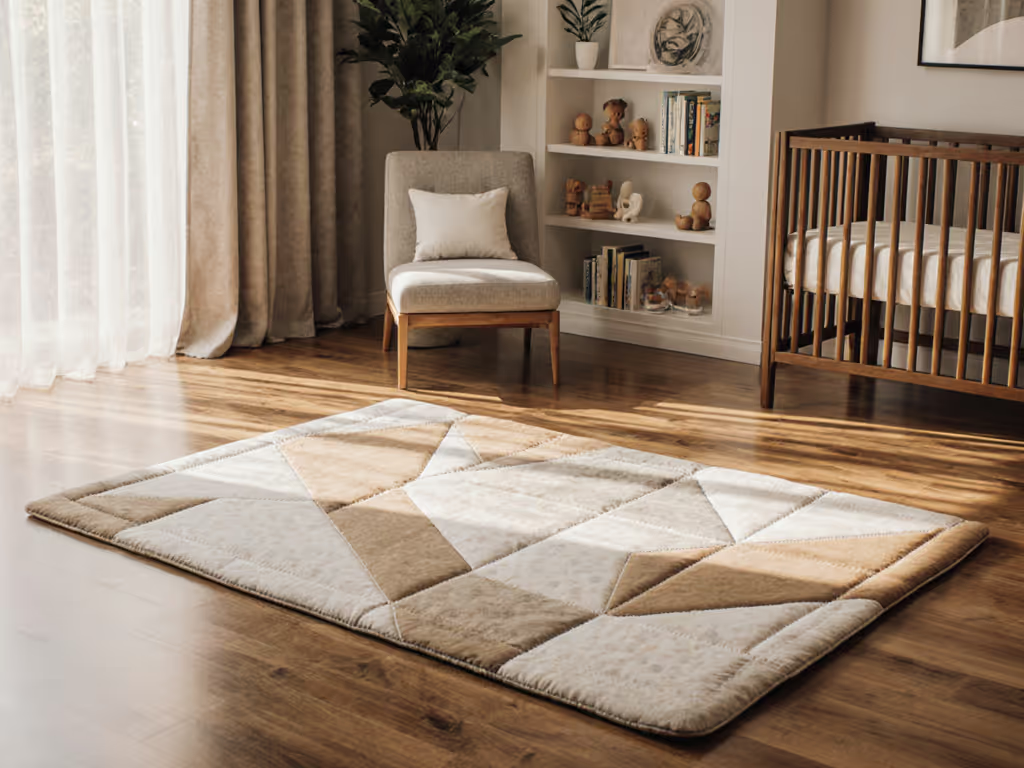
Minimalist geometric patterns or subtle textures: More visually interesting than flat solids but still sophisticated; avoid bright kiddie prints if that clashes with your style.
Practical truth: Lighter colors show stains but read as more minimalist; darker colors conceal messes but photograph as heavy. Middle-ground (gray, warm taupe, soft white) is the aesthetic sweet spot.
Single large mats:
Dual smaller mats:
Foldable mats (some TPU or closed-cell foam designs):
Multi-use option: If you do home yoga, Pilates, or floor workouts, a mat that serves dual duty (baby play + adult exercise) justifies taking up permanent shelf space. Look for mats rated for 200+ lb body weight and approved for both applications.
Buying once and buying well means tracking value over 2-4 years of use.
EVA (8-12 mm):
Expected use: 18-30 months before visible compression or discoloration
Daily wear factor: Moderate to high (color fading, indentation marks from furniture)
TPU or Closed-Cell Foam (10-15 mm):
Expected use: 3-4 years
Daily wear factor: Low; resists compression and discoloration
Natural Rubber (8-12 mm):
Expected use: 4-6 years
Daily wear factor: Minimal; may require occasional conditioning but maintains performance
If comparing a $150 EVA mat (2-year lifespan) vs. a $280 TPU mat (4-year lifespan):
Factoring in durability, the TPU is actually cheaper per month and requires less frequent replacement stress (shopping, shipping delays, environmental impact of disposal).
Add resale or hand-me-down value: A well-maintained TPU or natural rubber mat often sells for 40-60% of original price on secondhand market; EVA mats rarely recoup resale value.
Watch for:
Durability advantage: Right support, less bulk - a firmer, denser mat in a smaller footprint (dual mats or a single thick mat) often outlasts a large, soft, thin mat because it doesn't bottom out and doesn't require constant repositioning.
Use this checklist to narrow down:
Your floor: _______________
Minimum mat thickness: (Refer to Floor Type Compatibility Matrix above)
Material priority: (Grip > Acoustic dampening > Durability)
Total play area needed: _____ square feet (most twins need 40-60 sq. ft. to roll, crawl, stand, and play with toys)
One large mat or two smaller?
Realistic cleaning schedule:
Stain/odor sensitivity:
Budget: $______
Expected use: 2 years / 3 years / 4+ years
Buy-once philosophy: If you plan 3+ years, premium materials (natural rubber, quality TPU) pay for themselves
If buying online:
If buying in-store:
Choosing a twin play mat is an act of practical optimism - you're investing in a space where your children feel secure and you feel sane. Here's what to do now:
Measure your play space (length, width, note your floor type and any obstacles like furniture legs or pet food bowls).
Identify your floor type from the compatibility matrix and note the recommended mat thickness and material.
List your top 2-3 non-negotiables (e.g., "Must be non-slip on our tile," "Must fit under the sofa for storage," "Must be white or neutral").
Check for third-party certifications (CPSIA, OEKO-TEX, Greenguard Gold, phthalate/BPA/flame retardant testing) if materials transparency is a priority.
Request samples or test returns before committing; spend 2-3 weeks living with your top choice.
Calculate the cost-per-month over your expected use window to justify the spend.
Buy from a retailer with a hassle-free return policy for bulky items; peace of mind is worth the slightly higher price.
The goal isn't perfection; it's clarity. A mat that performs reliably on your floor, supports your twins' play safely, and integrates into your home without resentment - that's the right choice. You'll know it when you stop thinking about the mat and start thinking about your babies.
Right support, less bulk.
Start with these variables. The rest will follow.