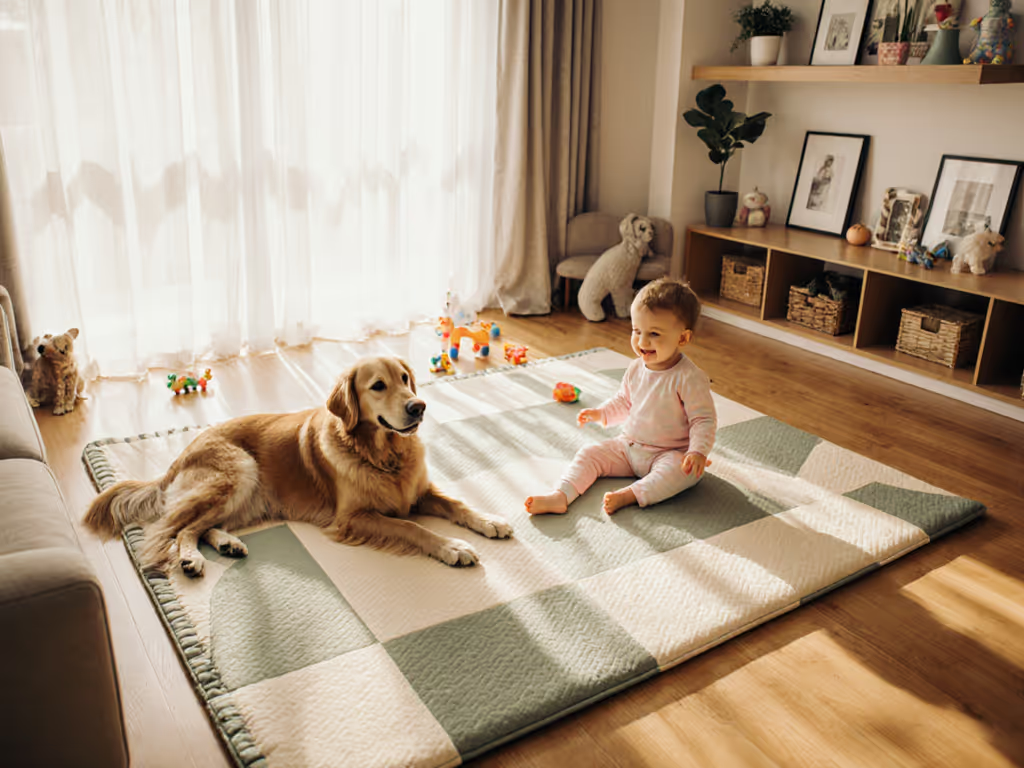
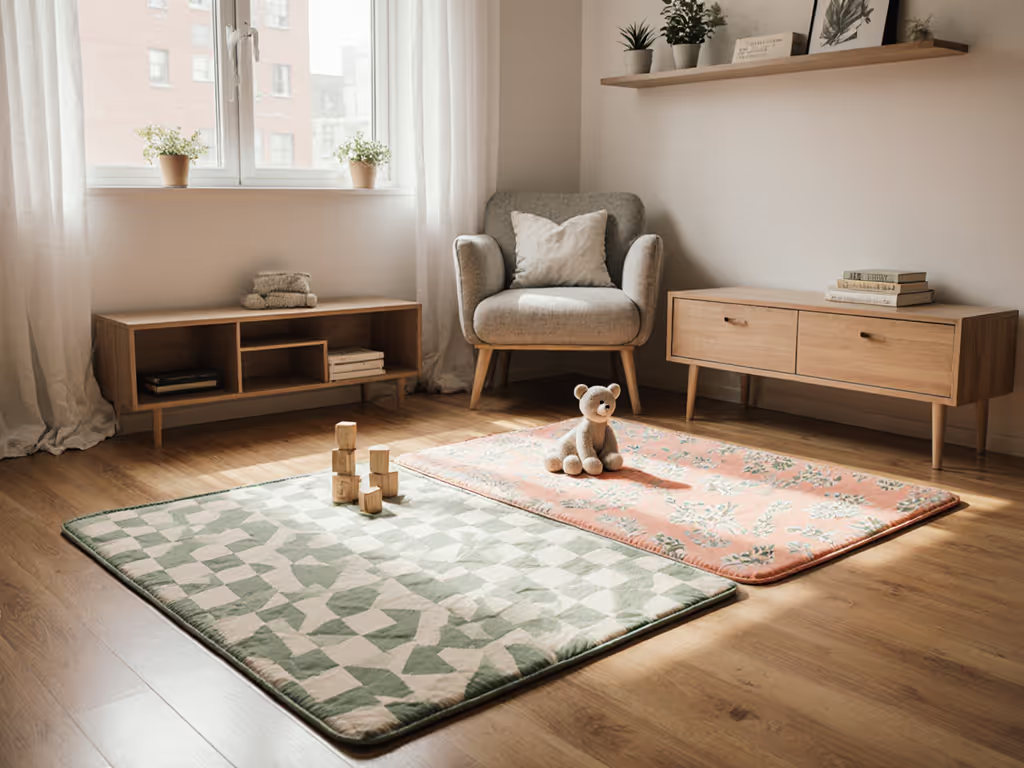
Parents with twins in small homes face a specific geometry problem: a twin play mat comparison forces you to choose between having enough surface for safe simultaneous play and having floor space left for yourself. And if the mat is a nightmare to clean at midnight (sticky with yogurt, stained with crayon, reeking of spit-up), you'll resent it. Time to clean is the real daily cost, and I've timed this one.
Unlike shopping for a single baby, play mats for multiples demand a harder trade-off calculus. This guide breaks down what actually works for two babies across different developmental stages, what stays clean long enough to justify its footprint, and which simultaneous twin play mat solutions let you reclaim your living room.
Understanding Your Twin Play Mat Needs
The first reality: most mats marketed for twins aren't actually wide enough for two active babies. Research into developmental safe-spacing confirms this.[1] For newborns through 6-month-olds during co-tummy time, you need a 30-inch minimum width to position two babies side-by-side safely without head-to-toe overlap (a critical consideration for airway awareness).[1] By 6-12 months, length matters more than width; rolling babies need 36 inches or longer, but the width bottleneck eases as they develop directional control.[1]
That said, most dual-baby setups don't live on a single mat. Instead, space-efficient twin play surface thinking means choosing a mat that serves one baby through multiple developmental windows, then expanding modularly if needed, rather than buying a 6-foot mat, using it for 8 months, and then storing it under the couch because both kids have graduated to the toddler phase. For compact setups under three feet wide, see our space-smart twin mat picks.
Developmental Windows and Mat Sizing
0-3 months (Tummy Time Foundation)
- Babies spend 15-40 minutes per session on mat
- Risk of compression matters less; cushioning and positioning aids matter more
- Space for a nursing pillow, rattles, and parent elbows
- Minimal rolling risk; edge safety is low-priority
- Cleanability test: spit-up and diaper blowouts on a daily basis
3-6 months (Beginning Mobility)
- Babies pivot and rock; they don't roll far yet
- Mat edges and thickness become safety markers
- Traction matters; slipping mat = frustrated baby (and parent)
- Soil types expand: pureed food, drool, teething chew marks, pet hair landing on the surface
6-12 months (Rolling and Crawling)
- Babies roll across mats; side-to-side impact with edges is real
- Edge curl or curl-and-pinch hazards create trip/entrapment risk
- A 3-foot-wide mat becomes restrictive for two crawlers
- Modular dual-baby play mat features (like tiles or expandable panels) shine here
- Soil complexity peaks: pureed sweet potato, scrambled egg, pet kibble, carpet lint migration from adjacent rooms
12-24 months (Toddler Territory)
- Impact tolerance matters; toys are dropped from heights
- Noise dampening becomes apartment-dweller priority #1
- Staining risk peaks (marker, juice, sticky finger transfers)
- Many parents transition partially off the mat to playpen or gated space; the mat becomes secondary
Cleanability: The Hidden Deciding Factor
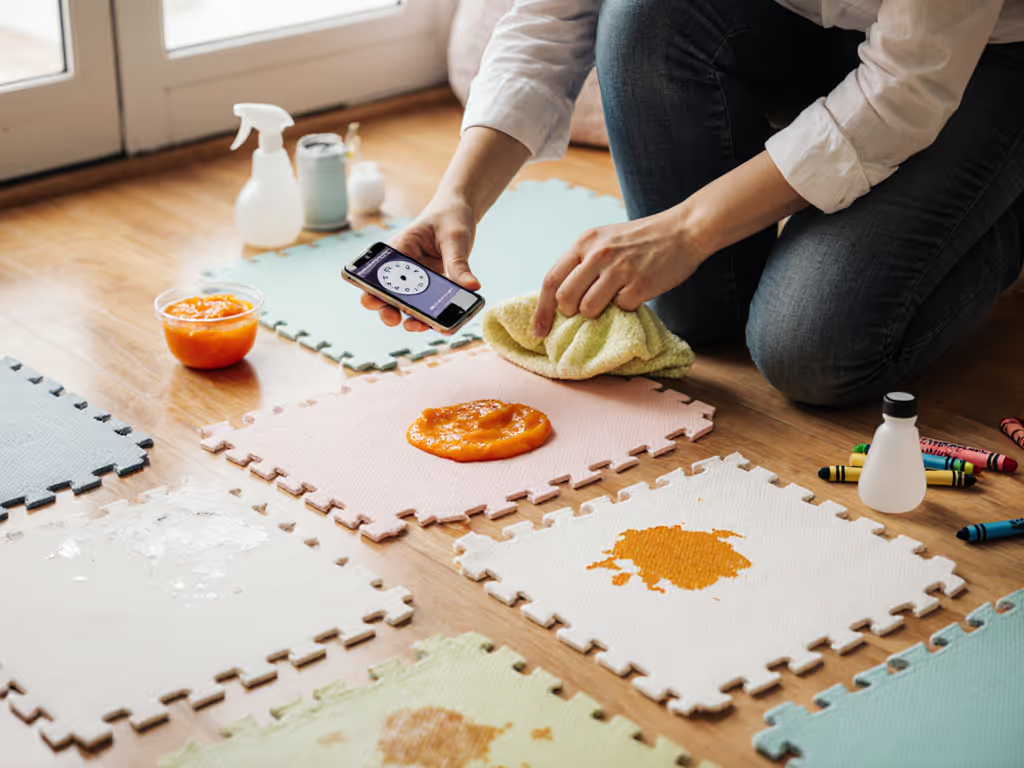
I once timed a cleanup at 2 a.m. (yogurt, coffee, and crayon collision) on a foam mat while holding a sleepy toddler on my hip. Two passes with a damp cloth, 90 seconds total. Dry at five minutes. Compare that to another mat that required a full bath soak, a half-hour dry cycle, and a vinegar rinse to kill the smell. Get step-by-step methods in our play mat cleaning guide. Guess which one stayed in rotation.
Here's the uncomfortable truth: if cleaning takes longer than five minutes per session, the mat becomes a burden instead of a tool. A burden you'll avoid using, which defeats its entire purpose.
Cleaning Protocols by Material Type
Closed-Cell Foam or EVA Mats
- Spot-clean method: spray with diluted white vinegar (1:1 ratio with water), wipe with microfiber cloth, air-dry - 5 to 8 minutes
- Soil type handling: spit-up (excellent), crayon marks (good), fruit puree (fair; may leave faint staining)
- Full clean: vacuum first, then hose down outdoors (if space allows) or spray-and-wipe indoors
- Drying time: 15-25 minutes in ambient conditions; 8-12 minutes with a box fan
- Edge curl risk: moderate; EVA hardens in cold and can warp if soaked or left in direct sun
- Non-slip durability: most foam mats slip on hardwood after 4-6 months of daily use unless anchored
Natural Rubber Mats
- Spot-clean method: dampen cloth with mild soap and water, wipe, allow air-dry - 4 to 6 minutes
- Soil type handling: spit-up (excellent), crayon marks (excellent), puree stains (very good; minimal absorption)
- Full clean: gentle vacuum (rubber is puncture-prone if vacuumed with sharp-edged brushes), wipe down, or quick mop with a soft cloth
- Drying time: 10-15 minutes
- Edge curl risk: low to none; natural rubber resists temperature extremes
- Non-slip durability: natural rubber grips hardwood and tile naturally; grip persists for 2+ years
- Caveat: natural rubber is latex; if allergies are present in the household, rule this out
Interlocking Puzzle Tiles (EVA or Foam Blocks)
- Spot-clean method: remove affected tile, wipe/rinse, dry separately, reassemble - 8 to 12 minutes (plus the hidden cost of tile shuffling)
- Soil type handling: spit-up and spills sit between tiles, creating odor traps; crayon marks concentrate on raised edges; puree can seed into crevices
- Full clean: tedious; each tile must be wiped individually; crevices require a soft brush or old toothbrush
- Drying time: 20-30 minutes (tiles dry unevenly if stacked)
- Edge curl risk: high; tiles curl at edges within 6-12 months of heavy use, creating trip hazards and movement gaps
- Separation issue: tiles shift with infant movement and crawling; parents must re-seat them regularly
- Piece loss: one missing or lost tile destabilizes the entire setup; replacement tiles are often hard to match
- Non-slip durability: tile edges rely on friction between blocks; once tiles compress or warp, stability declines
Machine-Washable Mats (Fabric-Top, Foam Core)
- Spot-clean method: spray with diluted soap solution, wipe; heavy soils = remove mat and pre-rinse
- Full clean: follow manufacturer instructions; most are 30-minute wash cycles (warm water, gentle cycle) plus air-dry
- Drying time: 45-90 minutes in good airflow; heat-drying risks delamination
- Soil type handling: excellent for spit-up and puree (absorbed quickly, washable); fair to poor for oil-based marks (grease lingers)
- Durability: fabric-top can pill, bobble, or fray at edges after 12-18 months; seams are weak points
- Non-slip durability: fabric backing grips briefly; over time, it flattens and loses friction
- Space caveat: removing and washing a mat creates a 1-hour gap in usable play space; not ideal for families in apartments with limited rotation space
Soil-Type Testing Framework
When evaluating a mat, test it against your household's actual soil profile. Here's a checklist:
- Spit-up (newborn-8 months): Apply curdled milk + digestive enzymes to a corner. Wait 2 hours. Time your cleanup.
- Crayon marks (12+ months): Rub a crayon directly onto the mat surface (both color side and tip residue). Attempt removal with vinegar solution and gentle cloth.
- Fruit puree (6+ months): Spread a spoonful of sweet potato or prune puree on the surface. Allow to dry for 30 minutes. Attempt removal and check for staining.
- Pet hair and debris: Roll the mat (or section of tiles) onto itself. Assess how much debris stays embedded vs. releases easily.
- Sticky residue: Apply a touch of honey or jam to a hidden corner. Time your cleanup attempt after 1 hour of drying.
If cleanup for any soil type exceeds 8 minutes per incident, the mat is not worth the daily cognitive load. That's the test I use.
Key Factors in Choosing a Dual-Baby Play Mat
1. Floor Type Compatibility
Your underlying floor determines how well a mat stays anchored and how much friction it provides. For room-by-room recommendations, see our hardwood and carpet compatibility guide. Mismatches create a cascade of problems: a mat that slides invites your baby to topple mid-roll, and it frustrates you every time you reposition it.
Hardwood and Laminate Floors
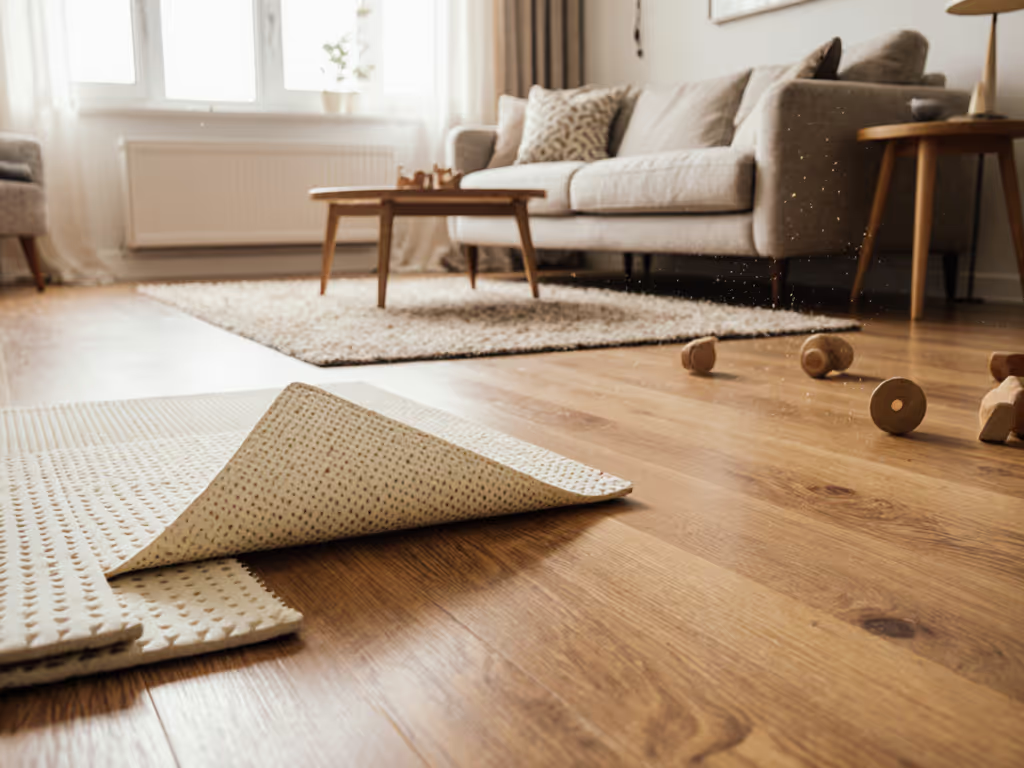
- Eco-friendly rubber or cork-based mats grip naturally without adhesive
- Most foam EVA mats slide; you'll need a non-slip underlay (adds $20-30 and complexity)
- Puzzle tiles slip dangerously; not recommended unless you anchor them with a perimeter frame
- Closed-cell foam + a thin rubber underlay = practical compromise
Tile and Stone
- Slippery substrate requires either a textured mat base or a separate grip underlay
- Natural rubber excels here (it grips tile directly)
- Foam on tile = high risk of sliding; check friction before committing
Carpet
- Mats bunch and create wrinkles; babies trip on ridges
- Thick foam mats compress under baby weight and become unstable
- Puzzle tiles sink and separate; avoid them
- Firmer mats (natural rubber, TPU) hold their shape better on carpet
Radiant Heat Floors
- Most foam mats insulate, which traps heat and risks warping
- Check with mat manufacturer before purchase; many void warranties for radiant heat
- Thin mats or tiles with gaps allow heat transfer
2. Thickness and Density Trade-Offs
Thicker isn't always better. The Goldilocks zone for most homes is 0.5 to 0.75 inches:[1] protective enough for baby falls, firm enough for healthy motor development (not sinky), and thin enough to fold compactly for storage.
Too Thin (Under 0.4 inches)
- Insufficient impact absorption; baby's head impact on hardwood is felt through the mat
- Compresses quickly under repeated crawling
- Stacks flat for storage; easy portability
Ideal Range (0.5-0.75 inches)
- Absorbs minor impacts and toy drops without creating a trampoline effect
- Resists compression dents over 12+ months of daily use
- Folds or rolls without taking up excessive closet space
- Provides enough cushioning for tummy time without that "sinking" sensation
Too Thick (Over 1 inch)
- Overly plush; babies don't develop proper proprioception (balance and spatial awareness)
- High likelihood of bunching on carpet
- Difficult to store; often requires a vacuum-seal bag or dedicated closet
- Expensive and heavy to move
- Takes longer to dry when washed or heavily soiled
3. Materials and Off-Gassing Concerns
Parents in this demographic prioritize transparency and third-party validation. Greenwashing claims without substance waste your trust, so demand specificity. For a deeper dive into certifications and compositions, read our materials safety guide.
Material Red Flags
- "Non-toxic" without named certifications (OEKO-TEX, Greenguard Gold, or CPSIA compliance)
- PVC-containing mats; PVC off-gases phthalates, especially in warm conditions
- Flame retardants listed but not identified (chlorinated or brominated compounds are neurotoxicants)
- "Natural rubber" paired with synthetic latex fillers (ask for 100% natural rubber or TPU confirmation)
Credible Certifications
- OEKO-TEX Standard 100: Tests for restricted substances across the full material chain
- Greenguard Gold: Ensures low chemical emissions and VOC limits; most stringent
- CPSIA Compliance: Required for products marketed to children under 13 in the U.S.; ensures lead and phthalate limits
- Prop 65 Compliance: California standard; particularly relevant for latex products
Common Materials and Their Profiles
| Material | Off-Gas Risk | Odor Profile | Durability (Months) | Cleanability |
|---|
| EVA Closed-Cell Foam | Low (OEKO-TEX variants) | Mild, fades in 48-72 hours | 18-24 | Very Good |
| Natural Rubber | Very Low | Earthy/faint | 30+ | Excellent |
| TPU (Thermoplastic Polyurethane) | Low-Moderate | Minimal | 24-36 | Good |
| PVC | High | Strong chemical odor | 12-18 | Fair |
| Polyurethane Foam | Moderate-High | Pungent | 12-18 | Good |
4. Edge Safety and Wear Patterns
Edge curl and fraying are the silent killers of mat longevity. A mat that looks pristine at 6 months can become a tripping hazard by month 10 if edges aren't engineered properly. Compare fastening options in our edge security guide.
Edge Failure Patterns
- Curl creep: Foam mats exposed to humidity and temperature swings curl at the perimeter within 6-12 months
- Seam splitting: Glued or heat-sealed edges separate; look for mats with bonded or welded edges, not just glued ones
- Tile lift: Puzzle tiles corner-curl or separate from the base, creating a pinch-and-entrap risk
- Fabric fraying: Mats with stitched fabric borders unravel at edges; reinforced binding extends lifespan
Testing for Edge Durability
- Press your thumb hard into a corner edge; does it spring back or stay dented?
- Try to separate the edge from the core; is the bond flexible or brittle?
- Fold the mat gently; do seams show strain or do they flex without cracking?
5. Noise and Sound Dampening
Apartment dwellers and parents with napping infants upstairs value sound dampening. A dense mat dampens better than a thin one, but even a 0.5-inch mat outperforms hardwood alone by 3-5 decibels.
- Dropped toys (impact noise): 0.75-inch mat reduces impact sound by ~5 dB vs. bare floor
- Crawling (friction noise): natural rubber and EVA dampen better than puzzle tiles (which transmit sound through gaps)
- Toddler stomping: firm, dense mats minimize vibration transfer to floors below
Space-Efficient Solutions for Twin Households
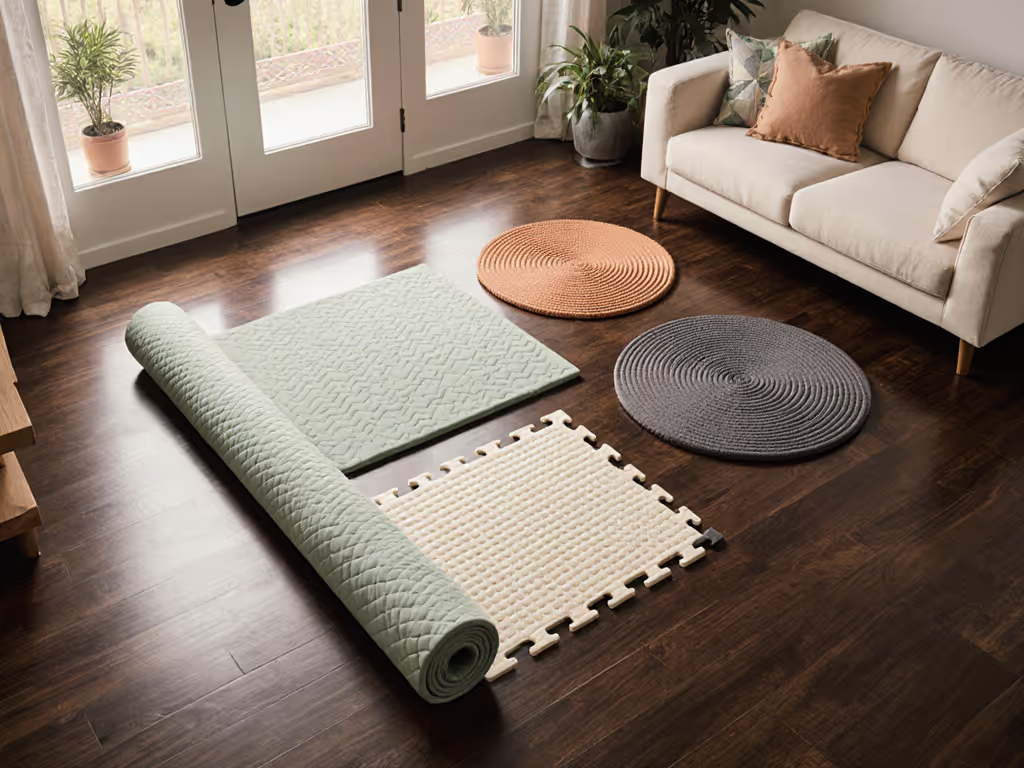
Option 1: Single Large Mat with Modular Expansion
Strategy: Start with a 4' × 6' mat (or closest equivalent to your floor space). Two babies fit comfortably; one mat stores by folding or rolling and tucking under a sofa. As toddlers graduate and need separate activity zones, add puzzle tiles to extend the footprint into a corner or hallway.
Pros
- Cohesive visual aesthetic; neutral color blends into your décor
- One-piece storage is simpler than managing puzzle tiles
- Cleanup is straightforward (no crevices; no separated pieces)
- Lifecycle value: single mat serves newborns through toddlerhood
Cons
- Upfront cost is higher ($150-350)
- Less flexible for non-rectangular spaces (L-shaped living rooms, alcoves)
- If the mat fails or stains irreversibly, you lose the entire setup
Best for: Families with defined rectangular play areas, minimalist aesthetics, and the budget to invest upfront for longevity.
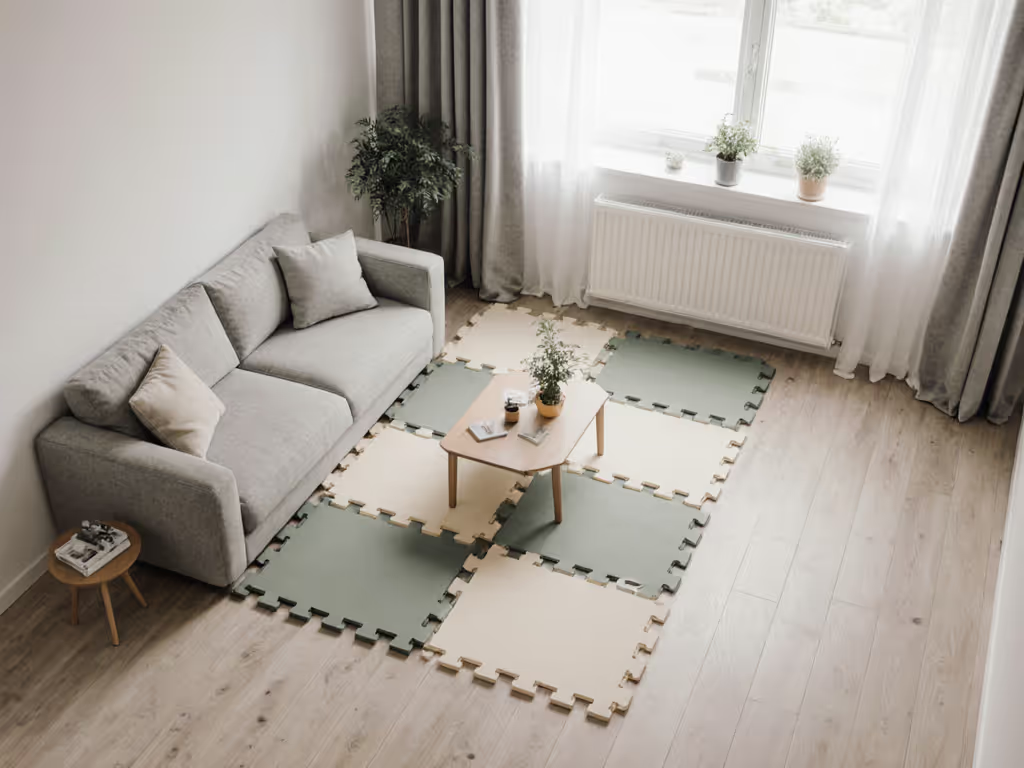
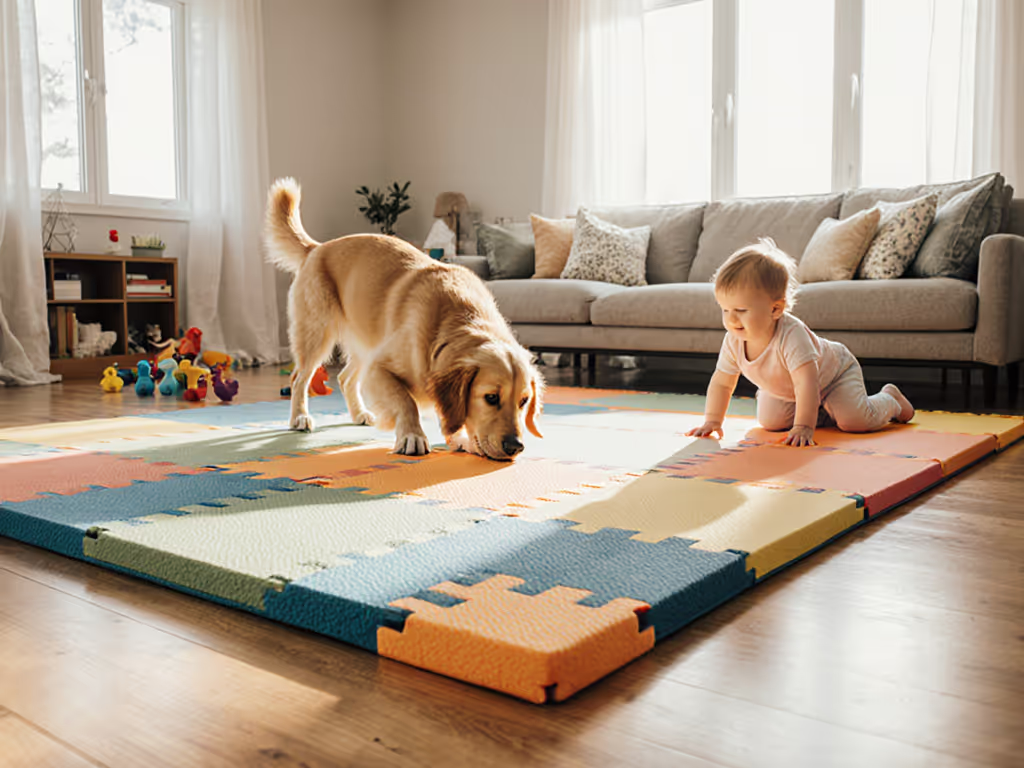
Option 2: Interlocking Puzzle Tiles (EVA or Natural Rubber)
Strategy: Buy a 4-tile base (typically 4' × 4' or 4' × 6', depending on tile size). Expand by one row or one tile at a time as children grow or space allows. Store individual tiles under a bed or in a flat bin.
Pros
- Modular; you scale cost as children develop
- Compact storage; tiles fit into closets or under furniture
- Customizable shape; fit oddly-sized rooms
- Easy piece replacement if one tile damages
Cons
- Edges curl and lift within 6-12 months, creating tripping hazards[1]
- Gaps between tiles trap hair, debris, and food particles; cleaning takes 2-3 times longer than a one-piece mat
- Tiles shift under baby movement; you'll re-seat them several times weekly
- Pieces get lost (under furniture, chewed by pets); a missing tile destabilizes the entire setup
- Non-slip durability declines as tiles compress; slipping becomes an issue after 18-24 months
Best for: Families with unusually shaped rooms, budget constraints ($0.92 per mat per month if purchased conservatively),[1] and tolerance for active maintenance.
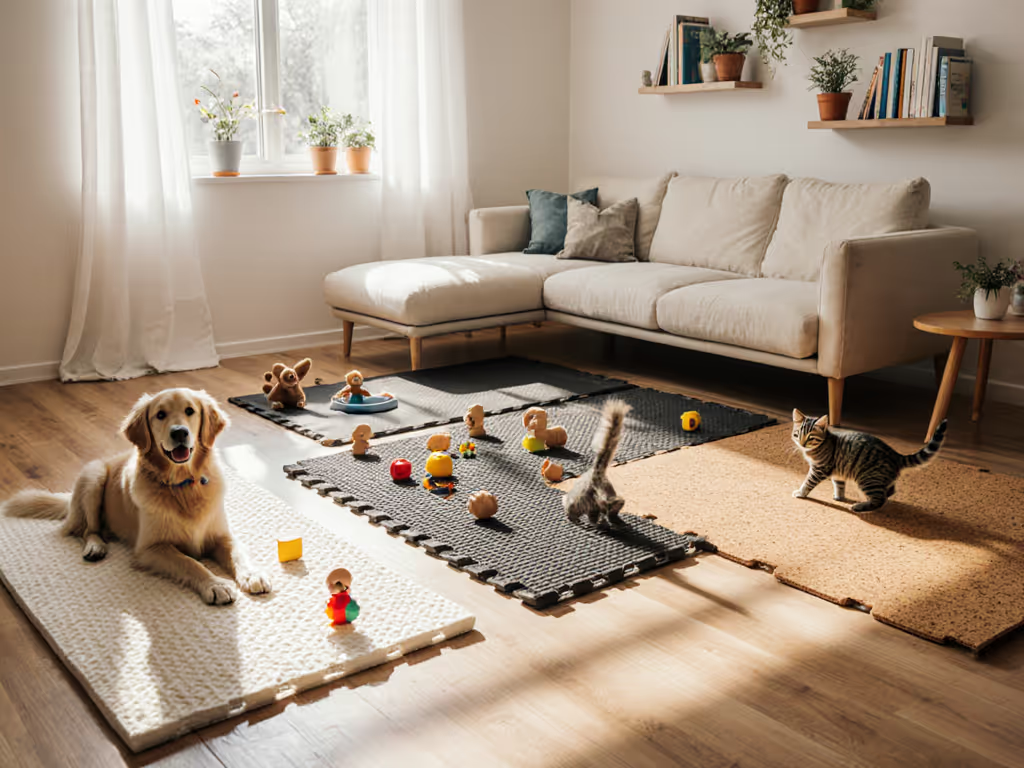
Option 3: Combination (One-Piece Mat + Tile Extension)
Strategy: Primary mat (4' × 6') handles newborn-to-crawling phase. Puzzle tiles extend into a hallway or bedroom as babies become toddlers and need separate zones. You keep the core mat clean and protected; tiles take the "traffic" zone.
Pros
- Best of both: core mat stays pristine; tiles absorb wear and tear
- Flexible scaling; buy tiles as needed
- If tiles fail, you've lost minimal investment; core mat continues serving its purpose
- Phased approach spreads cost across 6-12 months
Cons
- Requires two distinct material types; aesthetic cohesion is harder
- Highest total cost over time (mat + tiles + underlay)
- Logistics of moving between two surfaces
Best for: Families that plan to transition toward separate play zones for twins, want low-risk modularity, and don't mind a transitional phase.
Simultaneous Twin Play Mat Considerations
If both babies must play at the exact same time on the same mat, you're operating in the constrained 30- to 36-inch width zone mentioned earlier.[1] Here are your realistic options:
Simultaneous Play Duration and Development Phase
0-3 months
- Duration: 20-40 minutes per session
- Risk: Minimal (babies aren't rolling toward each other)
- Solution: Any mat 30+ inches wide works; focus on comfort and easy cleaning
3-6 months
- Duration: 30-60 minutes (includes tummy time, play gym interaction, rolling practice)
- Risk: Moderate (babies will rotate and shift; head-to-head contact increases)
- Solution: 36+ inches wide; edges must be stable and non-tripping
- Priority: Secure non-slip anchoring to your floor type
6-12 months
- Duration: 60-120 minutes (two rolling babies create space pressure)
- Risk: High (babies roll into each other, edges, and furniture nearby)
- Solution: Consider a secondary mat or tile extension; one mat rarely accommodates two crawlers safely[1]
Honest Assessment
Most families find that "simultaneous play on one mat" works best for newborns and young infants. By 6-8 months, when rolling and crawling begin, a second play surface (tile section, playpen, or gated area) makes logistics simpler and safety higher. Plan for it; don't fight the developmental reality.
Twin Developmental Play Mat Adaptability
A mat's value multiplies if it serves across developmental windows without replacement. Here's how to assess adaptability:
Tummy Time to Crawling (0-12 Months)
- Firmness: Does the mat support neck and head during tummy time without sinking? A baby's head should rest at a slight incline (not flat), and the mat should not compress more than 0.1 inches under a baby's weight.
- Texture: Is the surface textured enough for traction (preventing rolling away from mom's reach) but smooth enough for easy movement? Babies transition from immobile to mobile; a textured surface that grips too much can frustrate their developing motor skills.
- Drainage: Does the surface dry quickly after spit-up or diaper accidents? A damp mat becomes a petri dish for bacteria and mold.
Crawling to Standing (8-18 Months)
- Impact absorption: Can the mat absorb a baby's weight shift as they transition from belly to hands-and-knees to standing? A mat that felt great for tummy time might feel unstable once a baby is pulling to stand.
- Edge security: Do edges stay flat and secured, or do they curl and create a pinch zone? This is the phase when edge failures become dangerous.
- Traction: As babies develop balance, does the mat provide enough grip to prevent slipping mid-crawl or when pulling to stand? Overly slippery mats increase fall risk.
Toddler Play (18-24 Months)
- Durability: Can the mat withstand toy drops, marker marks, and aggressive play without pilling, peeling, or staining permanently?
- Safety: Is the surface free of small cracks, seams that have split, or edges that have lifted? A curious toddler will explore every edge.
- Aesthetics: Can you tolerate the mat's appearance in your living room for another 6 months, or are you ready to transition it to a playroom or storage?
Maintenance Protocols and Lifecycle Costs
A mat's true cost is not its price tag; it's price per month of actual use plus the time you invest in maintenance. A $200 mat used for 24 months = $8.33/month. A $100 mat used for 12 months before it stains irreversibly or edges fail = $8.33/month. Same cost; very different experience.
Weekly Maintenance Routine
Monday through Friday (Light Daily Reset)
- Vacuum or wipe debris (lint, crumbs, pet hair) from the surface - 3 minutes
- Spot-clean visible spills or drool marks with a damp cloth - 2-4 minutes
- Allow to air-dry if wet - 5-10 minutes ambient time (can use a box fan to speed it up)
Saturday or Sunday (Full Deep Clean)
- Move mat slightly to vacuum or sweep underneath - 5 minutes
- Hose down or spray-clean the entire surface (if foam mat) or full wash cycle (if fabric-covered)
- Air-dry in a well-ventilated area or outdoors if space permits - 15-30 minutes
- Return to play space when fully dry
Monthly (Inspection and Odor Check)
- Press into mat edges and corners; look for soft spots or compression dents
- Sniff the mat; any sour or moldy smell indicates moisture retention (risk of bacterial growth)
- Check seams and edges for peeling, fraying, or lifting
- Test non-slip base for slipping or movement on your floor type
Red Flags: When to Replace
- Edge curl is severe (more than 0.5 inches lifted from the floor); creates tripping hazard
- Seams have split or begun separating; water and debris infiltrate the core
- Permanent staining (that survives your standard cleaning routine); odor lingers despite cleaning
- Non-slip base is worn or peeling; mat moves uncontrollably on your floor
- Visible cracks or tears in the surface; bacteria colonies form in crevices
- Compression dents don't spring back; foam has permanently degraded
- Unpleasant odor persists after deep cleaning and drying; indicates mold or bacterial growth in the core
Summary and Final Verdict
Choosing a play mat for multiples isn't just about finding the largest surface that fits your budget. It's about honest assessment of three competing demands: space, cleanliness, and durability. You can usually only optimize two of the three.
If space is your constraint (small apartment, shared living area), invest in a modular or thin mat that folds compactly and stores under furniture. Accept that you'll likely expand to a secondary tile section by 12 months.
If cleanability is your priority (pet household, frequent spit-ups, chaos-prone environment), choose natural rubber or OEKO-TEX-certified EVA foam with sealed edges and an easy-wipe surface. Expect to pay more upfront ($200-350), but gain 2-3 years of reliable use and fast cleanup.
If durability is paramount (you want to buy once, use twice, for both twins, then resell or donate), invest in a premium natural rubber or TPU mat with proven edge retention and third-party certification. Avoid puzzle tiles; they fail faster and create more management burden.
Real-world hedge: Buy a solid, mid-range EVA foam mat (0.5-0.75 inches, OEKO-TEX certified, sealed edges) for $150-200. Pair it with a non-slip underlay suited to your floor type. Use it for 18-24 months; then add puzzle tiles to adjacent space as toddlers develop separate zones. Repurpose the core mat for yoga or playroom use, or donate it. Total lifecycle cost: ~$7-$9 per month. Sanity preserved: priceless.
The mat you'll actually use is the one that doesn't demand too much from you. Time to clean is the real daily cost, and a mat that takes five minutes to spot-clean is infinitely more valuable than one that requires thirty minutes and a vinegar soak. Choose accordingly, test thoroughly before committing, and remember: if it's fussy to clean, it won't get used.