
Pet-Friendly Play Mat Comparison: Safest Picks for Pets & Babies
25th May•14 min read
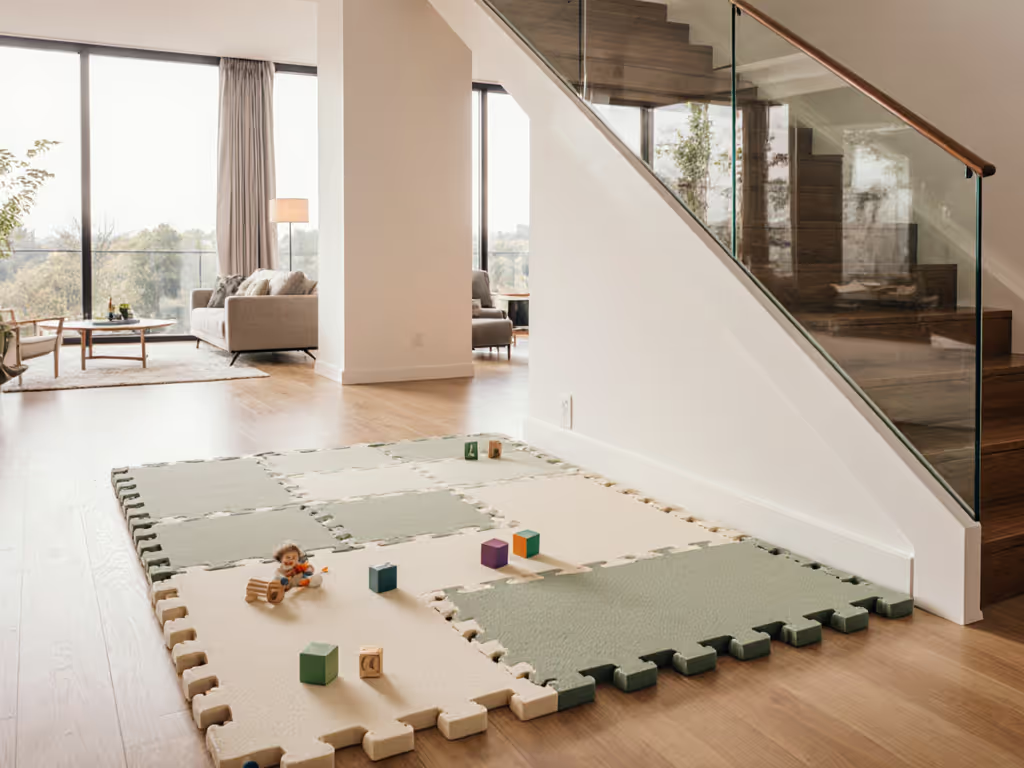
When your baby transitions from stationary play to rolling, crawling, and eventually pulling to stand, a stair-safe play mat and multi-level home play mat become more than comfort; they become infrastructure for safe, staged exploration. But in homes with stairs, split levels, or even single-step transitions between rooms, the usual play mat advice breaks down. Your mat must work harder: it needs to define a contained zone away from staircase edges, anchor itself reliably on hardwood or laminate without slipping when your toddler launches forward, and stay secure during the high-traffic chaos of daily life. If you’re unsure how your floors affect mat grip, see our floor compatibility guide. The challenge isn't just choosing the right mat; it's choosing one that fits your home's actual layout and your family's movement patterns.
I learned this the hard way. When our son arrived in a 480-square-foot walk-up, I spent a week taping mat footprints on the floor: tracking traffic patterns, where the stroller needed to park, which corner caught morning light for nap time. That exercise revealed something crucial: the best mat is the one your home can live with daily. In a multi-level space, that means a mat that doesn't migrate toward stairs, stays put on your floor type, and packs away cleanly when guests come over. For choosing dimensions that fit tight floor plans without crowding pathways, use our play mat size guide.
Most play mats are designed for single, open rooms. They assume a consistent floor type, predictable traffic, and the luxury of permanent placement. Multi-level homes break all three assumptions.[1] Stairs create psychological and physical barriers that demand edge security and intentional sizing. Seams and edges become trip hazards, especially as toddlers learn to pull to stand along the mat perimeter. Off-gassing from cheaper foam becomes noticeable in stairwells where air circulates differently. To reduce fumes and verify safe materials, follow our non-toxic play mat safety checklist. And on staircases themselves (the most hazardous area for toddlers), traditional cushioned play surfaces create new problems: a mat draped over stairs is an entanglement risk, while a mat placed beside stairs must be firm and wide enough to redirect a crawling or toddling child away from the edge without creating a separate climbing attraction.[1]
The solution isn't to avoid play mats in multi-level homes; it's to choose them with staircase geometry in mind. For edge containment near stairs, compare interlocking vs weighted borders to select the safest fastening approach for your layout.
Square inches are a budget. Make the mat earn them. In multi-level homes, the right size depends on three variables: the developmental stage your child is entering, the floor plan of your play zone relative to stairs, and whether the space is shared with adult furniture.
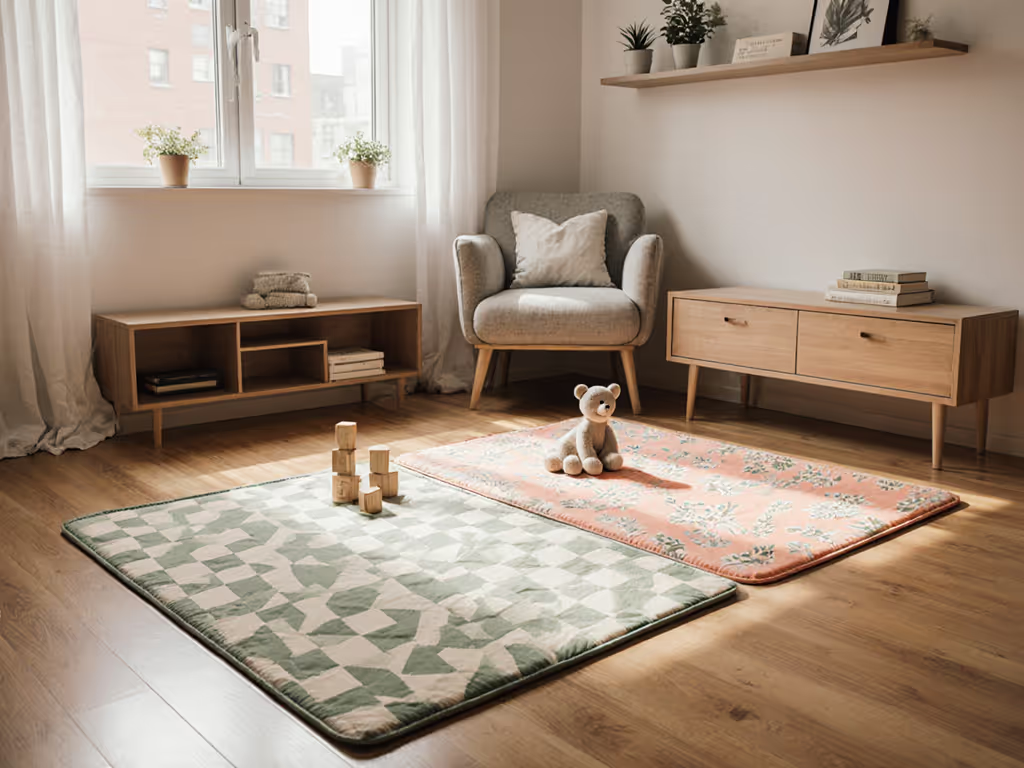
For tummy time and early rolling (birth-6 months): A 6' × 4' mat (24 square feet) is the practical minimum.[2] This size fits against one wall or alongside a sofa, leaving sight lines to stairs and doorways clear. At this stage, your baby isn't mobile enough to reach edges or attempt escape, so the focus is cushioning and non-slip backing for your own comfort during tummy time sessions.[4]
For crawling and cruising (6-18 months): A 7' × 5' mat (35 square feet) becomes optimal.[2] This footprint accommodates rolling without the baby reaching the perimeter constantly, allows space for a play gym or soft toys without cramping the zone, and fits most urban living rooms without dominating them. Critically, a 7' × 5' mat can be positioned so its longest edge runs parallel to stairs (never perpendicular to them), creating a clear boundary that your crawling child learns through repetition.[2]
For toddler play (18+ months): An 8' × 6' mat (48 square feet) enters dedicated-playroom territory and becomes difficult to justify in shared multi-level spaces.[2] If your toddler is climbing stairs with adult supervision, a smaller mat placed strategically (away from the staircase entrance) is safer than a sprawling mat that encourages independent navigation of the whole home.
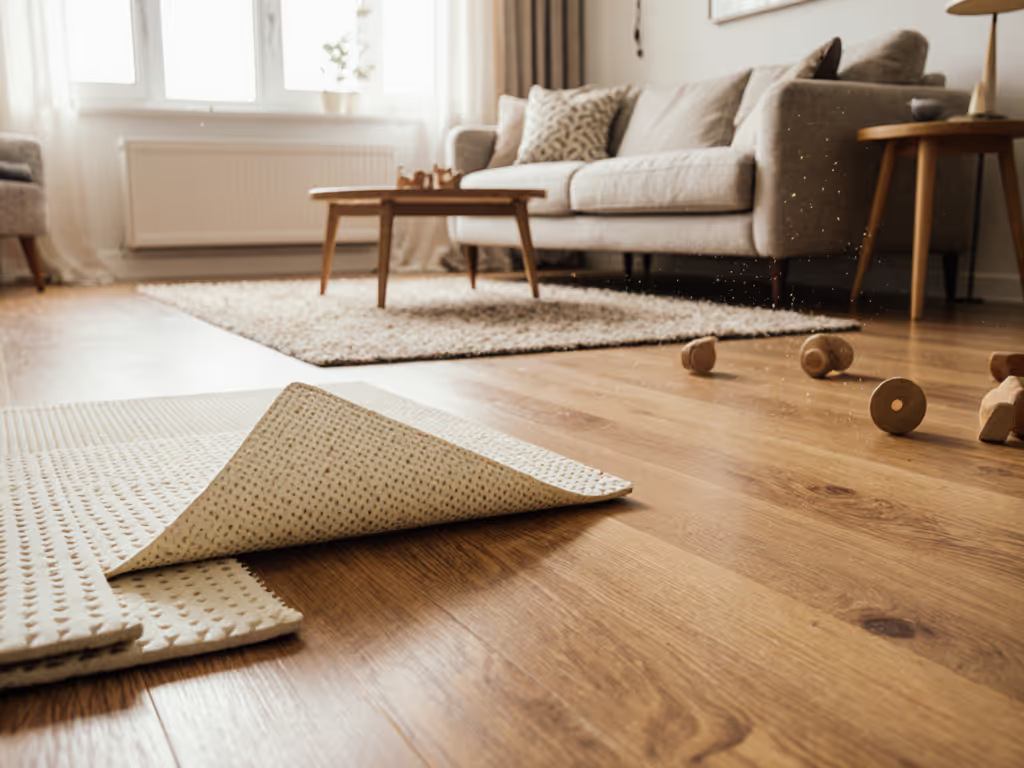
Hardwood and laminate floors add a hidden requirement: a 6-12 inch border of bare floor around the mat's perimeter for stability and movement without slipping.[2] This means your actual usable play zone is smaller than your mat's footprint, a trade-off worth acknowledging before purchasing.
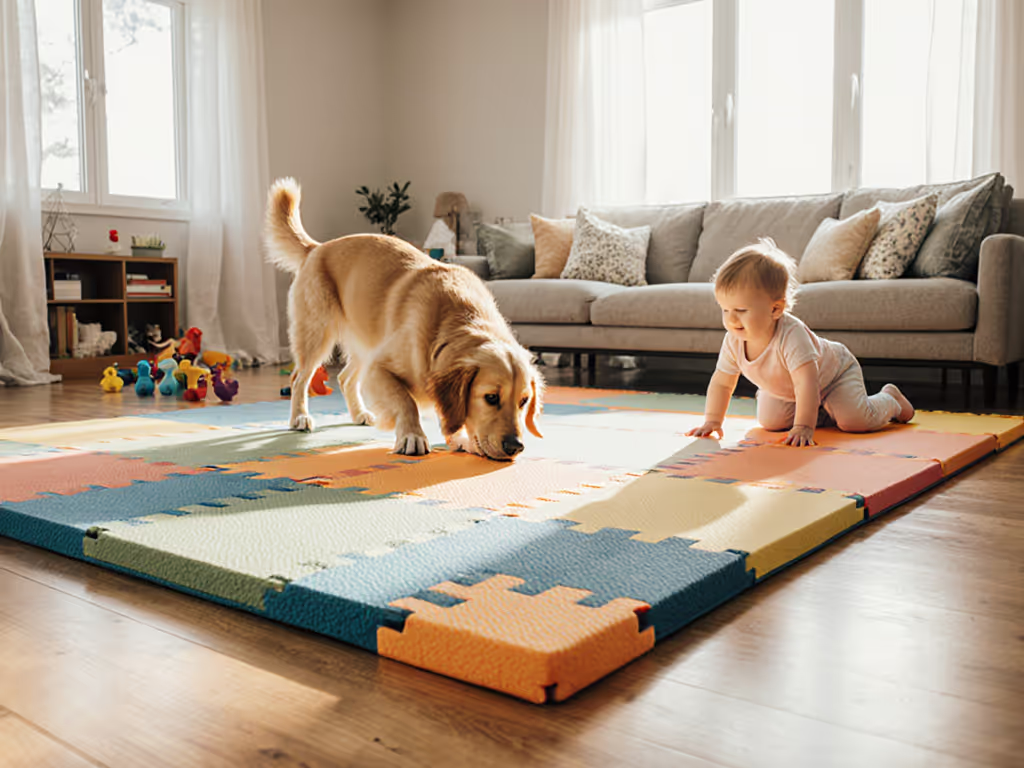
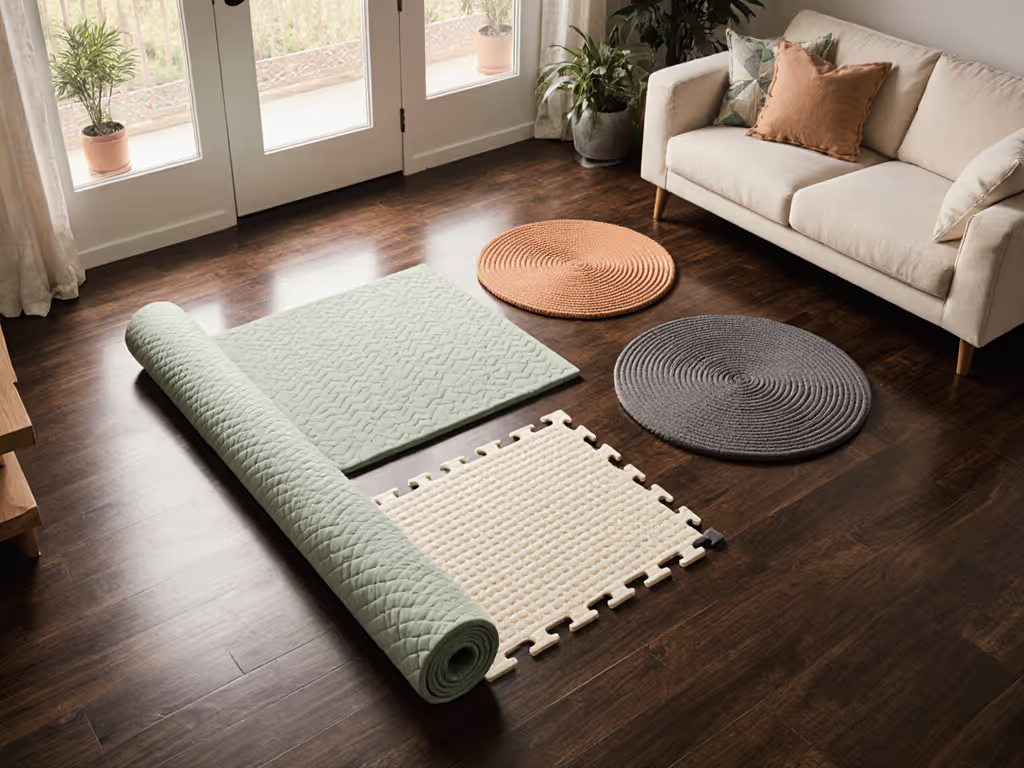
This choice shapes how well your mat handles the unique stresses of multi-level homes: movement toward edges, repeated set-up and takedown, and the need for true stickiness without adhesive residue. If you’re leaning toward tiles, see our compact puzzle mat systems comparison for interlock strength, seam stability, and safety trade-offs in high-traffic areas.
Pros:
Cons: