Pet-Friendly Play Mat Comparison: Safest Picks for Pets & Babies
25th May•14 min read
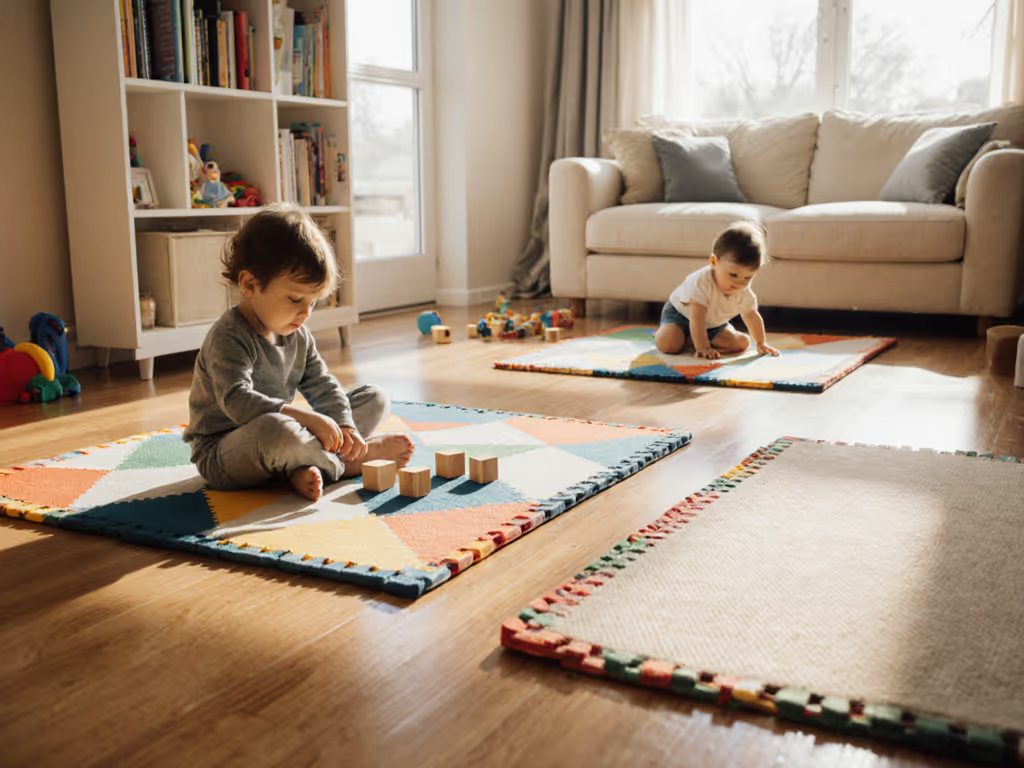
When your home transforms from a single-baby nursery to a multi-child play zone, finding the right sibling play mat comparison becomes essential. As space shrinks and developmental needs multiply, parents need multi-age play mat solutions that actually deliver across ages, not just marketing promises. In this critical analysis, I cut through the hype to evaluate what truly works for families navigating the complex reality of shared floor spaces. Transparency is a feature, not a vibe or hint.
Having tracked materials safety across hundreds of baby products, I've witnessed how many "one-size-fits-all" mats fail when confronted with the messy reality of multiple children. I remember our own nursery smelling 'new' for days until I realized that 'new' often meant VOCs. That experience taught me to request third-party test reports and track off-gassing (a practice that quietly resolved my headaches and gave me peace of mind).
"Bigger is better" is marketing fluff: what you need is strategically sized space. Pediatric occupational therapists recommend minimum dimensions based on developmental stages:
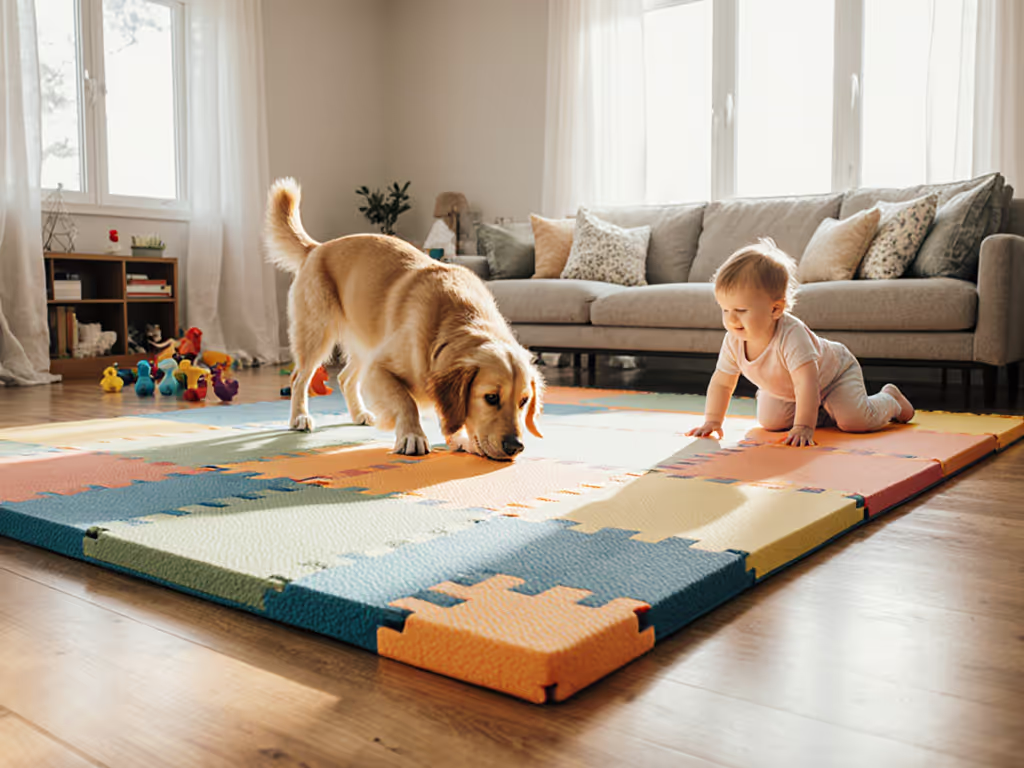
For siblings sharing space, calculate your minimum footprint: (older child's space) + (younger child's space) + 2 feet for movement. In practice, this means most urban apartments need at least 5'x7' of dedicated play area. See our play mat size guide for small spaces to right-size multi-child zones. The standard "6-piece puzzle mat" (roughly 4'x4') works for single babies but fails when accommodating multiple children (especially when one is learning to pull up while the other crawls through).
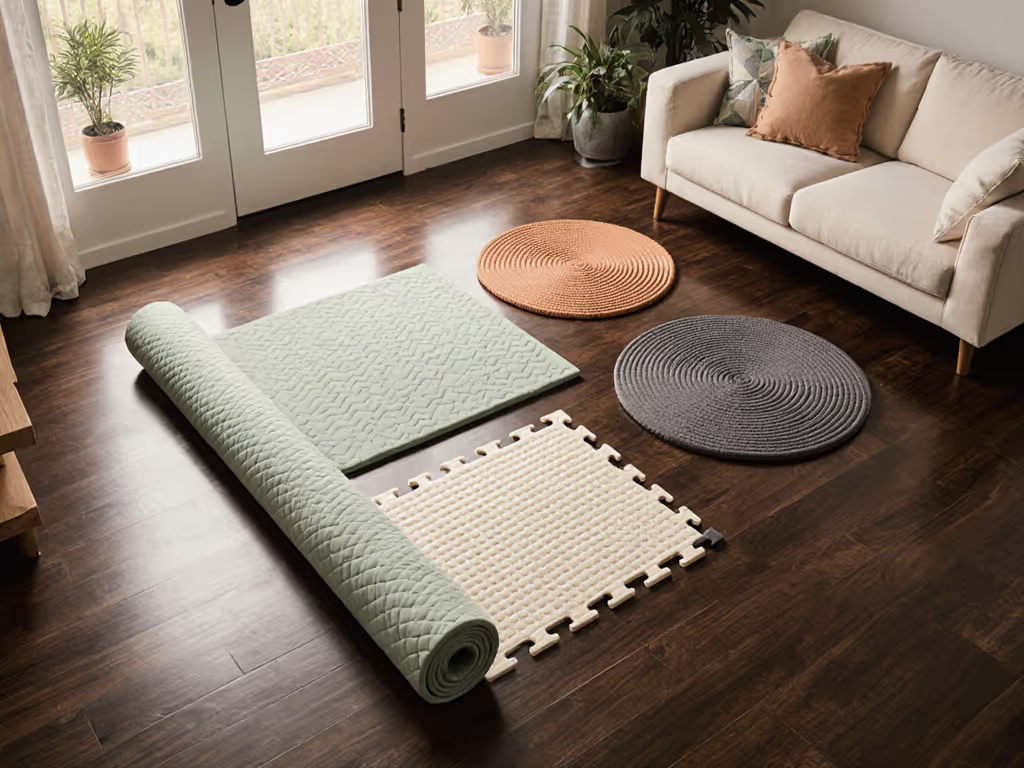
Understanding materials isn't just about safety, it is about durability through multiple children's use. Let's demystify common options:
Unknowns stay labeled. Many brands claim "non-toxic" without specifying tests or standards. Demand documentation: "CPSIA compliant" means nothing without third-party verification of specific chemical limits.
The short answer: yes, but with critical caveats. For age-by-age setup ideas, check our toddler play mat guide to extend safe use beyond infancy. Most premium mats fail at the transition point between infant and toddler use because they prioritize softness over support. Developmentally, babies need:
The magic zone is 0.4"-0.6" thickness with moderate density, enough cushion for falls but firm enough to support developmental milestones. Thicker isn't better; excessively soft mats can actually delay crawling as babies sink too deeply.
Not all certifications are equally valuable. Here's my risk-tier framework for evaluating claims:
| Certification | Risk Tier | What It Actually Means |
|---|---|---|
| Greenguard Gold | Low | Tests for 10,000+ VOCs; verified by UL Environment |
| OEKO-TEX Standard 100 | Low-Medium | Tests for 300+ harmful substances; version-specific matters |
| CPSIA Compliant | High | Only meets basic US lead/phthalate limits; no third-party verification required |
| "Non-Toxic" (unverified) | Highest | Meaningless marketing term; legally unenforceable |
Concise citation: A 2024 analysis by Healthy Building Network found 68% of "non-toxic" labeled play mats contained detectable levels of concerning chemicals when independently tested.
With multiple children comes exponentially more mess. Evaluate cleanability through these practical tests: For step-by-step care across materials, use our play mat cleaning guide.
"Machine washable" claims require scrutiny, many mats lose structural integrity after just 3 washes. The reality is that wipe-clean surfaces with water-resistant finishes (like polyurethane coatings) outperform "natural" but absorbent materials long-term in multi-child households.
Strengths:
Concerns:
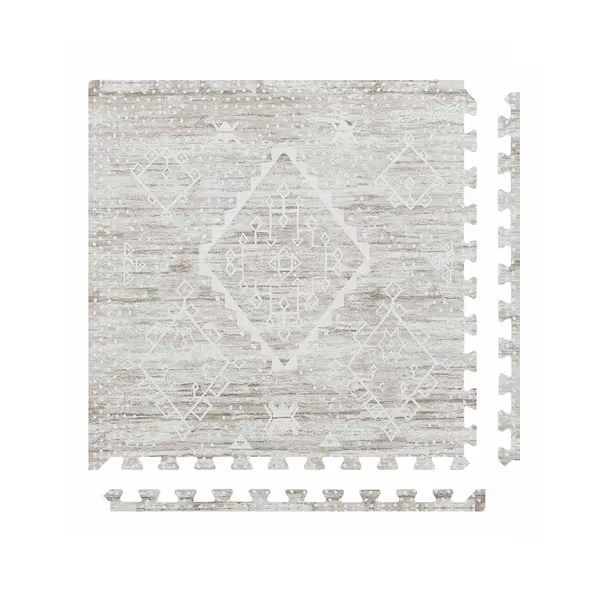
Sibling Verdict: Excellent modular solution for design-conscious families, but request recent VOC test reports before purchase. Best positioned as a shared sibling play space that grows with your needs. For deeper brand analysis, read our House of Noa review covering longevity and value.
Strengths:
Concerns:
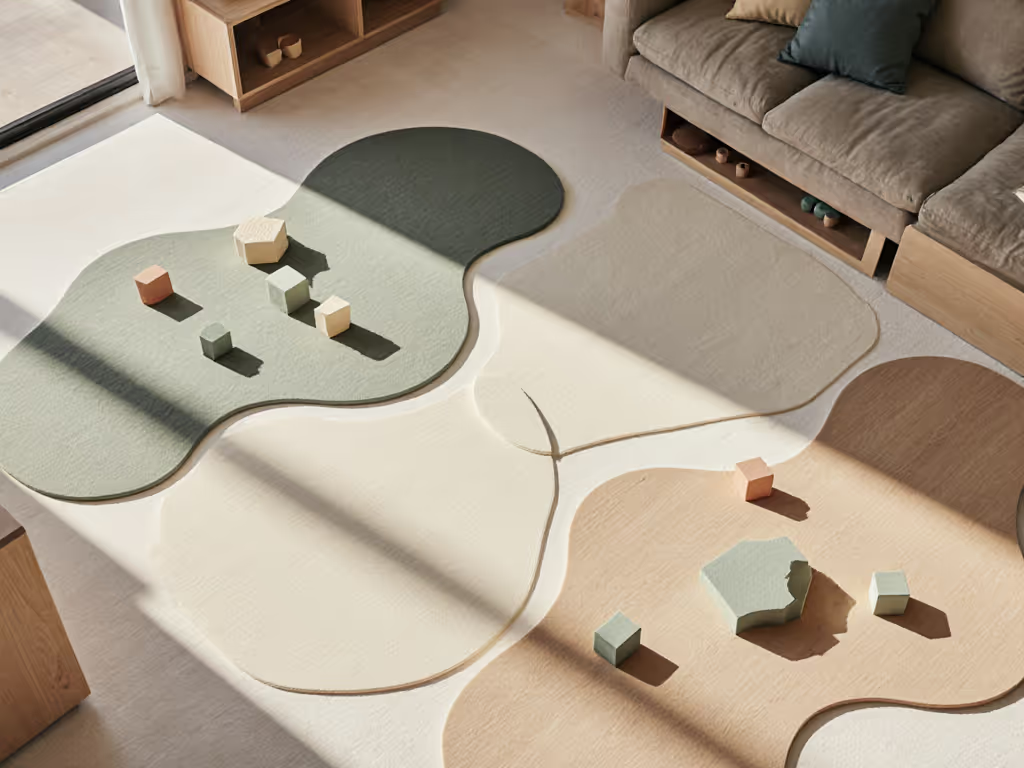
Sibling Verdict: Better suited as a temporary solution or travel mat than a primary family play mat system. Fails the long-term multi-child durability test.
Selecting a developmental stage play mat that serves multiple children requires strategic thinking beyond initial aesthetics. Consider these evidence-based metrics:
Durability isn't a given, it is engineered. The most successful multi-age play mat solutions I've tracked share three features: modular design, certified low-emission materials, and adult-friendly aesthetics that don't require "baby-proofing" your entire home.
The ideal sibling play mat isn't about finding one perfect product, it is about matching transparent specifications to your family's actual needs. Demand documentation, test claims against real-world scenarios, and prioritize certifications that verify what matters most to your household.
Transparency is a feature; families deserve clear, testable materials claims. Unknowns stay labeled.
Explore certification requirements in greater depth through Healthy Building Network's free VOC tracking tool, or join our monthly "Materials Deep Dive" webinar where we test reader-submitted products against real-world conditions.