
Pet-Friendly Play Mat Comparison: Safest Picks for Pets & Babies
25th May•14 min read
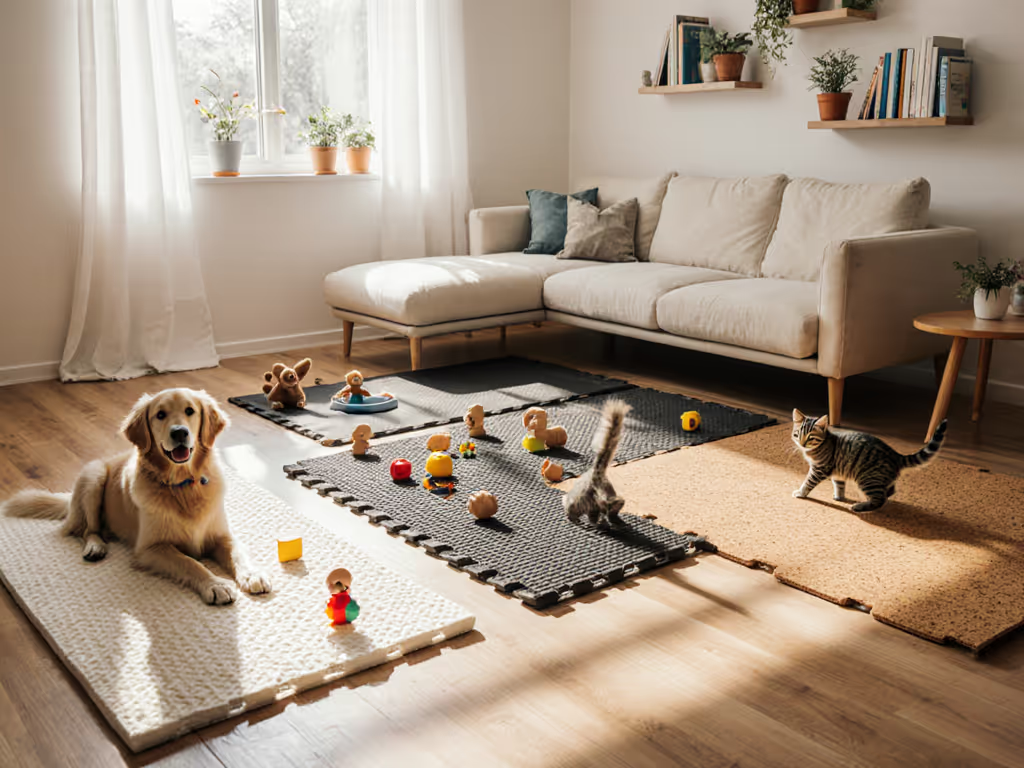
Choosing a pet-friendly play mat comparison that works for both your baby and your pet (or managing a multi-species play mat in a shared living space) requires matching material properties to your specific floor type, household mix, and safety priorities. Foam, rubber, and cork each bring distinct trade-offs in durability, cleanability, off-gassing risk, and aesthetic fit, and understanding those differences in plain terms is the only way to avoid a costly wrong choice.
This guide walks through the material comparison side-by-side, addresses your most pressing concerns about safety certifications and odor, and shows you how to evaluate trade-offs without getting lost in marketing claims.
A pet-claw resistant play mat and a baby-safe mat share a critical requirement: the surface must resist puncture, compression, and peeling without leaching chemicals. When you first unroll a new mat and notice a strong "new" smell, that's often off-gassing (volatile organic compounds, or VOCs, releasing from the polymer or adhesives used in manufacturing). I learned this the hard way years ago when a nursery mat smelled intensely plastic-like for days; my headaches and my baby's fussiness quietly resolved only after I switched to a mat from a supplier who provided test reports showing zero formaldehyde and low-VOC adhesive. The supplier also answered every question I asked. That experience taught me that transparency is a feature, not a vibe or a marketing promise.
The three materials we'll compare (foam, rubber, and cork) handle off-gassing, claw resistance, and cleanability very differently, and there is no perfect choice for everyone. For evidence-based VOC and composition details, see our materials safety guide. Your job is to name your non-negotiables (e.g., "must be washable and have a Greenguard Gold cert") and trade consciously for everything else.
Non-toxic doesn't mean zero-odor or zero-VOC. A mat labeled "non-toxic" may still meet legal thresholds for phthalates or flame retardants while off-gassing slightly. Look for named certifications (Greenguard Gold, OEKO-TEX, CPSIA compliance, or Prop 65 clearance) and ask for test reports (not just marketing language).
Thickness and firmness are not the same. A thicker mat isn't automatically better for motor development; a very soft, thick mat can feel sinky and offer poor support for crawling or standing. A firmer, moderately thick mat often wins for babies learning to bear weight. For pets, a thick mat is usually preferred to reduce joint impact, but if the surface is too soft, furniture legs can sink in or wheel bases (vacuum, stroller) can dent it.
What it is: Foam typically refers to EVA (ethylene-vinyl acetate), PVC (polyvinyl chloride), or closed-cell polyurethane. EVA is the most common in commercial play mats and puzzle tiles; it's lightweight, squishy, and inexpensive to manufacture.
Pros:
Cons:
Best for: Budget-conscious households seeking soft, quiet play in low-mess scenarios (e.g., a dedicated play corner with minimal accidents). Not ideal if you have pets or a young baby prone to blowouts.
What it is: Rubber can be natural rubber (from latex-producing plants), synthetic rubber (SBR, or styrene-butadiene), or recycled rubber. Premium play mats often use natural or synthetic rubber with a reinforced vinyl or PU cover, as seen in commercial-grade mats designed for dog play areas.
Pros:
Cons:
Best for: Multi-pet households, families with toddlers or dogs that chew or scratch, renters needing durability and easy cleanup, and anyone prioritizing a dual-species play mat that handles both baby spit and pet hair without staining. Acceptable for tummy time once babies are past 6 months and motor skills warrant firmer support.
What it is: Cork is the bark of the cork oak tree, harvested without killing the tree. It's often ground, pressed, and glued into sheets or tiles. Higher-end cork mats combine cork with natural rubber or use cork veneer over a rubber or foam base.
Pros:
Cons:
Best for: Design-conscious, eco-conscious households without high-traffic pets; single-pet homes or homes where pets are infrequent floor-users; families prioritizing aesthetic harmony and willing to trade durability and easy cleaning for warmth and sustainability.
| Feature | Foam | Rubber | Cork |
|---|---|---|---|
| Softness for tummy time | Excellent | Moderate | Good |
| Claw resistance | Poor | Excellent | Moderate |
| Washability | Spot-clean only | Wipeable/hose-able | Spot-clean only |
| Odor resistance | Poor (absorbs) | Excellent | Excellent |
| Durability (years) | 1 to 3 | 5 to 10+ | 2 to 5 |
| Off-gassing risk | Moderate to High | Low to Moderate | Low to Moderate* |
| Cost | $ | $$$ | $$$ |
| Aesthetic appeal | Low | Low | High |
| Compression resistance | Poor | Excellent | Good |
| Portability | Excellent | Good | Good |
*Depends on adhesive; request test report.
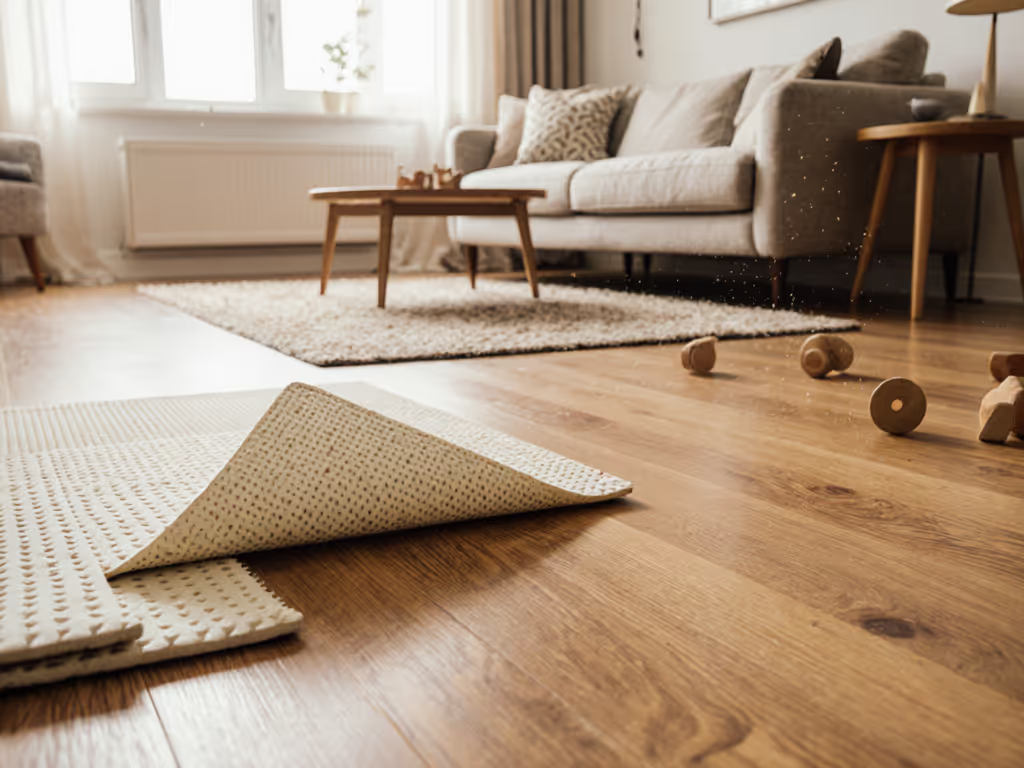
Hardwood and laminate floors are slippery; mats slide unless they have a genuinely non-slip backing. Tile is grippier but cold. Carpet can bunch under a mat or create unstable pockets. Get floor-specific non-slip tips in our hardwood and carpet compatibility guide. The solution: look for mats with non-slip backing designed for your specific floor type, and test the mat in place before committing. Rubber and cork both offer natural grip; foam requires a separate non-slip pad or backing layer (which introduces more adhesive and off-gassing risk).
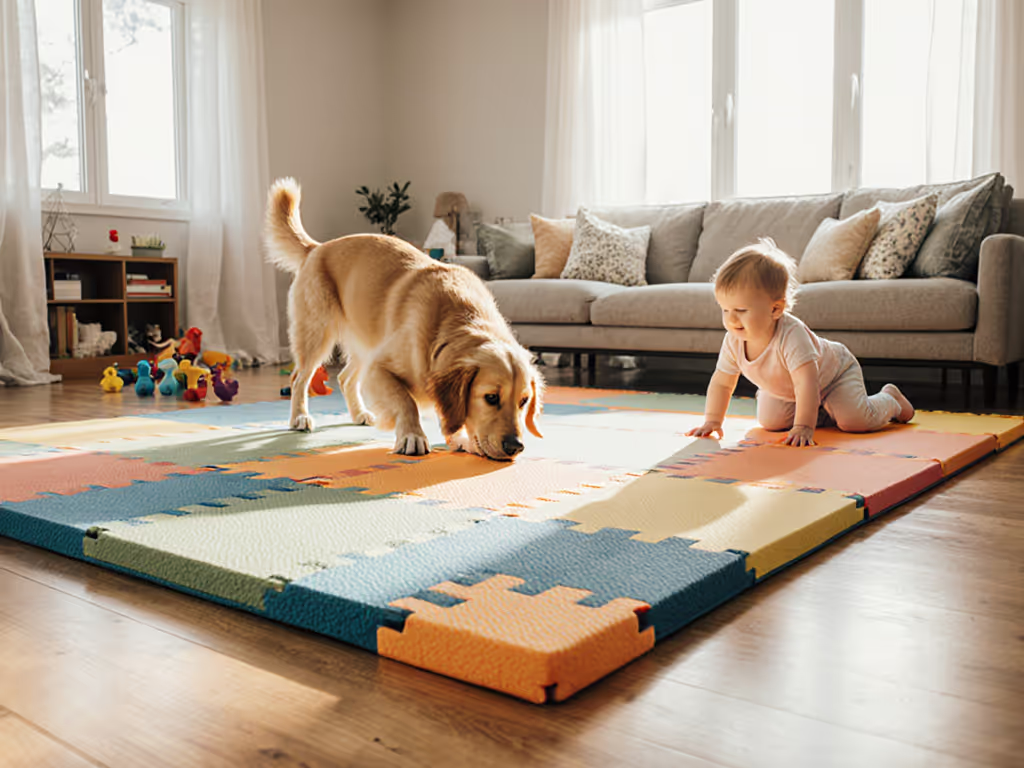
If you have a dog that scratches, a cat that kneads, or a teething toddler, foam is almost certainly a wrong choice. For setup strategies that keep babies and pets safe together, read our multi-species play mat guide. Rubber is best; cork is a middle option if your pet traffic is light. If your pet has frequent accidents (incontinence, marking, housetraining blowouts), you need a surface that doesn't absorb: rubber or a sealed vinyl-topped mat.
Look for these third-party certifications:
Transparency is a feature: Ask the seller for the actual test report, not just the cert name. A reputable brand will provide it.
If a product claims "non-toxic" but offers no test report or certification, flag it as a red flag and move on. Use our non-toxic safety checklist to verify certifications and spot red flags fast.
Foam: No (risks delamination and water absorption).
Rubber: Depends on construction. A solid rubber mat can be wiped or hosed. Rubber over foam can't be fully submerged. Always check the manufacturer spec.
Cork: No (risks swelling and mold).
If cleaning ease is a must, prioritize rubber or a sealed vinyl-topped mat and plan for spot-cleaning and air-drying.
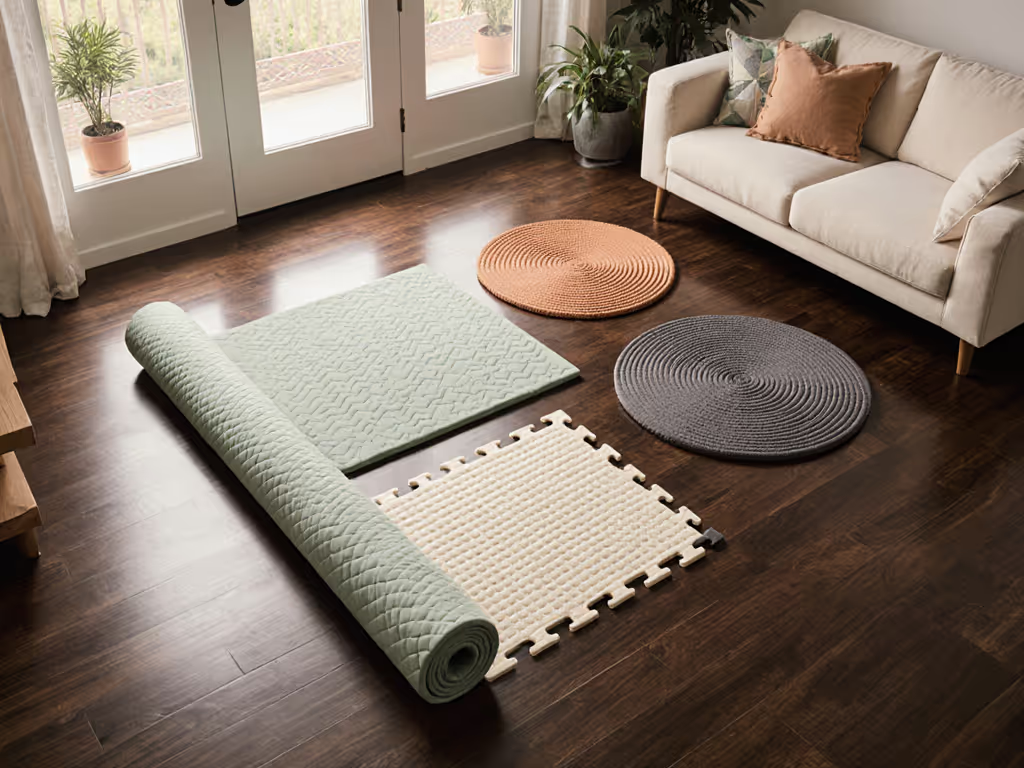
For a baby learning to roll and crawl (3 to 12 months), a mat 4 to 6 feet long and 3 to 5 feet wide is typical. For toddlers pulling to stand and cruising (12+ months), 6 to 8 feet long gives room to move without fear of rolling off. If space is tight, consider a modular rubber mat set that interlocks and expands as your child grows, or a roll-up cork mat that stores compactly.

Compression: Rubber mats bounce back; foam and cork compress over time. If you have a heavy toddler, large dog, or furniture sitting on the mat, foam will show permanent dents within months. Rubber is far more resilient.
Scratching and peeling: Foam and cork are vulnerable to scratching and surface layer separation, especially with pet claws or sharp toy edges. Rubber, particularly if it's high-grade nitrile or natural rubber with a sealed top, resists scratching far longer.
Edge curling: All modular mats risk edge curl, especially foam. Rubber interlocking mats tend to hold edges flat longer due to material stiffness. Cork can splinter at edges if chewed or aggressively played with.
Longevity: Foam: 1 to 3 years. Rubber: 5 to 10+ years. Cork: 2 to 5 years (assuming dry storage and light use).
Foam absorbs odors and stains; once trapped, they're nearly impossible to remove. Rubber repels odors and stains; most wipe off with mild soap and water. Cork is naturally odor-resistant but can still stain if liquid sits long enough. Prevention via rapid cleanup is key for cork and foam; rubber gives you more time and forgiveness.
Most play mats are compatible with radiant floor heating if not left in place 24/7 (heat can't dissipate and may warp the mat). See our test results for radiant heat-safe mats before setting up near heated floors. Rubber mats are generally steamer-safe; foam and cork risk damage. Robot vacuums can catch mat edges; avoid mats with very curled edges or use perimeter tape to secure the edges. Always confirm with the manufacturer before using heat or appliances on the mat.
Foam: Bright primary colors and kiddie prints dominate; hard to match modern, neutral decor. Takes up space even rolled.
Rubber: Industrial grays, blacks, and bright colors. Blends if you embrace minimalism; clashes with warm, naturalist interiors.
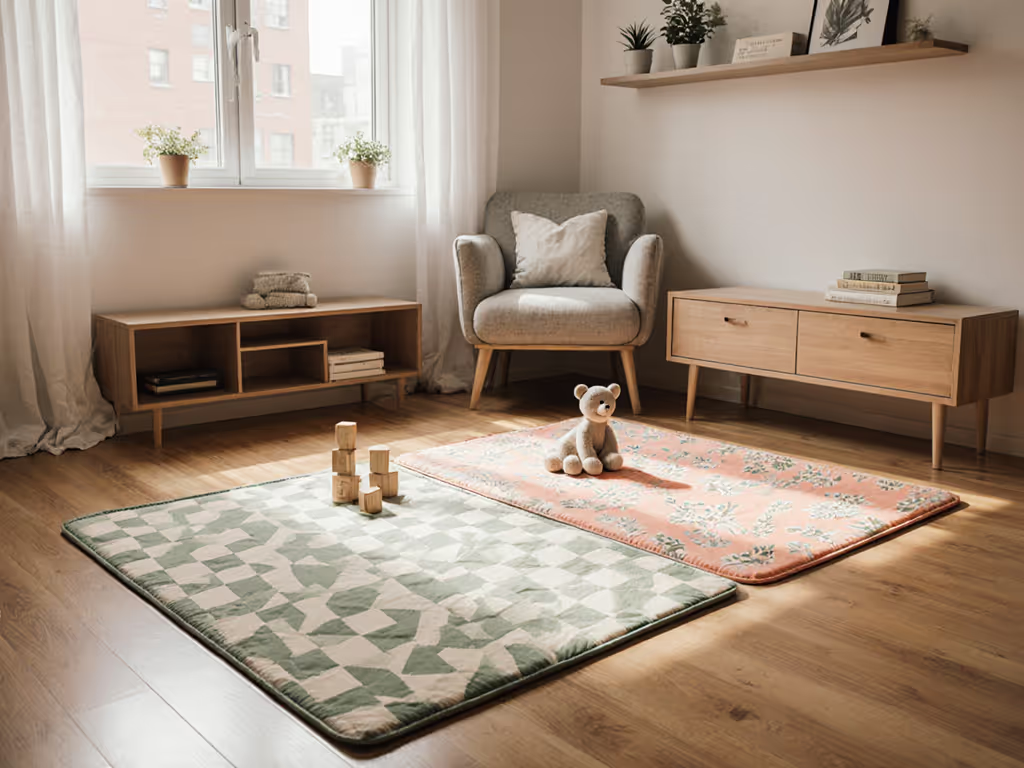
Cork: Warm natural tones; highly design-forward. Blends beautifully into Scandinavian, minimalist, and modern eclectic spaces. Premium aesthetic aligns with design-conscious households.
If aesthetics matter (and for many millennial and Gen Z parents, they do), cork or neutral-toned rubber is worth the premium. A mat that you don't cringe at having visible is one you'll actually use and keep longer.
Foam: Rolls or folds compactly; lightweight. Stores easily under a sofa or in a closet.
Rubber: Heavier; some mats roll, others fold. Takes up more closet space than foam. Modular interlocking mats can be partially disassembled to save space.
Cork: Rolls or folds; moderate weight. Stores similarly to rubber. Premium cork mats sometimes come with a storage bag.
For small apartments or renters who move frequently, foam wins on portability; rubber is acceptable if weight and size don't prohibit moves; cork is middle-ground.
Daily: Vacuum or brush off crumbs and pet hair.
Spot stains: Dab with mild soapy water and a cloth; blot dry. Stains often remain.
Odors: Air outdoors if possible. Baking soda or activated charcoal left overnight may absorb some odors but won't eliminate deep smells.
Washability: No machine washing. No prolonged moisture.
Daily: Vacuum or brush off debris.
Spot stains: Wipe with a damp cloth and mild detergent. Rinse and air-dry.
Odors: Wipe with a dilute vinegar solution and air-dry. Odors rarely penetrate.
Washability: Some solid rubber mats can be hosed down or wiped with a mop. Check manufacturer specs. Not suitable for steam cleaners if glued to foam.
Pet accidents: Blot, wipe, rinse, air-dry. No lingering odor if done promptly.
Daily: Vacuum gently (avoid pushing debris into crevices).
Spot stains: Dab with a damp cloth and mild soap; blot immediately. Don't let moisture sit.
Odors: Cork is naturally odor-resistant; wipe with a cloth. If odor develops, air outdoors.
Washability: No machine washing. No prolonged moisture or steam. Spot-cleaning only.
Pet accidents: Blot immediately; prolonged moisture risks mold.
The brands and mats worth your money are the ones willing to share test reports openly. When you contact a seller, ask for:
If a seller can't or won't provide test reports, assume the worst and shop elsewhere. Transparency in the supply chain signals a company that respects your family's safety.
To justify the premium on rubber or cork, calculate the cost-per-month across the expected lifespan:
Foam mat ($80) used 2 years = $3.33/month. Then you rebuy.
Rubber mat ($240) used 7 years = $2.86/month. Plus, no replacement hassle, no re-contamination risk with a new mat's off-gassing, and better resale or donation value.
Cork mat ($200) used 4 years = $4.17/month. But you get aesthetic harmony and natural odor resistance, which foam can't match.
If you have a pet or plan to use the mat through toddlerhood and potential future siblings, rubber's durability and washability tip the value equation in its favor, despite the higher upfront cost.
Now that you understand the trade-offs, your next steps are:
The mat you choose should earn its footprint, survive the wear, store neatly, and feel safe and clean under your child and pet. Transparency is a feature, and the brands that prove it (with test reports, honest material specs, and responsive support) are the ones worth buying from. Take your time, ask tough questions, and trust your due diligence.