
Pet-Friendly Play Mat Comparison: Safest Picks for Pets & Babies
25th May•14 min read
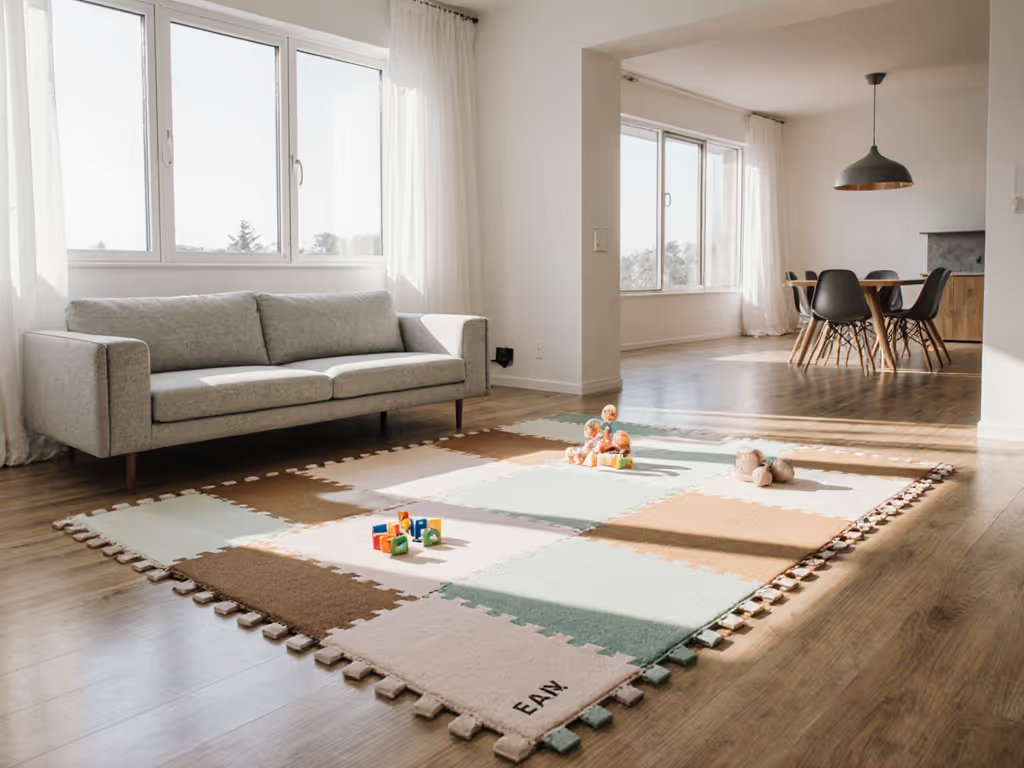
When your home flows seamlessly from kitchen to living room, finding the right open floor plan play mat becomes a precision exercise, not just a "plush enough" purchase. As someone who tests cushioning metrics across concrete slabs, vintage tile, and floating hardwood, I've learned that home layout play mat comparison must start with your floor's behavior under load. Comfort isn't just feel; it's millimeter-level force distribution. What looked like sufficient cushioning on my daughter's nursery carpet vanished when she crawled onto our living room tile, proving that what works in one zone might fail in another. Focus on the measurable criteria that determine whether a mat truly works with your floor.
Open concept spaces demand zone-specific matting. Measure not just length and width, but note:
A 7' x 4.5' mat might span a living room but leave critical transition zones exposed. Support is distribution; thickness alone is a blunt instrument.
| Stage | Minimum Mat Size | Risk Zone | Floor-Contact Consideration |
|---|---|---|---|
| Tummy Time (0-4 mos) | 36" x 36" | Edge roll-off | 6mm minimum cushioning on hard floors |
| Rolling (4-6 mos) | 48" x 60" | Obstacle proximity | 8mm firmness to prevent sinking into seams |
| Cruising (9-12 mos) | Full room coverage | Pull-up stability | Non-slip backing must grip at pressure points |
Do: Measure your room's "roll radius" (how far baby can travel from starting point before hitting a wall or obstacle). Add 12" buffer.
Don't: Assume standard 4'x4' foam tiles create safe zones around furniture legs, they compress unevenly under concentrated weight.
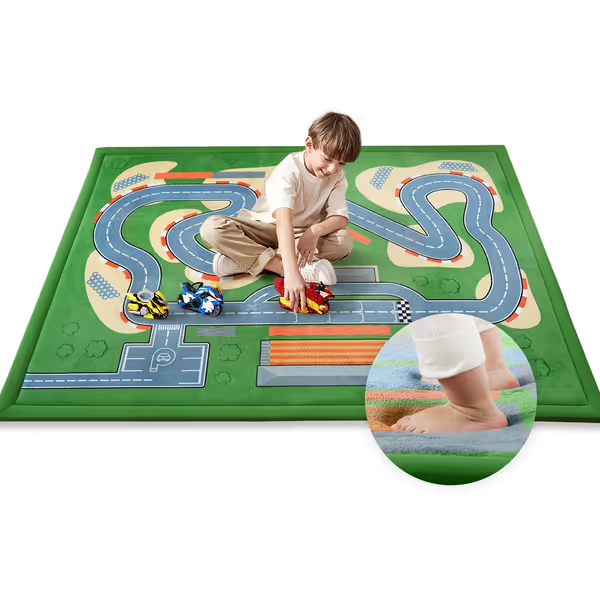
Most reviews fixate on thickness alone. For floor-by-floor guidance, see our flooring compatibility guide. But in open layouts, floor-type compatibility determines real-world performance. Here's how different surfaces interact with mat materials:
Open concept living means baby spends hours daily on this surface. Don't trust "non-toxic" claims without:
Red flag: "Meets CPSIA standards" without naming specific tests. CPSIA sets limits but doesn't verify compliance.
Green light: Brands publishing full material safety data sheets (MSDS) showing extraction test results for phthalates and formaldehyde. For a deeper breakdown of plastics, foams, and textiles, read our play mat materials safety guide.
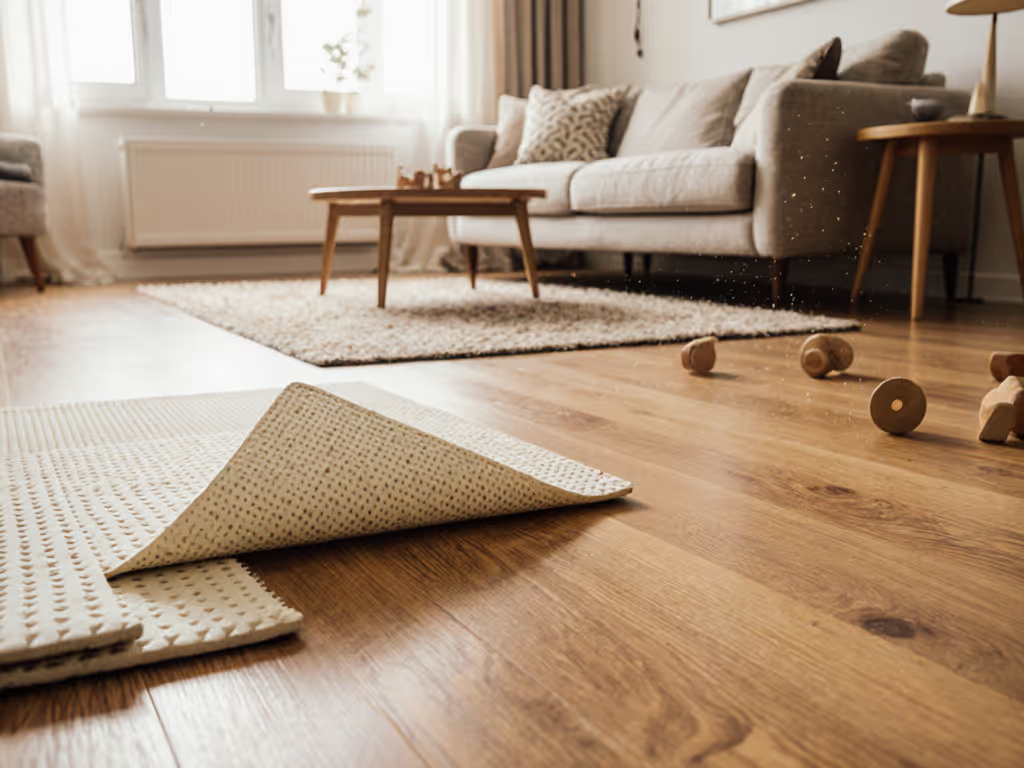
Slippage causes more near-misses than parents report. Conduct this real-world test:
Critical note: Some mats use adhesive coatings that leave residue (always confirm "residue-free removal" in product specs). If shifting or curled edges are your pain point, compare edge security systems for safer open walkways.
In open plans, every dropped block echoes. Sound transfer coefficient matters more than you think:
| Material | Impact Noise Reduction | Suitable For |
|---|---|---|
| EVA Foam (12mm) | 18-22 dB reduction | Apartments with downstairs neighbors |
| TPU Foam (10mm) | 25-28 dB reduction | Multi-story homes, hard surfaces |
| Memory Foam (15mm) | 30+ dB reduction | Open layouts with frequent toy-dropping |
Key insight: Thinner mats with higher density (0.15g/cm³+) often outperform thicker, lower-density options for noise control. If you're optimizing for close neighbors and tight footprints, see our apartment-friendly mats.
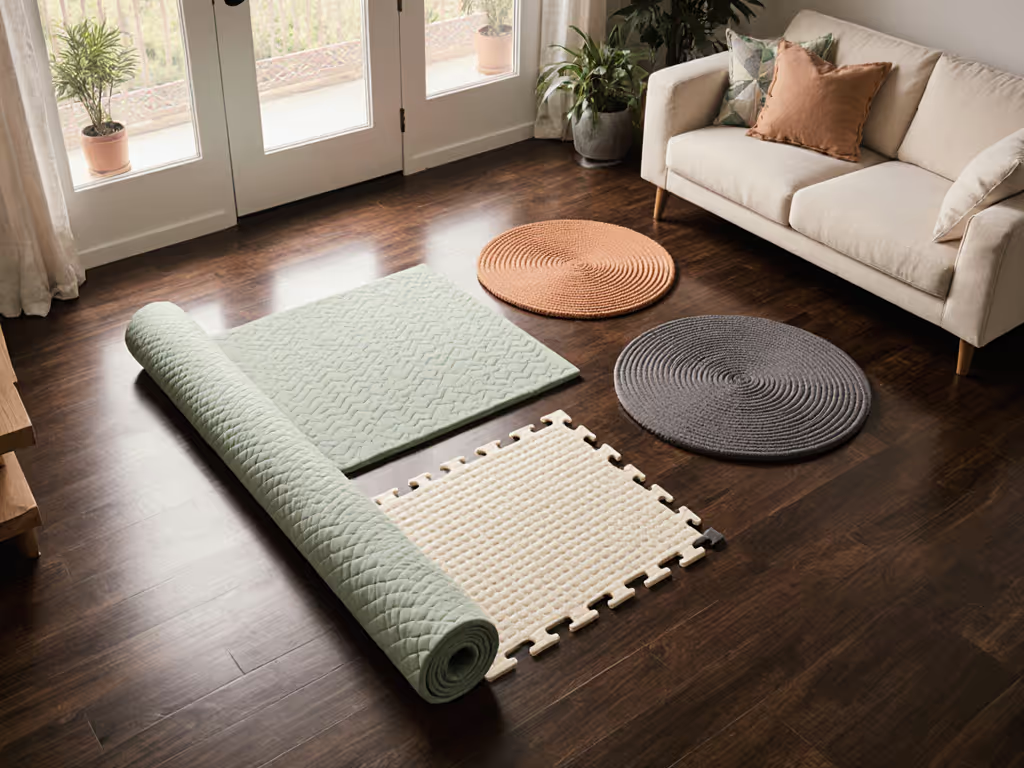
Multi-room play mat setup requires strategic segmentation:
[Kitchen] [Dining] [Living Room]
 _______ _______ _________________
|       |       |                 |
| Tile  |       |Hardwood/Laminate|
|_______|       |_________________|
 |      |       |  Soft Play Zone |
 |Dining|       |_________________|
 |Tiles |       |                 |
 |4'x4' |       |Cruising         |
 |_______|       |Area 6'x8'      |
 |__________|
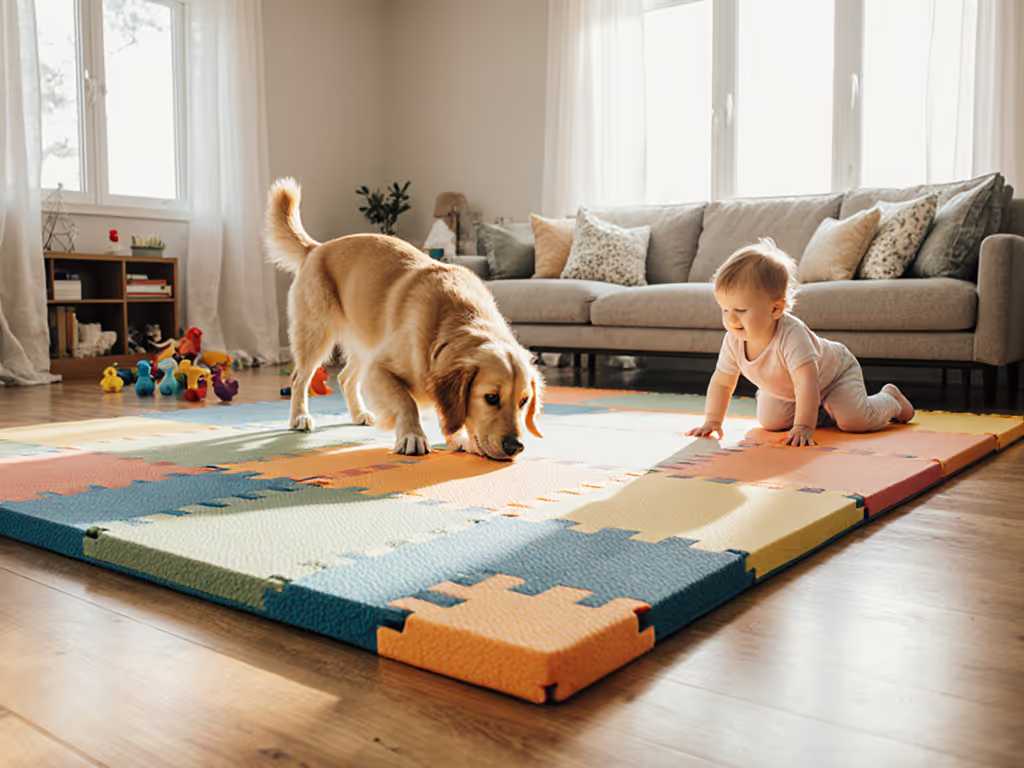
Do: Use transitional mats (12"-18" wide) at floor type changes to prevent tripping. For modular layouts across mixed flooring, compare puzzle mat systems for secure interlocks and easy reconfiguration.
Don't: Place tiles directly under high-traffic paths, they'll shift within 2 weeks.
A configuration with 1.3" thick memory foam and silicone-dotted backing performs particularly well for hardwood/laminate transitions in testing, maintaining 0.9mm displacement under 10 lb pressure points while reducing impact noise by 27 dB. Its velvet surface provides that critical 0.3mm texture depth for grip without compromising cleanability.
Choosing the right mat for open layouts isn't about finding one perfect piece, it's engineering a system that works with your specific floor's physics. When my daughter began pulling up across our tile-to-hardwood transition, I finally understood why comfort is measurable: it's the difference between a mat that merely looks cushioned and one that actively manages force where it matters.
Further Exploration: