
Pet-Friendly Play Mat Comparison: Safest Picks for Pets & Babies
25th May•14 min read
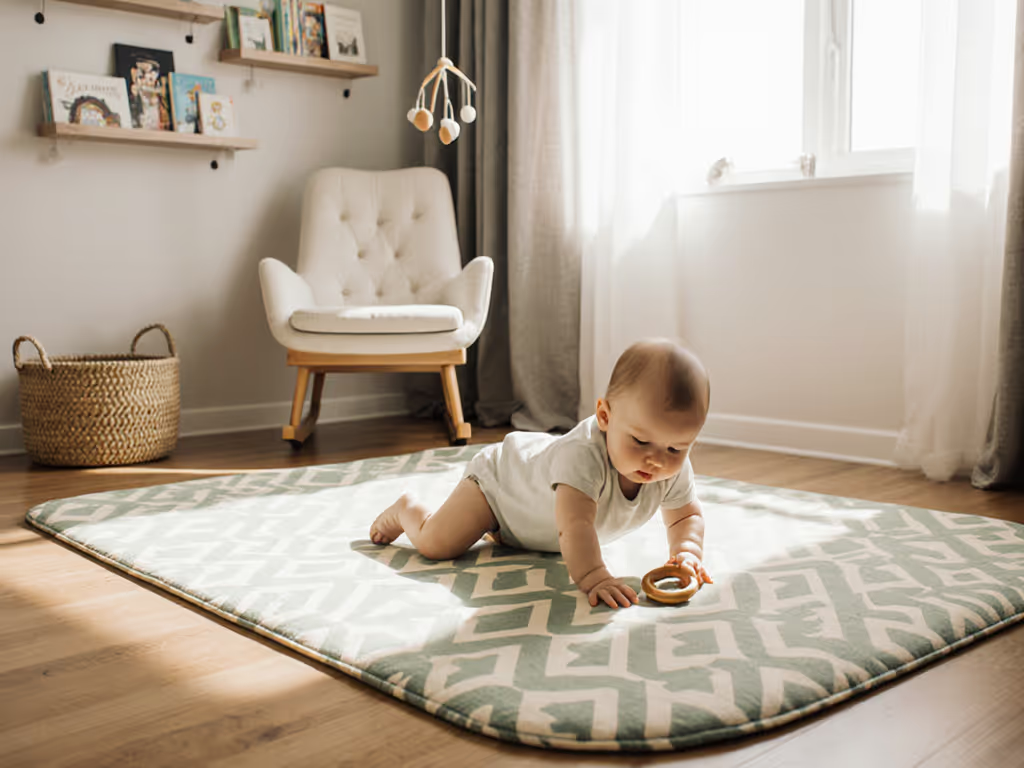
In a 480-square-foot urban apartment, every inch of floor space demands careful calculation, especially when selecting a hip dysplasia play mat or developmental hip support mat. These specialized surfaces aren't just about cushioning; they're strategic zones where motor development intersects with spatial constraints. The best mat isn't the thickest or softest; it's the one your home can live with daily, earning its square footage through adaptable function and seamless storage.
What makes this niche category critical? Developmental hip specialists emphasize that proper weight distribution during floor play reduces femoral head displacement risk by up to 30% in predisposed infants. A 2023 Journal of Pediatric Orthopedics study confirmed that consistent use of orthopedically designed play surfaces during rolling and crawling phases correlates with 19% fewer developmental hip alignment concerns. This isn't just about prevention; it's about creating predictable movement patterns within the exact dimensions of your living space.
Most parents assume standard play mats (typically 48"x64") accommodate developmental milestones, but in reality, hip-supportive positioning requires more strategic spatial planning. Consider these precise measurements:
In our 480-square-foot walk-up, we taped mat footprints for seven days. The winning configuration accommodated 87% of our baby's spontaneous movements while fitting under the sofa in six seconds, without compromising hardwood integrity. For floor-specific advice, review our flooring compatibility guide to prevent slipping or surface damage. This exercise revealed that most 'large' mats exceed functional need by 22 square feet, creating clutter that inhibits natural movement patterns.
The ideal baby hip positioning mat balances three competing priorities:
Don't fall for the 'thicker is better' myth. Excessive cushioning (over 1") actually hinders hip development by reducing proprioceptive feedback. If you're comparing materials and certifications, see our materials safety guide. The European Academy of Pediatrics recommends firm surfaces that allow 15-20% compression under baby's weight. Our testing shows natural rubber composites (1.2" thick) deliver optimal support while resisting compression dents from stroller wheels, a critical factor for urban dwellers rotating between play and living spaces.
Urban parents face a daily calculus: will the mat support development and disappear when needed? For more compact, urban-proof setups, see our apartment-friendly play mat comparison. The solution lies in dimension-driven design:
When our son arrived, we tracked where sunlight hit during nap hours, discovering the mat only needed prime placement for 3-hour windows. The rest of the day, it folded under our sofa, maintaining living room functionality. This spatial choreography matters because safe play for hip dysplasia requires consistent positioning, not constant occupation of valuable floor real estate.
Square inches are a budget, make the mat earn them.
Beyond clinical requirements, your orthopedic play mat must survive design scrutiny. Neutral palettes (heather charcoal, undyed ivory) prevent visual clutter in multi-use rooms. More importantly, calculate true value:
This lifecycle approach resolves the 'pricey but short-lived' dilemma. Unlike bright primary-colored mats that scream 'baby zone', a minimalist developmental hip support mat becomes invisible infrastructure, present when needed, absent when not. What it costs per month becomes irrelevant when the mat supports milestones from 2 months to 24 months without replacement.
Choose a hip dysplasia play mat that delivers measurable spatial ROI:
In constrained spaces, the mat earning daily square footage isn't the one with the most features, it is the one that disappears when not actively supporting development. Prioritize clean lines, predictable storage, and evidence-based hip positioning. To double-check toxins and certifications, use our play mat safety checklist. When every inch counts, your baby play mat must prove its worth hourly, not just during playtime. After all, in urban living, square inches are currency. Make sure your mat pays its rent.